
-
5.0 Stars ⭐⭐⭐⭐⭐ 628 Google Reviews


Carnity
-
Posts
677 -
Joined
-
Last visited
-
Days Won
21 -
Country
United Arab Emirates -
Carnity Points
132 [ Donate ]
Content Type
Profiles
Forums
Advice
Car Deals
Recall
OBD II Car Diagnostics
Guest lead capture
STORE
Events
Gallery
Blogs
Everything posted by Carnity
-
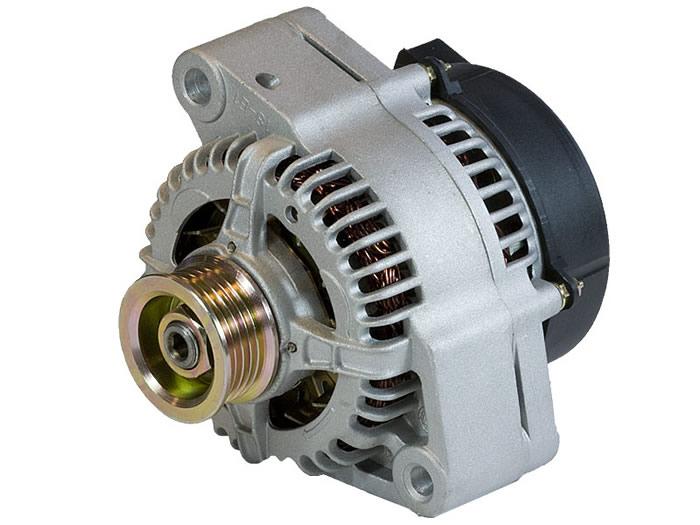 Every car uses electricity to power up lot of devices and sensors like engine management chips, air conditioning, music systems, headlights etc. Surprisingly enough not all the electricity comes from battery as it comes from the alternator also called dynamo. Battery supplies only the first cranking power and when engine starts then the alternator takes over the electric demand. When you start your car, if you experience a delay in cranking of the engine or the headlights are dim, then there is a problem either with the battery or the alternator. The best way to find out the issue is to use a voltmeter or a multi-meter. When checking the alternator, you measure only the voltage, so a voltmeter is ideal; the multi-meter measures not just the voltage but other electrical properties too. Before checking the alternator, check the battery. It is required to start the vehicle, and spinning the alternator to keep the battery charged. So, if the battery is low, the vehicle may not start and you will not be able to check the alternator. Unlike European countries, where the weather tends to get cold and the battery is usually the culprit, in GCC the battery could be in a better state. To check the battery, turn off the engine before attaching the voltmeter. Connect it to the battery by placing the red end (positive) to the red battery terminal and the black one (negative) to the black terminal. If the meter shows a reading above 12.2 volts, the battery is healthy. If it is less, then you will have to recharge the battery rendering the alternator to be healthy. Also remember to check the connecting cables for abnormal wear - if crackled or frayed, replace them. A poor connection can cause a voltage drop reducing the flow of current through the charging circuit. Look at the alternator gauge and an volt/amp gauge can read the alternator output. Turn on all accessories like headlights, heater or blower of the AC and see if the the gauge decreases voltage. If the voltmeter is higher when the engine is running, it means that the alternator is charging. You can also use your ear. Try to hear the alternator when the engine is running. In case of any issue with the alternator, you can hear a weird screeching sound emanating from the front of the car. Another way of the checking any problem with the alternator is to run the engine for a few minutes. Then turn it off and touch the alternator. If very hot, it is an indication that something is wrong. If the alternator is working well, your multi-meter should read somewhere in the range of 12.6 volts with the engine off and 14-15 volts when the engine is running. If voltage is below 13.5, then it is a sign that the alternator is not able to meet the battery’s charging requirements. Try accelerating the up the engine to 2000 RPM or higher. If the voltage is too low and you are sure that all connections are well placed, then it might just be time to change the alternator. If you need more help, or need specific answer for any question then try the ‘Carnity Forum’ (http://carnity.com/) section or find car businesses near you with the Carnity ‘Business listing’ (http://carnity.com/business_listing) section.
 -
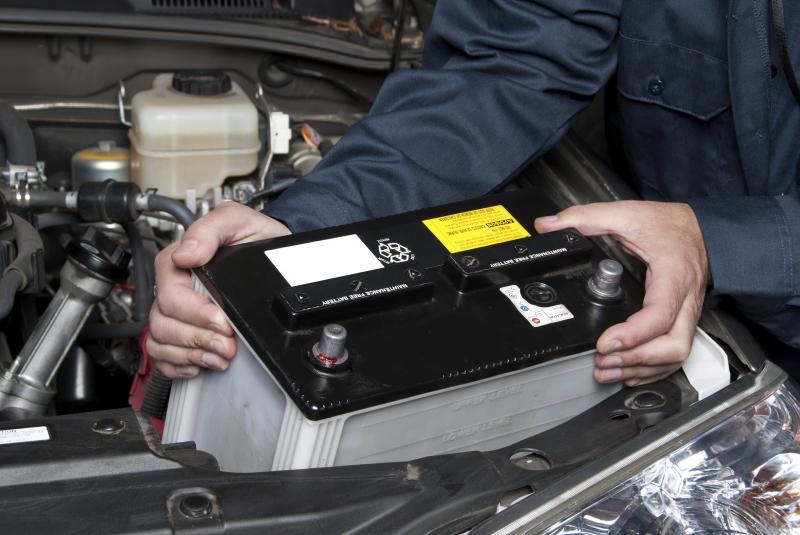 A good battery accepts and holds a charge. It can produce amperage close to its rated output and just needs to be recharged. While a bad one will not hold or accept charge leave along coming close to the required amperage. You just have to replace it. A car battery life is about 3 to 5 years, so going by its life, you will need a new battery. A low or dead battery does not mean your battery has failed, or that it needs to be replaced. A good battery can run down for any number of reasons: somebody might have left the lights on, you have not driven enough to keep the battery fully charged. It could also be that the car has been idle with lights and music system on with engine off, that means battery was drained without getting recharged from the alternator system that works with the engine rpm. Or there is an electrical problem which is draining power from the battery while car is off: like anti-theft system, music system, bluetooth and internet connectivity. Many auto parts stores will test your battery for free. On your own, try the load tester. If the battery voltage drops below 9.6 volts during the test, the battery is bad. If it gives a reading of 0 volts, your battery just had a short circuit. If the battery stops reaching 10.5 volts, it has a dead cell. If the battery is fully charged and the voltage is 12.4 or less, the battery is sulfated. You could also use an electronic ‘conductance’ tester. It sends an alternating frequency signal through the battery to determine the condition of the cell plates inside the battery. Such tester gives an accurate reading. As for the size, the stock-size battery should be ideal. In GCC conditions, a smaller battery may not fail either. A larger battery has a lot of extras - expense, toxins, weight. Increasing battery size might allow running your car, but it is not an advisable upgrade unless you really require that additional amperage to power up some special device like heavy music system with amplifier and woofer, have additional headrests DVD screens that chew lot of power and slight increase in battery output will ease the load. Upgrade the battery to max 10-15% increment only, like if OEM battery had 60 AMP so you can safely upgrade to 65-70 AMP but not higher than that without consulting proper electrician. If you need more help, or need specific answer for any question then try the ‘Carnity Forum’ (http://carnity.com/) section or find car businesses near you with the Carnity ‘Business listing’ (http://carnity.com/business_listing) section.
 -
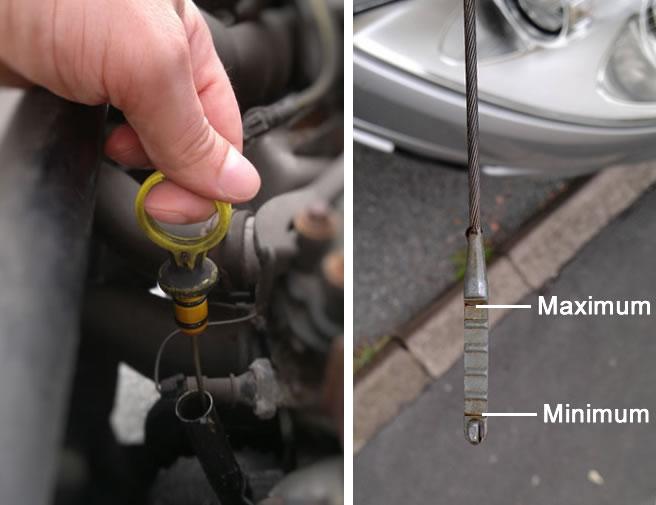 The backbone of all cars engine performance is the engine oil, that’s why it is advised to use the best quality oil for the car as the engine life, performance and reliability depends on the engine oil. There are many different kinds of engine oil for specific car types and requirements like fully synthetic oil, semi synthetic oil and mineral oil. If oil is not changed when getting car serviced you can end up with accelerated wear of the engine like loss of performance and fuel economy, and increased emissions and oil consumption. Engine Oil is best to change after 3,000 to 15,000 Kms or go with what the car owner's manual recommendation from the car manufacturer, which is based on what type of engine oil is used as mentioned earlier. In general each type of engine oil has basic life span: Fully Synthetic: 10,000 to 15,000 KmsSemi Synthetic: 5,000 to 8,000 KmsMineral Oil: 3,000 to 5,000 Kms.How to check Engine Oil level? Car has to be cold and resting overnight or few hours at leastOpen the car engine hood and secure it safely in open positionLook for engine oil dipstick (shown above) usually placed on left or right side of the engineDraw the dipstick out and wipe it clean with tissue or clothInsert the cleaned dipstick inside fully and draw it out againAt the end of dipstick there is two mark showing Maximum and Minimum (shown above)Engine Oil level should be safely in between these two Max-Min markingHow to check Engine oil condition? Engine oil viscosity (thickness) should be reasonably thin and not too thickIt's color should be close to golden or red, and not brownish blackOil should have smooth oily property and not sticky and tacky feelIf you need more help, or need specific answer for any question then try the ‘Carnity Forum’ (http://carnity.com/) section or find car businesses near you with the Carnity ‘Business listing’ (http://carnity.com/business_listing) section.
 -
 Air filter as a name itself is self-explanatory; this particular part plays a vital role in your car’s engine performance and its life. And because of its seemingly ‘small’ existence in your car compared to other priority devices, it is often ignored. Giving a thrust to forget the air filter is its comparatively lower cost of replacement too. But, if you know its ‘job profile’, you may start loving it. Your car engine needs air – Clean Oxygen to complete the combustion process, to power your vehicle. Given Dubai’s, UAE’s or other neighboring GCC countries humid and dusty condition, there is a challenge compared to European countries. And so the role of an air filter in GCC is much more important than say a car in Paris or in Zurich; the air has much more dust and debris, and the air filter of your car will have to be cleaned or changed at a frequency that is much more than is usually the norm. A clogged air filter will not only affect the fuel economy, but it can/will reduce performance in terms of acceleration. So, keep the following in mind: The frequency of changing the air filter definitely varies from car to car. While the norm is to change it after 20,000 to 40,000 kilometres, if you live in sandy areas like Ras al-Khaimah or Hatta, then its best to get the filter changed after 10,000 to 20,000 kilometres. If you live in places like Dubai or Abu Dhabi, then 20,000 to 40,000 kilometres is good enough. And if you go by time, then, if your car is older than two years, you probably should get a new one now. An ideal rule of thumb is to change the air filter at least once a year. Also, it is a good practice to check the air filter from time to time, especially when checking the engine oil. Mainly because, the need for change of oil is driven by the same conditions as with the need for changing the filter – car periodic service. You can check the condition of the air filter on your own. Car owner’s manual will help you locate the air filter’s location and ‘plucking’ it out of the car requires plain common sense. In most cars, it is made of pleated paper-like material with the rubber frame. Once out, rely on visual inspection. If the filter is white, no need to change. If it is slightly dirty, even then there is no need to change. In fact, it works more efficiently. If you see only a slight layer of dirt, you just have to clean it up by blowing air or tapping it few times on the floor. However if the air filter is ‘caked’ or turned completely black or choked with dirt then you definitely need to change it immediately.Remember, if your mechanic tells you to change the air filter every time you visit him, it is time to change him and not the filter. Thankfully, in this part of the world, cars are well maintained and the service adviser usually checks the filter when you get the car serviced. If you need more help, or need specific answer for any question then try the ‘Carnity Forum’ (http://carnity.com/) or find car businesses near you with the Carnity ‘Business listing’ (http://carnity.com/business_listing) section.