
Leaderboard


Popular Content
Showing content with the highest reputation on 04/09/2016 in Advices
-
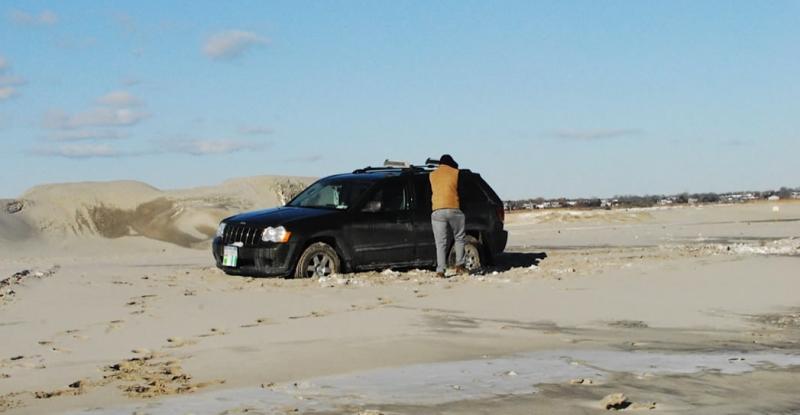 5 reasons to not use SUV's for off-road In my previous advice I have explained: How to choose a capable off-road car? based on low range, ABS and Diff-locks. In this advice I will explain why SUV’s and crossovers do not make good, capable off road vehicles. The SUV’s / crossovers have serious design flaws (or differences) that make them unsuitable as off road vehicles. Below are the 5 points that will make this class of vehicle unsuitable as off road vehicles. 1) SUV’s have poor suspension articulation Main part of the reason why proper off road vehicles can do what they do is the fact that they have a long suspension travel, otherwise known as “suspension articulation”. What this means in the real world is that these vehicles can cope with uneven terrain because the suspension systems allow the wheels to move for up to 40 inches (1 meter) and more with respect to each other. This means that even on extremely uneven terrain, all the wheels can remain on the ground, thus maximizing the traction. In the case of SUV’s and crossovers, the maximum suspension travel is about 9-10 inches (seldom more), which means that once a wheel has moved as far as the suspension allows it to travel, the part of the vehicle lifts off the ground. When this happens, one or more wheels lose traction and if the vehicle is not fitted with diff locks, the vehicle is stuck, and has to be towed out of the obstacle, or uneven terrain. 2) SUV’s are not flexible enough Proper off road vehicles that have separate, “stepladder” chassis are extremely flexible, which also helps to keep all the wheels on the ground. In combination with their long, built-in suspension travel, this means that a proper off road vehicle can negotiate types of uneven terrain that no SUV or crossover ever can, simply because SUV’s cannot “bend” enough to allow the wheels to remain on the ground. 3) SUV’s do not have enough ground clearance While some SUV’s have about the same ground clearance as many proper off road vehicles, the problem is that their suspension setups do not allow for heavy loads. This load is sometimes made up of up to seven passengers, but in most cases, the load comes from the suspension being too soft. When an SUV goes over, say, a bump, the vehicle drops down too low when the suspension compresses as the vehicle leaves the obstacle, and especially so when the vehicle is travelling too fast. Since the suspension compresses too much, the vehicle’s ground clearance can be reduced to the point where some components like differentials, cross members, and even the engine and transmission can hit obstacles like rocks. Proper off road vehicles do not have this problem, because their hard suspensions do not compress to the point where ground clearance is affected in meaningful ways. Moreover, because proper off-road vehicles have hard suspensions, its ground clearance actually increases when one or more wheels go over an obstacle, since the vehicle’s weight is always fully supported by the firm suspension(s). This is not always the case with SUV’s, since their suspensions were designed to move in such a way that uneven spots are absorbed without excessive body roll or movements. Thus, the vehicle is not lifted off the ground when one or more wheels pass over an obstacle, and if the vehicle is loaded with passengers, it could happen that even small obstacles could hit one or more critical components. 4) SUV’s are overly complicated The ideal off road vehicle has as few components as possible to make it work, with driver and passenger comfort coming a long way behind requirements like reliability, ease of use, and easy repair ability. This is not the case with luxury SUV’s and crossovers that are designed to give the driver and his passengers the most comfortable ride possible on hard, paved roads. While we agree that some SUV’s are able to complete short and easy level 1 off road trails that are designed with SUV’s in mind successfully, the problem is that SUV”s are too complex (complicated) to do anything else reliably. Part of the problem is that the electrical systems of modern SUV’s are not designed to cope with the heat, dust, and vibration that go with serious off road driving. In many cases, the air suspensions of these vehicles are protected by dozens of fuses, relays, and control units that were simply not designed to cope with the demands of off road driving conditions. No vehicle that can be completely disabled when a single fuse blows (such as when the compressor stops working when its fuse blows) can ever be trusted on a long, difficult off road trail, and especially a trail that requires extreme care by an expert driver. 5) SUV’s do not have recovery points It is one thing to clown around on some loose sand, or to drive an easy, level 1 trail when there are plenty of other vehicles around to supply a tow, but it is something else entirely when that vehicle has to be recovered in very difficult terrain. For instance, a vehicle that is stuck in sand up to the depth of the tyre sidewalls, can require a force of up to three times the force required to move it if it were on a hard surface. This force is calculated by using the weight of the vehicle as a base line; therefore if your vehicle weighs say, 1800 kgs, you will need a force that is equal to the vehicle’s weight, plus ten percent of that value to move it on a hard surface. In this instance, you will need a pulling force of at least 1980 kg. However, if as we said, the vehicle is stuck in sand up to its rims, you need at least three times that pulling force, thus, 5940 kg, and that is where the problem comes in. Even if there is a vehicle with a winch available, there is no attachment point on the stuck vehicle that is strong enough to withstand this pulling force, and it is almost certain that the normal towing point or recovery eyelets will tear out from the vehicle- leaving the vehicle stuck in the sand, and probably hurting someone as the winch cable snaps and recoils. Depending on circumstances and local conditions, the required pulling force can be as high as six or even seven times the value of the baseline figure, which should make it obvious that unless the vehicle has properly rated recovery points, it should not be used off road, and most certainly not in conditions where it might have to be towed out with forces that exceed its weight by several times. SUV’s are simply not designed to withstand pulling forces of this type, and any attempt to subject a vehicle to these forces is irresponsible, dangerous, and likely to hurt someone. So, no, SUV’s and crossovers do NOT make good off road vehicles, even if it is only because they cannot always be recovered safely.6 points
 -
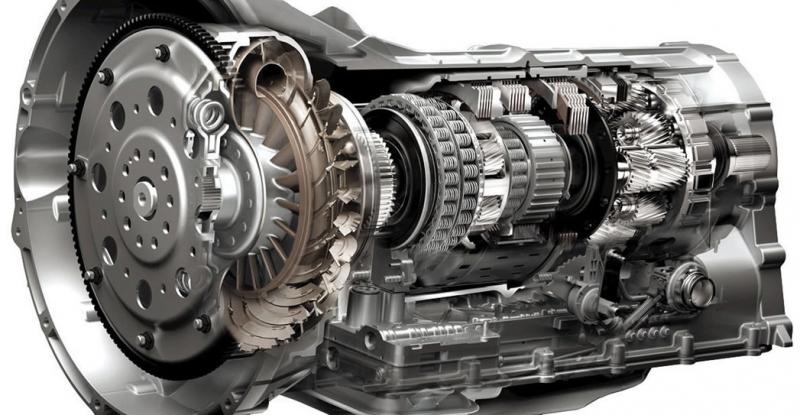 Myth about lifetime transmission fills There has been a lot of talk lately about “lifetime” transmission fills, so in this post I will take a closer look at this issue. Lifetime transmission fills have destroyed thousands of transmissions all over the world, simply because transmission fluid breaks down, just like any other lubricant. More importantly though, a new transmission has a lot of relatively rough wearing surfaces, which means that the metal particles that wear off internal components eventually end up in the fluid, where they are filtered out by the transmission filter. However, many “lifetime” transmissions do not have internal filters any more. Instead, they have fine metal mesh strainers or screens, and the problem with that is the fact that most metal wear particles are small enough to pass straight though the strainer where they can become stuck in the valve body, where they can cause hard and/or erratic shifting, or sometimes a failure to shift at all because they prevent valve shuttles in the valve body from moving freely. That is just one of the many problems with lifetime fills. Another issue is that since many transmissions do not have proper filters, metal wear particles are allowed to circulate freely, despite the fact that almost all transmissions have two more magnets in the oil pan to “capture” floating metal particles. In practice though, there is no guarantee that any magnet will always capture all metal particles, so in effect, the metal in the fluid turns the fluid into a sort of grinding paste that causes premature wear on the clutch packs, bearings, planetary gears, and small moving parts in the valve body. Then there is the problem of additives in the fluid that break down. Many car manufacturers claim that the fluid in their lifetime fills is fully synthetic. That may be true in some cases, but they are only telling you half of the story. The fact is that the word “synthetic” means nothing in itself, since even the best synthetic fluids do not offer enough lubrication on their own. All synthetic lubricants need additives like friction modifiers, anti-foaming agents, and corrosion inhibitors to protect against corrosion and mechanical wear, and there is no single additive that lasts forever. ALL additives break down over time due to the effects of heat, moisture and contact with oxygen, and while this breakdown process takes longer to occur in transmissions than in engines, it does happen, and when it does, it causes problems with shifting because the fluid no longer lubricates the transmission properly. One of the major manufacturers of transmissions, ZF, recommends that the fluid in their products be replaced every 80,000 kms, but car manufacturers have made it almost impossible to replace the fluid. It is certainly possible to replace the fluid when you start experience shifting problems, but the problem is that nobody knows how much fluid most modern transmissions take. Measuring the amount that comes out of a transmission when you remove the oil pan is only a part of the fluid charge- the rest remains behind in the torque converter and in the valve body, so you don’t know how much fluid to put back in. Overfilling a transmission is just as bad as under filling it, which means that unless you have diagnostic equipment with the correct software to measure the temperature of the fluid as you fill the transmission, you could accidentally destroy the transmission by overfilling it. Transmission fluid expands as it heats up, which means that a transmission must be charged with the correct amount of fluid, with the temperature of the fluid determining the exact volume of fluid required. In most cases, this temperature is about 400C, but unless you can measure this temperature accurately, you could end up over filling the transmission as easily as under filling it. A modern car transmission can take anything between 4.5 and 6 litres of fluid, but since you don’t have a dipstick to gauge the level with, you just don’t know how much, or how little fluid to put in the transmission. So is a lifetime transmission fill a bad thing? It is absolutely a bad thing because you cannot service such a transmission, and there is a good chance that the dealers don’t know how to service a malfunctioning transmission with a lifetime fill as well. Moreover, you don’t get a lifetime guarantee to go along with the lifetime fill, so you are basically on your own when the transmission fails if the car is not covered by a warranty- and that is a very bad thing indeed. Bottom line, change the transmission oil and filter every 50,000 to 60,000 kms irrespective of the car manufacturer or dealer advise of lifetime transmission fills. This is my personal advice based on burning my fingers twice by believing in the theory of lifetime transmission fills. Both the time all my internet research and consultation with top mechanics taught me this lesson.6 points
 -
 The top 5 most common Car problems Car not starting The single most common car problem is the car not starting and that has series of things to check and troubleshoot before calling a recovery and sending for detail diagnose. Low on fuel: If car is extremely low on fuel and fuel pump is weak and/or old it will not build enough pressure to start the car as fuel delivery is very less. To counter this, always keep fuel more than 1 quarter of a tank. Dead Battery: If battery health indicator turn white, it means its dead. Green is good, empty means that battery is fully discharge and can be recharge by jump starting the car and then driving the car for more than 20 minutes to start the charge cycle. If car interior lights and headlights are dimmed then it’s a sign of weak battery that stop retaining the charge for certain cranking amps and failing to start and changing the battery is required. Choked Air filter: Check the air filter and it should look clean and free from dust and practically in a white or lighter color (depends on brand). If it’s fully clogged, choked and turn to darker color then remove it out and tap it on the floor gently couple of times to remove the dust as much as possible or use compressed air to blow the dust away. If car starts, then change the air filter asap as it’s not good to suffocate the car air delivery passage, that will burn more fuel and have difficulty in start up again very shortly. Car wobbling or pulling on one side Car majorly wobble due to unbalance wheels. No matter how good they were balanced in the past this problem can still occur, by simply hitting or scrubbing the pavement that removed the wheel balancing small metal strip accidentally. While balancing the wheel it is important to see Zero | Zero on both left and right side of the wheel to make sure it is 100% balance. In off-road cars, little bit of sand can get in the tire that makes similar wobbling as that sand keep rotating inside the tire. So get the tire open and remove all the sand from inside and then balance the wheels. Last but not least this can also happen if all 4 tires are inflated at different PSI level. Always inflate the tires as per OEM specification sticker placed on the driver door side (when open). In some cases (not so common) car can also wobble while having a drive-train issue, axle issue or faulty suspension. These all require professional diagnose and repair accordingly. Reason for car pulling on one side is the wheel alignment and that is totally different than balancing. Alignment is much quicker than getting all wheel balance and done faster and cheaper. Alignment will keep your car steering straight on road and also save your tire from uneven wear. Check engine light This one is the big Pandora box that can get on for so many minor to major reason that to list all of them here will require a separate book for each brand. However, in general “Check engine Light” comes for below most common reasons: Car is due for service. Fuel cap is not closed properly. Crank sensor, Cam shaft sensor need replacement. Faulty spark plug, HT lead (plug wire) or faulty ignition coil. Engine oil level depletes due to leak or internal combustion. Air filter is not set properly, or air flow meter on air filter housing got loose. Issues with emission control and some of the emission component need change. Engine Overheating Most dangerous and often neglected that result in huge repair bills. Always keep an eye on Engine temperature gauge inside the car dashboard. STOP the car immediately if it rises even slightly and inspect the below items immediately: Check the level of coolant in reservoir bottle, if low top-up immediately. Check the level of coolant in the radiator (when car is cold), if low top-up immediately. Check radiator fan is working in two speed: low (normal) and high (when car is hot). Check if there is no leak in the radiator and neighboring big black water hoses. AC fan works, when you switch on AC and shuts off when you switch off AC. If you pay attention to above 5 points, you will save over 75% chances of your car getting overheat and save your engine. Hope you know if car engine overheat to the max ONCE, it has over 90% chances that you need either new engine or rebuild old engine that cost almost 60%-70% of the engine cost. So make sure your eyes are always glued to the engine water/coolant temperature gauge and you notice the rise in time and stop to diagnose. If in doubt, do not drive if car is overheating in idle. Period. Screeching noise while braking In simple words, if you hear screeching noise while braking then change the brake pad shortly as they are going to screech even more in next few days to remind you for the required maintenance. While changing brake pads, front set of pads get consumed 3 times faster than the rear ones as over 70% of the time car only uses front brake and not rear. It’s only when car is under full load or high speed hard braking engage all 4 brakes together to stop your car faster. While at it you also should pay attention to brake disc condition, and should always get the brake disc skimmed if your brake pad change was delayed and constant metal scratching caused the serious scratches on the brake disc surface. Secondly, brake disc has certain minimum thickness and if it’s lower than the threshold thickness (mm) then it is highly advisable to change it ASAP for safe braking. Check your car repair manual or speak to service adviser to find out the minimum thickness of brake disc for your car model. Headlight or Taillight not working First thing to doubt when the headlight or tail light fails is the electric fuse, which is simple do-it-yourself job and replace any blown out fuses. If fuse were fine then you can check the lamp placed inside the tail light or head light and see if that is blown out, just like our house bulb it also breaks the filament after certain age. These two above steps can be simply performed by reading your car owner manual instructions. Beyond this point to check the switches, wiring, distribution points you will need a professional assistance to carry out a thorough check with a certified car electrician.6 points
This leaderboard is set to Dubai/GMT+04:00