
-
5.0 Stars ⭐⭐⭐⭐⭐ 628 Google Reviews


Ale Vallecchi
-
Posts
2,529 -
Joined
-
Last visited
-
Days Won
90 -
Country
United Arab Emirates -
Carnity Points
7,171 [ Donate ]
Content Type
Profiles
Forums
Advice
Car Deals
Recall
OBD II Car Diagnostics
Guest lead capture
STORE
Events
Gallery
Blogs
Everything posted by Ale Vallecchi
-
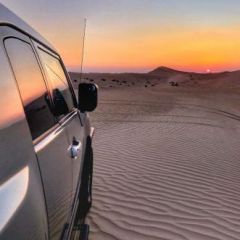
Anish Sookun has been promoted to Advance level
Ale Vallecchi replied to Gaurav's topic in Off-Road Club's Announcements
Bravo @Anish S. Very much deserved, for your skills, your enthusiasm and your being a team player. See you soon out there. -
Ahab Shamaa has been promoted to Intermediate level
Ale Vallecchi replied to Gaurav's topic in Off-Road Club's Announcements
Super!!! Well done @Ahab Shamaa. You are a very deserving guy, and a very valuable member of the Club. Keep on improving. -
Well done @Shehab Alawadhi. Good job!
-
Hello @Abdul Rahman Abdul Kader. You will be the first in line in the WL. Thanks
-
Well done @Paul Zeitoun. You show great control of your beast, which the challenges to come will help you improve further.
-
Dear Desertnauts. Following the hectic race to the dues taking place every Friday, Saturday morning drives always have a relaxing, soothing atmosphere. This time we'll try to take advantage of this more tranquil day to visit a less crowded area, located between Sharjah, Abu Dhabi and Dubai, mostly marked by locals' tracks (especially at the beginning of the drive). The first part of the excursion will be among the copses of Ghaf trees that punctuate the lower, Western reaches, of the Faqa Plateau. I like to call this area "the Arboretum", due to its abundance of the national UAE tree. From here we'll scale the heart of the Faqa dunes, in a South-Easterly direction, with the goal of descending on the other side of the plateau, in another area of wide, long range dunes. After navigating the corridors between these tall, but open cordons, Inshallah we'll turn back toward the west, to cross the last stretches of Faqa's dunes, and reach an area where sabkhas and low, more technical dunes, follow each other all the way to our exit point, on the track to Solar Park. This may end up being a slightly longer Newbie drive, where we'll slow down to take all the time we need to navigate (not attack) the corridors of sand in the middle of which we'll find ourselves, and we'll speed up to cross the flat sabkhas we'll encounter on our way in and out. We'll enjoy the sunrise on the dunes, and will work out our appetite for the well deserved, Saturday lunch that will follow. Looking forward to seeing you on Saturday. Have a great week.
-
untilDrive Details Level: Newbie and Above When: 9 January 2021, Saturday. Meeting time: 6:30 AM (SHARP - Without any exceptions) Action Plan: We will be looking to drive through long range dune, reaching the heart of Faqa's higher cordons, before descending into more long range dunes, on the other side of this "plateau". Driving will focus on navigating the dune corridors, straight crossing them when needed, and practicing side-sloping, where possible. Occasional "technical" areas of closer, lower dunes, may require finesse in driving. Meeting Point: https://maps.google.com/?q=24.727729,55.558290 Type of Car: Any proper 4x4 with front and back tow hooks and 8-10 inches of ground clearance. What to bring along: Loads of water, snacks (for yourself), face mask, rubber gloves, enthusiasm and willingness to learn. Approximate finish time: 11:00 AM THIS IS A COMPRESSOR ONLY DRIVE. WE WILL STARTING AND ENDING THE DRIVE AT THE SAME POINT, WHICH IS NOT CLOSE TO AN AIR LINE. IF YOU DO NOT HAVE A COMPRESSOR, PLEASE DO NOT SIGN UP FOR THIS DRIVE. IF YOU ARRIVE AND HAVE NO COMPRESSOR YOU WILL NOT BE ALLOWED TO JOIN THE DRIVE.
-
This drive is organized in full compliance with the COVID19 guidelines. We expect every member that joins this drive to go through below information and strictly follow these guidelines in order not to jeopardize someone's health, and to ensure we can keep organizing these drives safely. MUST READ AND TOTALLY AGREE: COVID19 Precautions MUST READ AND TOTALLY AGREE: BAN POST Two Way Radio Guidelines Every Off-roader brings his own radio, programmed to the frequencies described in below advice topic. We will not share spare radios or program your radio on the drive. If you need assistance in programming the radio, post a topic on the Carnity website with your questions and we will help you out. Make sure your radio is fully charged. It will be your only way of communication while driving. Before buying, please carefully read below advice so you are informed properly on which model / cost / shops... No radio = No drive. It is an essential tool and you should make sure you bring it on every drive and learn/practice how to use it. Drive Details Level: Newbie and Above When: 9 January 2021, Saturday. Meeting time: 6:30 AM (SHARP - Without any exceptions) Action Plan: We will be looking to drive through long range dune, reaching the heart of Faqa's higher cordons, before descending into more long range dunes, on the other side of this "plateau". Driving will focus on navigating the dune corridors, straight crossing them when needed, and practicing side-sloping, where possible. Occasional "technical" areas of closer, lower dunes, may require finesse in driving. Meeting Point: https://maps.google.com/?q=24.727729,55.558290 Type of Car: Any proper 4x4 with front and back tow hooks and 8-10 inches of ground clearance. What to bring along: Loads of water, snacks (for yourself), face mask, rubber gloves, enthusiasm and willingness to learn. Approximate finish time: 11:00 AM THIS IS A COMPRESSOR ONLY DRIVE. WE WILL STARTING AND ENDING THE DRIVE AT THE SAME POINT, WHICH IS NOT CLOSE TO AN AIR LINE. IF YOU DO NOT HAVE A COMPRESSOR, PLEASE DO NOT SIGN UP FOR THIS DRIVE. IF YOU ARRIVE AND HAVE NO COMPRESSOR YOU WILL NOT BE ALLOWED TO JOIN THE DRIVE. LIMITED SPOTS AVAILABLE: Limited to 12 Newbie and above drivers. RSVP will close on Thursday - 9 AM. If the RSVP is full and you wish to join, please mention your name on the drive thread to add on the waiting list. Latecomers will be returned back - without ANY EXCEPTIONS. Members without RSVP will be returned back - without ANY EXCEPTIONS. Please withdraw your RSVP, if you aren't joining, so your spot can be taken by others. Repeated no-show members after RSVP will have their account suspended for a month. PLEASE RSVP ON THE BELOW CALENDAR
-
LONG TREKS – OBJECTIVES, PREPARATION, AND MANAGEMENT (Part 3...before the actual trip begins) Nobody takes long desert trips looking for gourmet cuisine as part of the experience. Yet, one may occasionally be surprised by the ability of the cook to overcome the shortage of ingredients, and be as creative as possible, with local food and interpretations of more international dishes. The galley is usually stocked on a special “kitchen” car, where only the cook seats, next to his driver. Based on the size of the convoy, sometimes an assistant cook travels with the group. Most of the foods are non-perishable dry or canned items, while fresh vegetables, and sometimes fresh meat, usually last only for the first few days, and can be resupplied only if the trip includes a stop at a local market. As usual, the order of service is breakfast, lunch and dinner, plus at least 1 tea stop along the way. Breakfast is always done with dry cookies, left over from the bread made the evening before, jam and honey, and sometimes with the bonus of a typical Italian cake (Panettone for December trips, and Colomba for Easter time travels). Tea and instant coffee are always available. Lunches allow exclusively for cold dishes, which require minimum preparation, without dismounting the whole kitchen: salads (as long as fresh vegetables last, or as soon as they can be replenished at one of the possible oasis), canned tuna, rice dishes, cheese and fresh or dried fruit (oranges and apples usually last for quite a long time). Possibly even the leftovers from a cous-cous from the previous night. For dinners, the full kitchen set up means warm dishes: after an aperitif (cold cuts, bits of cheeses, some olives and pates), the omni-present soup, key to rehydration after the long warm/hot day, followed by another hot plate, ranging from local cous-cous accompanied by bread cooked under the sand, rice (the cold remains of which, as in the case of the cous-cous, will be served the following lunch), spaghetti, or, less often, some grilled meats (the leaner parts, while the bones and cartilages are used to enrich the soup). Wine, courtesy of the travelers, often is served during dinner, while tea invariably closes it, being served around the fire. There is always one person from the agency's staff who is the official tea maker. He stores the dry tea leaves, and the fresh mint, with great care, stashing them in two separate bags inside his tea pots, usually enamel ones with the colors blackened by the fire's soot. When the evening's tea is prepared by a Tuareg, as it would be in this case, it becomes an unforgettable moment, always to be longed for, during, and especially after the trip. The preparation is a rather complex and long procedure: you need green tea (usually strong Chinese tea), fresh mint leaves in large quantity, and a lot of sugar (approximately five teaspoons of sugar for one teaspoon of tea leaves). You’ll also need two pots. The tea is first put in the teapot and a small quantity of boiling water is added. The tea is left to infuse for a short time (approximately 20-30 seconds), then this initial liquid is poured in another pot, and kept aside. This is the “spirit” of the tea (essentially a strong, deeply flavored liquid from the initial infusion, which adds extra flavor to the final infusion), and will be added back to the final infusion, to restore its “spirit”. The tea leaves are then “cleaned” by adding a small quantity of boiling water, that is poured out after one minute (this lessens the bitterness of the tea). This process may be repeated more than once. Mint and sugar are added to the tea leaves, and water at the boiling point is then poured in the pot, which may then be further heated to increase the flavor of the infusion. After three to five minutes, a glass is served and poured back in the pot two to three times, to mix the tea. A final taste, and addition of more sugar, if needed, will complete the infusion. Now, the tea is poured into glasses from a height, to swirl loose tea leaves to the bottom of the glass, whilst gently aerating the tea to improve its flavor, and, last but not least, to produce a layer of fluffy “foam” on top of the tea itself. A Tuareg’s tea should always be enjoyed 3 times over a period of several minutes (usually while talking around the fire), to fully appreciate all its nuances, due to the evolving concentrations and balance of tea, mint and sugar. For a Tuareg this triple tea tasting is not only the proper way to fully enjoy the beverage, but it also becomes a representation of life. As the saying goes “The first glass is as bitter as death, the second is as strong as life, the last as sweet as love.” And remember… “A tea without foam is like a Tuareg without his turban” (Tuarge’s proverb). Normally, while the kitchen prepares dinner, the weary and dusty travelers set up camp. Tents are supplied by the local agency. It is their task, before every trip, to check and fix all the zippers, clean the tent poles from the sand that will surely have sneaked inside the joints, and repair any breaks in the fabric. Ferrino is usually the go-to brand of tents we use, while I have almost never used those automatic deployment tents. Mattresses are also provided by the agency, which occasionally also brings a fabric enclosure used to protect the kitchen and eating areas from the wind. Everything else is care of the traveler. In order of importance: the sleeping bag (in winter time, at least good to give comfort at -5 degrees), a canteen, toilet paper, a head lamp (with batteries), wet towels, duct tape (great to repair any kind of tears in your equipment), a small spray bottle for washing/showering, a towel, a folding knife, eating utensils, and any medicines necessary to the individual (always best to have something against stomach ailments, including laxatives, eye drops, disinfectant, band-aids and gauze, antibiotic cream, and for those who suffer from it, never leave home without Preparation H….). Now that we have taken care of the cars, water, fuel, food, tea and gear, we are really ready to leave Agadez, and venture in one of the largest, most desolate, diverse and sparsely inhabited deserts in the world: The Ténéré.
-
@Mohamed Seidam it's our duty to make our dreams come true. Great writing!!!
-
Introduce yourself !
Ale Vallecchi replied to Frederic's topic in Carnity Photography Club's Discussions
Thanks @Frederic. I will look into that 😅 -
Introduce yourself !
Ale Vallecchi replied to Frederic's topic in Carnity Photography Club's Discussions
Thanks @Frederic for the great new club. As far as introductions go, alongside my previous activity (more a hobby) as adventure tour guide (see other threads), I enjoyed photographing the extreme places I had the fortune of visiting. Since we are speaking of a different era (it truly is, in terms of technological advancements), those photos were taken with a series of reflex machines: first Minolta, then Canon, and finally the gem of the times (talking about the middle 1990's), a professional Nikon F5 and a Nikon F100, with Nikkor lenses. I guess my approach in photography has been as the one I had with off-roading: first learn how to "drive", then upgrade to a better car. So I first taught myself the skills and tricks of photography using a basic camera, then slowly moved up to more sophisticated machines, which just allowed me to capture a few more things (quicker focus, more range of exposing options in manual, longer and/or wider lenses), but didn't add much to my abilities to choose subjects, frames, lights, etc.. I used to travel with the 2 camera bodies on me at all times, each mounting a different lens (a wide angle zoom with 17-24 mm opening, and a telephoto 70-300mm zoom). This made me always ready to "draw", and gave me many more opportunities to shoot different subjects and situations. Hard to believe nowadays, those cameras used real film rolls. I used to favor Fuji Velvia 50, for its vivid greens and blues, and Ektakchrome E100 for its warm reds and oranges. I would normally leave for a trip with between 50 and 100 rolls, and ended up taking an average of around 2,000 shots each trip. One reason for this enormous number of pics was that I liked to use underexposure and overexposure with most shots, to ensure a variety of color hues with the same pic, from which to chose my favorite). Also, the risk of not getting the right photo was quite high (no live viewing of the pic), hence more shots were taken of the same subject, just in case. I used to work a lot in manual, and sometimes with A priority (less times with S priority). Each photo was the result of a thought process, which forced me to think about a lot of variables, before and while shooting, that made each chosen photo (not more than 100 each trip) extremely satisfying. Then, digital photography appeared. Slowly but surely, great film types and brands went out of production, reflex cameras were virtually terminated, photos started to be viewed on a PC rather than with a projector (you wouldn't believe the difference if you haven't seen it), immediate reviewing became available, automatism started to kick in, and photography lost all its poetic meaning, for my. At least, it became a much colder, mechanical means of expression, in my opinion. So, here I am, an old-timer in the world of today's quick and cheap photos. I have tried using digital cameras, only to be displeased by the lack of detail, warmth and finesse that old slide mounted pics possessed. I have used all the ready-made tricks the new camera's menus have to offer, but they all have given an artificial feeling to my photos. So I am doing what most of us do today: I use my cell phone (and indeed some take great quality pictures), while trying to apply the old tricks, learned in a foregone analog world, in terms of how to "cut" a photo, angles, choice of subjects, and all that went into the preparation of a nice, well constructed shot. This has still allowed me to take some nice photos of our deserts, during our drives, which I will be very happy to share with you on this thread. And thanks again to Fred for coming up with this idea, which will has surely revived my desire to take pics.- 83 replies
-
- 11
-

-

-

-

-
Veedooshee has been promoted to Intermediate level
Ale Vallecchi replied to Gaurav's topic in Off-Road Club's Announcements
@Veedooshee GREAT news !! Can't wait to have a drive with you. -
How can you see yourself as a "most boring guy" with your drives, is beyond my belief..... @Rahimdad you are the reason why many of us are with Carnity, and you are at the beating heart of this great community. Magic guy is a more apt description. Looking forward to our next drive together (it has been a while).
-
Sand to Mountains, RAK Exploration Drive - Report: The more the merrier Dear Desertnauts What a pleasant way to spend a Saturday morning. With so many of you!! Rarely I have seen such an enthusiastic response. Thanks to all of you for the trust, and active participation. This was veritably a case of "the more the merrier". This is not always true in off-roading, as bigger/longer convoys often lead to headaches. But last Saturday, thanks to Legend @Gaurav's availability to lead half of the group, to the nature of the terrain, as well as (and in no small part) to the consistent ability of all drivers, we managed 26 cars, with no major stucks, through a very long drive, in sometimes uncharted terrain. The drive started with a very timely meeting (not gathering 😅), in the tight spot where the dirt track leading into the desert leaves the tarmac road to the Ritz-Carlton Resort. We managed to separate the two groups, each on one side of the road, and to conduct a briefing in the chilly open air, before a rather early departure. As mentioned in the pre-drive briefing, this is an area where locals operate mostly camel, goat and sometimes vegetable farming, with a great number of tracks which lead over and around dunes. The open terrain is not easy to navigate off-track, due to the large amount of vegetation (you never know if there are trees or bushes on the other side of a dune, and when one finds out it may be too late to redirect), as well as a lot of pockets, double ridges, and other features created by the proximity of the dunes to each other. In fact, I had to exit the car twice, as I was uncertain about what laid ahead, to find the right path for the convoy, away from tight pockets full of soft sand, or bushes. Besides the intricacy of the paths we followed, the beauty of this area is given by its most prominent feature: the Longitudinal (or Seif) dunes. As explained in @Frederic's essay on dunes (available among this site's threads). these run alongside the direction of prevailing winds, and both sides (especially closest to the ridge, which tends to be less sharp, as smoothed by the wind) have quite soft sand. We enjoyed the beautiful landscapes' panoramas, from the top of some of the higher dunes, looking down onto the waves of these Longitudinal dunes, separated by sabkhas, the larger ones looking like dark lakes, with lone Acacia trees dotting them, like small green islands. Once we managed to reach the largest two sabkhas, surrounded by lower, still baby Saif dunes, we could not resist riding on top of their humpback, wider ridges. Hence the snaking around up the very ling length of these dunes, which most managed to ride all the way, while a occasionally exiting safely down the low slope onto the safe, hard plain (most of the early exits due to the sand getting softer, and looser, on top, or to some breaks in the ridge that invited more caution). Great job by all the Newbies, @frederic demolder, @Mike Kraher, @Baskaran P.R, @Alphin Aloor, @Arman, @Shehab Alawadhi, @Paul Zeitoun, in practicing a skill - ridge riding - which is more of a Fewbie level trick. Yet, the environment felt safe, so we pushed the drive a little bit toward the end, to add an extra layer to this great off-roading day. Once reached the exit point, on the outskirts of Al Ghail Industrial Area (after driving 53 Kms, in 3:15 hours), with Gaurav we decided to pull an ace from our sleeves, and attempt a "recce" drive in the last area of dunes before sand turns into rocks, and meets the Ajari Mountains. Hence, with the group's Fewbies, @Ahab Shamaa, @Niki Patel, @Federico De Chirico, @Federico Galbieri, @MUHAMMAD Kashif RAZZAQ. @Mahmoud Hamzawy and @DANIEL NOGUEIRA, we remain deflated, exited the industrial area on the main tarmac road, crossed it, and re-entered the sand in the direction of Al Ghail village proper. This is a small plateau of sand, with a variety of dunes, all very young and shifty (moved around and re-arranged by the wind), mostly of soft golden yellow sand, which first cascade onto a smaller, lower plateau, then eventually drop onto a gravel path, where the sand abruptly ends, and the black mountain rock begins to rise on the other side. This makes for a short, but exiting drive, with possibility of ridge riding, some criss-crossing, and, the final bonus, a straight climb, or sharp side sloping, on the wall of a very tall slip-face (where the plateau takes its first step down). Stunning views of the mountains accompany the ride, with a glorious mix of yellow, black and blue colors. After the bonus "recce", we reached our drive, which totaled 67 Kms, in 4:31 hours (3:12 moving), at an average speed of 15 Km/h (21 Km/h while moving). Thanks again to all the members who joined and have already written very good reviews of the drive: well done @Santhosh kumar Rajasekaran, @Bala Krishnan, @Ben84, @varunmehndiratta, @AlexPol, @Hisham Masaad and @Harold Roberts. One final special thanks goes to the 2 support drivers in my convoy: well done to @paolo dassi as a sure-wheeled Center Forward, and @Luca Palanca Falsini as a vigilant Sweep. See you again on the sand, as soon as my FJ will be returned to me.
- 86 replies
-
- 13
-
-
-
-
-
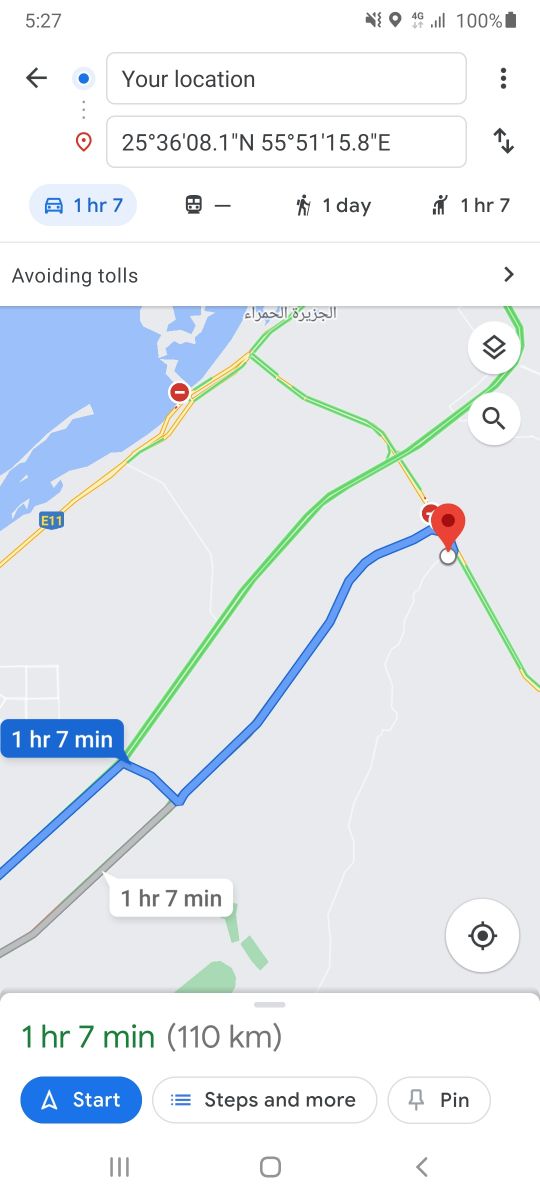
Hi @Santhosh kumar Rajasekaran. OK will do that. Thanks a lot and see you tomorrow. ATTENTION It seems there may be road works around Sheikh Khalifa Hospital. Google maps is giving an itinerary to reach the meeting point with a turn off toward E611. PLEASE FOLLOW GOOGLE MAPS. For any need my number is 0522163122. It's also my WhatsApp contact. Thanks.
-
Hi @Santhosh kumar Rajasekaran. OK will do that. Thanks a lot and see you tomorrow.
-
Hello @Mahmoud Hamzawy. You are in tomorrow's drive. Please acknowledge. You'll be joining @Gaurav's convoy. Thanks.
-
Dear Desertnauts. Time to get ready for tomorrow's Boxing Day drive in RAK. First, as this is the first Newbie driver we take in this area, let's consider it an "exploration" drive: this means that there is the chance that we'd have to stop occasionally to check the track ahead, or re-direct to find a cleaner path. The Second Lead's job will be to follow instructions very carefully, and for the convoys to exercise some patients whenever the situations above may arise. Secondly. due to the nature of the terrain, very much rich in vegetation, with a lot of human activities by locals, and therefore with a variety of tracks that mark the area, we'll mainly follow the tracks, with some occasional venturing in untracked areas. This will not make the drive any easier: there will be dunes to cross (especially toward the drive), up and downhills to manage, and finesse driving to avoid bushes, pockets and bumps. Keep in mind that most of the driving in the world's deserts is done on sand tracks, so this won't be any less adventurous. It will give us the opportunity to enjoy the environment, the occasional animals and farms we'll pass, the stunning sabkhas will drive on, and the beautiful longitudinal dunes we'll cross. As you know, we'll drive in 2 separate convoys. They will both enter and exit in the same two places, and may drive in the proximity of each other, but will nonetheless be led separately. The other convoy (we never have # 1 and # 2) will be led by Carnity's legend @Gaurav. As the original meeting place is the only one both convoys will have to use please follow carefully the instructions below, as far as reaching it, and keeping with the right convoy (mine or Gaurav's). Please, use E311 to reach the meeting point; Pay attention to possible detours that have been operated near Sheikh Khalifa Specialty Hospital Stay on Al Shohabadaa Road, and look for signs to The Ritz Carlton Desert Resort: follow these Once you'll reach the meeting point - a left-side turn off from the tarmac road leading to the Ritz-Carlton, onto a gravel track: MY CONVOY, LINE UP ON THE LEFT SIDE OF THE ROAD (you can enter the gravel area with the first cars that will reach the location, behind me) GAURAV'S CONVOY, LINE UP ON THE RIGHT SIDE OF THE ROAD. Please keep the road clear in the middle, so that local's trucks may pass. The following will be the group's breakdown, and convoy order: ALE'S CONVOY: @Federico Galbieri as Second Lead @frederic demolder at #3 @Mike Kraher in place #4 @Baskaran P.R at #5 @Federico De Chirico will be #6 @Alphin Aloor is #7 @paolo dassi will anchor the convoy at #8 @Saneesh Thomas is #9 @Bala Krishnan at #10 @Arman will be #11 @Shehab Alawadhi at #12 @Paul Zeitoun will be in place #13, and @Luca Palanca Falsini will Sweep the convoy GAURAV'S CONVOY: @Niki Patel will be Second Lead @Santhosh kumar Rajasekaran at #3 @Ben84 will be #4 @varunmehndiratta is #5 @MUHAMMAD Kashif RAZZAQ will take #6 @AlexPol in #7 @Hisham Masaad at #8 @Harold Roberts will take #9 @DANIEL NOGUEIRA is #10, and @Ahab Shamaa will close in the Sweep's position Please, make sure to reach the meeting point on time, and separate from the other convoy, as instructed above. MERRY CHRISTMAS TO YOU ALL. See you tomorrow.
- 86 replies
-
- 10
-
-
-
-
Hi @DANIEL NOGUEIRA. Copy that See you tomorrow.
-
Hi @Mahmoud Hamzawy. Nothing so far, but I will keep you posted. Thanks.
-
Dear @Mahmoud Hamzawy, I will place you at #1 on the WL. At the moment the convoys are stretched as much as they can be, considering the new area and needs for safety, but if someone drops out you'll be in. Thanks a lot. Dear @Abdul Rahman Abdul Kader you are #2 on the WL. Thanks for asking.
-
Thanks for the video @Mohamed Seidam. Just wandering if, in the time it took to tie the rope around the tire and secure it to the car, some good old shoveling would have also done the trick. After all it was a short wheel base car, and on the first stuck, with a front-heavy position, digging a V under the front may have freed the chassis enough for the car to self recover, just as quickly. Then, of course, each driver grows up in different off-roading cultures, and I've found that what is drilled into you is what you end up resorting to, all the time. I have driven once with an acquaintance who had been taught in his club to winch cars out, and who had never used a kinetick tow rope!! Yet winching suited him just fine. So, while I may prefer shovelling (always my first resort) it's good to see these videos, from different off-roaders, to learn thinking outside our box, and learn new tricks. Now, I would still prefer shovelling, but will keep this in mind, in the need arises. Thanks!!
- 7 replies
-
- 4
-
-
-
- solutions
- people of the desert
- (and 3 more)
-
Luca Bregni has been promoted to fewbie level
Ale Vallecchi replied to Gaurav's topic in Off-Road Club's Announcements
Complimenti @Luca Bregni!! -
Bravo Fede!!