
Leaderboard

Popular Content
Showing content with the highest reputation on 08/10/2020 in Advices
-
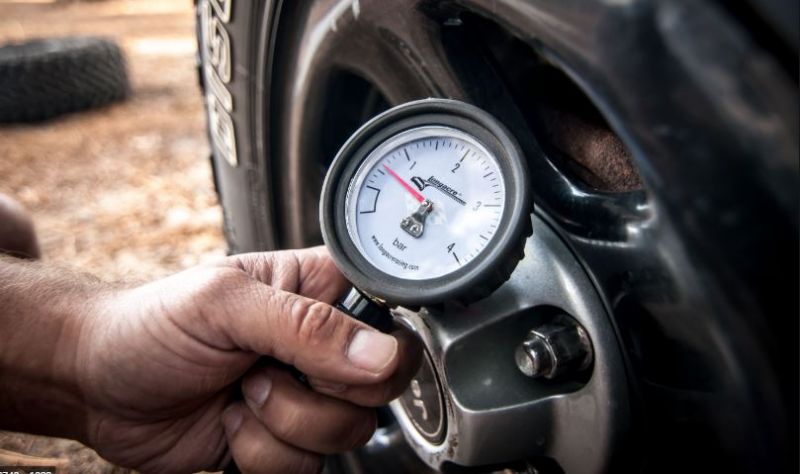 When starting as an off-roading enthusiast in UAE, you will come to hear about deflating your tyres, and setting your tyres to the right tyre pressure is one of the first things you will need to learn to master. The main reason for deflating your tyres is to obtain a longer footprint in the sand, and that enables you to drive on the sand, instead of digging into it. Tyre pressure is defined in PSI (pounds per square inch) or Bar. You will find both readings on your pressure gauge. In UAE most people use PSI, and the gas station compressors also use the PSI identification. Below you can see the corresponding PSI and Bar readings. As a beginner level offroader, you should reduce your tyre pressure to about 15 PSI. This is low enough to enable you to drive in the dunes without the risk of the tyre coming off the rim. This 15PSI is also perfect for on-road-tyres. After a few drives, and depending on the terrain, or if you have offroad tyres, you can slowly deflate further down to 10-12 PSI. Take note that the risk for having a pop-out will increase, so don't be afraid to post your questions on the Carnity website or consult one of the marshals if you are not sure about your tyre pressure. There are different ways of deflating your tyres, and each have their advantages and disadvantages. The more you will practice, the sooner you will find out what works best for you. How does a stem valve looks like ? The stem valve is consisting out of 3 pieces. The body, that is made of flexible rubber, the core, and the valve cap. Take note of the following: - The rubber valve body wears out over time. Once you start to see cracks, it is advisable to get it replaced at the nearest tyre center. - The valve core is a tiny component with a small rubber gasket. If you remove them on a weekly basis, the gasket slowly wears out or the core can even break. Carry 5-10 spares in your vehicle. The tyre center often give them for free. - The valve cap keeps dirt and sand from entering into the valve, so it's advisable to always screw the cap back on. The process of deflating / inflating goes by either pushing in the valve core, which allows air to be released, or by removing the valve core, which is a much faster option. How to check the tyre pressure ? Verifying your tyre pressure is really easy. Get yourself a pressure gauge, and push it against the tyre valve, or screw it on (depending on the model). You will see the reading in PSI or Bar. The digital ones are fine, but one day the battery will be empty, so a good old analogue is preferred to have as well. PS if you find that your gauge has difficulties reading the tyre pressure, and you really need to push it hard onto the valve, this is an indication that the valve core is worn out. Replace it with a new one and you will see that this will solve your problem. Which tools to deflate and how much time will it take ? 1) Set of keys, a rock, or anything you might find in your car (+/- 15 mins) PROS: CHEAP and plenty of stuff available CONS: Takes a very long time which you could use for a smoke or a chat and risk on damaging the valve stems. 2) Valve Chucks (4-5 minutes) Buy 4 of them and stick them on all tyres simultaneously and then wait about a few minutes (as per your type and size of tyre) to arrive at around 17-18 psi. Then take one tyre at a time and use your pressure gauge to further decrease and finetune the pressure of each individual tyre. PROS: Fast and Cheap CONS: none that i know off. 3) Stem removal tool (2-3 minutes) Available in most hardware shops. Enables you to remove the valve core stem so the tyre pressure comes down very fast. PROS: Very Fast and Cheap CONS: Be careful not to lose the stem as it can blow out. So taking some spare is advisable. Be careful not to deflate too much as it really goes fast. Use a stopwatch and learn to find the perfect timing when to screw it back in, and then double check with a pressure gauge. 4) Rapid Tyre deflator and pressure gauge ( 4-5 mins) This tool enables you to loosen the stem, quickly deflate and immediately take a pressure reading. PROS: Professional tool for reasonable price, pressure gauge and deflator in one tool. CONS: Might take a bit of practice to get the hang of it. The fake chinese ones are fairly unreliable. As with all tools and gear, we advise you to practice a bit at home to become familiar with them before your desert driving. It is also recommended to carry two pressure gauges, so you can compare them with each-other and double check your readings. Often we have seen pressure gauges giving accurate readings at high pressures (35) but very inaccurate results at 10-15 PSI.8 points
 -
This tutorial will describe the safest techniques to recover a vehicle from the desert. We will try to cover all scenarios and focus on the safety aspect. Although many offroaders have already learned the art of off-roading in the UAE desert, performing recoveries is a skill in itself and needs practice and clear understanding and respect of the dangers involved for the person recovering, the person being recovered, and bystanders. This is a skill that will require practice, and the more recoveries you do from different situations, the more experienced you will become. Whenever you have ANY doubt in during a recovery, you should assess the situation with other senior members and make the decision together. 2-3 people will most likely have a better total overview and will result in a safer recovery attempt. Team work is essential in this sport and all the more during recoveries. 4x4 Recovery Tools D-Shackle or Bow Shackle The D-shackle, also called a bow shackle, is the tool that you will use to connect your recovery rope to the tow-hook of the vehicle (both sides). Since the uprising of soft shackles, and the incidents that happened with poor quality D-shackles, most Off-roaders have now shifted to using soft shackles. A good quality, rated D-shackle can still be useful in some scenarios, and they are safe if the recovery is being done properly, but the risk of this projectile flying through the windshield and potentially killing people has made this shackle a tool only to be used by people who have 100% skill level and know what they are doing. Soft Shackles Soft shackles were first used in the marine/sailing world and have recently become very popular as the perfect shackle to use for off-road recoveries. They are easy to use, and in case they break they will not become a deadly projectile. They are more expensive than metal D-shackles but will last quite long and there is no compromise when it comes to safety. The shackle is made of UHMWPE, also known as Ultra High Molecular Weight Polyethylene, or Dyneema. This synthetic yarn is 10 times stronger than steel. Kinetic Recovery rope or Snatch Strap. A kinetic recovery rope is made of Nylon. The most useful characteristics of this rope is that it stretches about +/- 20% during a pull. This means the “tug” or “jerk” effect of the recovery will be dampened, resulting in less strain on the vehicle’s tow-points. The downside is that because of this characteristic, people sometimes have the tendency to start pulling much harder, which can result in breaking the vehicle’s tow-points or chassis. The recoil effect of this rope creates a massive force and that is why during a recovery we clearly instruct to not exceed 15km/h during recoveries, and to gradually build up the strength of the pull in 2-3 attempts. Do not use this rope for towing a vehicle. Due to the stretch effect it will be difficult to control the towing process, and furthermore you will damage the rope as it needs to recoil and settle after a recovery. When choosing a kinetic recovery rope, you should select a rope that has a breaking strength of 2-3 times the weight of the vehicle you will recover. For example; if you recover a Nissan Xterra which weighs 2 ton, the breaking strength of the rope should be at least 6 tons. Most recovery ropes have 10-15 Tons breaking strength. The reason for this is that the forces involved when a vehicle is completely stuck in the sand are far higher. Our club uses both the Viking Kinetic rope as well as the AOR Kinetic recovery rope with excellent results. The Viking rope costs about 350AED with a bag and 2 soft shackles included, while the AOR kinetic rope costs about 370AED without soft shackles. (AOR soft shackle cost 155 AED per piece). This rope is not the same as a Polyester Webbing sling that you will find in most hardware shops ! Kinetic recovery ropes will cost you about 350-400 AED. A Polyester webbing sling is far cheaper but does not stretch. Performing a Recovery When doing a recovery there will be tasks involved for both the person doing the recovery, and the person being recovered. It is essential that there is a clear communication established over the radio or verbally to make sure the recovery is being done professionally and safely. Bystanders should remain at a distance radius of at least 10m during the recovery process ! Scenario 1: A vehicle is crested Getting crested is an event that happens regularly during off-roading, and by following below steps you can recover a vehicle safely. The individual tasks for each person are mentioned below: # PERSON PERFORMING THE RECOVERY PERSON BEING RECOVERED 1 Will first inspect if the vehicle is front-heavy, back-heavy, and if the car can be maybe recovered without ropes. In many cases it is sufficient to clear the sand from the wheels, from underneath the body of the car, and try the self-recovery method and engage diff-locks. can help with clearing the sand from the wheels 2 When recovery with a rope is deemed necessary, he will attach the rope to a secure “recovery point” of the car. The recovery point needs to be strong enough and in perfect condition. He will not perform recoveries on worn out or heavily rusted towpoints. You need to keep approximately 2m free-play in the rope, so you have space to ramp up the vehicle before the pull starts. 3 Will step inside his car, put on his seatbelts, engage 4LO and put his car in First Gear forward or Reverse depending on the direction he will be recovered. He then announces on the radio that he is belted up, car is running in low gear, and he is ready for the recovery attempt. 4 Get inside his vehicle, engages 4LO, puts on the seatbelt, and asks the person being recovered if he is ready for the recovery attempt. Acknowledges the message and confirms he is ready for the pull. 5 Will drive a little bit forwards and backwards to create a firm track if needed, then starts off with a gentle pull. This is to test the waters and in some cases the vehicle will already come out. 6 If second attempt is needed, he will announce on the radio that he will try again. Acknowledges the message and confirms he is ready for the second pull. 7 Performs second attempt which is slightly more aggressive 8 The car comes out and is bring brought to flat ground where the rope can be safely removed. Follows the recovery vehicle to flat ground Scenario 2: a vehicle is bogged down When a vehicle is bogged down or in a ditch, and needs recovery with a rope, the same scenario as scenario #1 will be applied. You should always clear the wheels and shovel as much as you can to ease the recovery. It is also very important to properly position the vehicle to avoid sharp angles. Again, the rope should have at least 2m free play before starting the recovery. Make sure you position your rope in a zig-zag shape and verify it is not in a knot. Creating a knot in a kinetic rope will damage it beyond repair ! Scenario 3: a vehicle needs to be pulled upwards In the case that a vehicle needs to be pulled upwards, you need to be aware that the force that you will need to apply will be far higher. Some examples: - Towing a 2 Ton vehicle on the road results in a 100kg pull resistance. - Recovering a wheel-bogged down 2 Ton vehicle on flat sand results in 2000kg of pull resistance. - Pulling a chassid-bogged down 2 Ton vehicle on an upward slope of 15° results in 3500kg of pull resistance. (as photo below). This is the main reason why it is so important to clear the wheels from sand and shovel out the body of the vehicle as much as possible to reduce the resistance. Be aware that when pulling a vehicle upwards on a steep angle might damage the front bumper on the vehicle that is being recovered. Especially on slopes of 10° and more, the rope can hit the front bumper. Additional safety measures Safety Strap At a more advanced level of off-roading, safety strap is a very helpful tool to secure the rope or d-shackle during extreme recoveries. In that case it will avoid from becoming a projectile. Tow Point Essentials Most 4x4 vehicles are equipped with proper tow hooks which are welded to the chassis. In more modern SUV's which are less meant for heavy duty use, you will sometimes find a screw-in type of tow hook. These are generally ok for occasional use but for weekly recoveries they will not do as the threading will wear out and eventually they will fly out. Every Offroader should make sure he has proper recovery points on the front and back and that they are in perfect condition. During more extreme recoveries there are additional techniques we apply to distribute the load, such as a bridle rope. This rope basically distributes the load between both towpoints. In which direction should i put my vehicle when i recover someone ? This will depend on a case to case basis: When during the recovery you want to have FULL visual of the car that you are recovering, it will make more sense to attach your rope to your front recovery towpoints. In the case the recovery needs a bit more force, and you have a towbar or stronger recovery points at the back, then it makes more sense to attach your rope to the rear towpoints or tow bar. In the case that you really want to see where your own car is going (in difficult terrain with bushes for example), it will also make sense to perform the recovery by attaching the rope to the back of the car. Can i attach my shackle or rope to a tow ball receiver ? Tow balls are NEVER to be used for recovery purposes. There have been many incidents where the tow ball has come off and became a deadly projectile. DO NOT ever recover a vehicle by connecting to the tow ball !!!1 point
This leaderboard is set to Dubai/GMT+04:00