
Leaderboard

Popular Content
Showing content with the highest reputation since 10/07/2025 in Advices
-
.jpeg.59d634ef9b62cd2270f16323b00a2d97.jpeg) Joining an off-road club for the first time can be both exciting and a little nerve-wracking. You might have plenty of questions about your vehicle, equipment, what to expect, and how your first drive will work. This guide takes you through the process step by step, so you can arrive at your first Carnity drive prepared, comfortable, and ready to enjoy the experience. Before joining your first drive, we expect all new members to read through this guide and complete the steps below. 1. Subscribe to Carnity Off-Road Club Joining Carnity Off-Road Club requires a monthly or yearly subscription, completed securely online. Choose the subscription that works best for you: View Carnity Subscriptions If you're joining for the first time: Select New Member. Create your Carnity login profile. Choose your subscription. Complete the online payment. Once your payment is completed, you'll receive an email containing your Off-Road Joining Instructions. This onboarding email contains important information to help you prepare for your first drive, so please take the time to read it carefully. Join the Off-Road Club After creating your account, make sure you also join the Carnity Off-Road Club. Important: Click JOIN CLUB in the upper-right corner of the club page. 2. Complete the Must-Reads Before your first drive, please familiarize yourself with Carnity's essential safety, driving, and club guidelines. MUST READS Environmental Policy Offroad Flag Guideline Two-Way Radio Guideline Off-Road Driving Etiquette Emergency Details for All Off-Roaders Off-Road Driving — Roles & Responsibilities Off-Road Club Grading Structure V3.0 Team Carnity Grading Structure V1.0 These guidelines help keep our drives safe, organized, respectful, and enjoyable for everyone. 3. RSVP for Your First Newbie Drive When you're ready, RSVP for a Newbie Level Drive. After RSVPing, introduce yourself in the drive topic and provide the following information: Your 4x4 make, model, and year Your current off-road experience, if any Confirmation that your 4x4 has front and rear recovery points Confirmation that you have the required Newbie off-road gear Required Newbie Gear Programmable two-way radio Safety flag Tire pressure gauge Tire deflator Air compressor Shovel 4. Watch the Newbie Drive Briefing Before attending your first drive, please watch our Carnity Newbie Drive Briefing. Carnity Newbie Drive Briefing This briefing will help you understand what to expect and how to prepare for your first experience with the club. 5. Get Notified About New Drives Join our WhatsApp group to receive weekly event notifications: Join the Carnity WhatsApp Group New drives are generally: Announced: Monday around 11:00 AM RSVP opens: Monday at 7:00 PM Frequently Asked Questions Is my car suitable for off-roading? We recommend using a proper 4x4 vehicle with: At least 8–9 inches of ground clearance Front and rear tow/recovery points — factory recovery points are fine A low-range transfer case (4L) For EV and PHEV vehicles, low-range gearing may be limited or unavailable. If you're unsure whether your vehicle is suitable, please contact us before purchasing a subscription. Do I need to modify my vehicle? Not at all. We strongly recommend driving your vehicle in stock condition first so you can understand its capabilities before deciding whether modifications are necessary. After completing a few drives, you'll have a much better understanding of what your particular vehicle may—or may not—need. Common desert-driving upgrades can include: All-terrain (AT) tires Bash/skid plates to protect the radiator and bumpers Bumper trimming to improve approach and departure angles Lift kits Every vehicle is different, and modifications aren't automatically necessary. Unlike many off-road clubs supported by garages, Carnity does not sell or promote vehicle modifications. We encourage members to learn what works for their vehicle and use our community discussions to make informed decisions. What do I need for my first drive? You'll need: A valid UAE driving license A basic understanding of your vehicle's 4x4 settings Minimum Required Equipment Tire pressure gauge — example Tire deflator — example Air compressor — example UHF two-way radio — Baofeng UV5R, UV5RH, Crony MT777, or equivalent Safety flag — bracket or suction-cup mounted Shovel — example First-aid kit — this should be standard equipment in every vehicle Fire extinguisher — this should also be standard equipment in every vehicle Two-way radios and other equipment can also be found at Dragon Mart 1. For convenience, we've put together a starter equipment list: View the Carnity Starter Kit Can I bring family or friends? Absolutely. You're welcome to bring friends and family members as passengers without any additional charges or subscriptions. For your very first drive, however, we recommend driving alone where possible. This helps minimize distractions and allows you to concentrate fully on your vehicle, the convoy, and the instructions from the drive team. Can I pay cash at the drive location? No. For safety and organization, all drives must be booked in advance. Your subscription and RSVP confirmation therefore need to be completed online before the drive. We only accept secure online payments through the Carnity website. Can I try before committing? Absolutely. You have 30 days to try Carnity. If you're not satisfied for any reason, simply submit a refund request. No explanation is required. Visit the Contact Us page and let us know you'd like a refund. Refund requests are processed on the same day and are typically credited back to your card within 3 working days. Can I transfer my previous off-road experience? Yes. If you already have desert-driving experience, you may be eligible for fast-track promotion to Fewbie Level after completing one Newbie drive. Our marshals will assess your driving during your first Newbie drive, taking into consideration both your self-declared previous experience and your demonstrated driving skills. The final level assessment will be made by the Carnity team. REQUEST YOUR PROMOTION HERE Ready for Your First Carnity Drive? Follow the steps above, prepare your 4x4 and required equipment, complete the Newbie briefing, and RSVP for your first drive. Welcome to Carnity. Drive safe, keep learning, and enjoy the adventure. If you need further assistance, send us a message at CONTACT3 points
Joining an off-road club for the first time can be both exciting and a little nerve-wracking. You might have plenty of questions about your vehicle, equipment, what to expect, and how your first drive will work. This guide takes you through the process step by step, so you can arrive at your first Carnity drive prepared, comfortable, and ready to enjoy the experience. Before joining your first drive, we expect all new members to read through this guide and complete the steps below. 1. Subscribe to Carnity Off-Road Club Joining Carnity Off-Road Club requires a monthly or yearly subscription, completed securely online. Choose the subscription that works best for you: View Carnity Subscriptions If you're joining for the first time: Select New Member. Create your Carnity login profile. Choose your subscription. Complete the online payment. Once your payment is completed, you'll receive an email containing your Off-Road Joining Instructions. This onboarding email contains important information to help you prepare for your first drive, so please take the time to read it carefully. Join the Off-Road Club After creating your account, make sure you also join the Carnity Off-Road Club. Important: Click JOIN CLUB in the upper-right corner of the club page. 2. Complete the Must-Reads Before your first drive, please familiarize yourself with Carnity's essential safety, driving, and club guidelines. MUST READS Environmental Policy Offroad Flag Guideline Two-Way Radio Guideline Off-Road Driving Etiquette Emergency Details for All Off-Roaders Off-Road Driving — Roles & Responsibilities Off-Road Club Grading Structure V3.0 Team Carnity Grading Structure V1.0 These guidelines help keep our drives safe, organized, respectful, and enjoyable for everyone. 3. RSVP for Your First Newbie Drive When you're ready, RSVP for a Newbie Level Drive. After RSVPing, introduce yourself in the drive topic and provide the following information: Your 4x4 make, model, and year Your current off-road experience, if any Confirmation that your 4x4 has front and rear recovery points Confirmation that you have the required Newbie off-road gear Required Newbie Gear Programmable two-way radio Safety flag Tire pressure gauge Tire deflator Air compressor Shovel 4. Watch the Newbie Drive Briefing Before attending your first drive, please watch our Carnity Newbie Drive Briefing. Carnity Newbie Drive Briefing This briefing will help you understand what to expect and how to prepare for your first experience with the club. 5. Get Notified About New Drives Join our WhatsApp group to receive weekly event notifications: Join the Carnity WhatsApp Group New drives are generally: Announced: Monday around 11:00 AM RSVP opens: Monday at 7:00 PM Frequently Asked Questions Is my car suitable for off-roading? We recommend using a proper 4x4 vehicle with: At least 8–9 inches of ground clearance Front and rear tow/recovery points — factory recovery points are fine A low-range transfer case (4L) For EV and PHEV vehicles, low-range gearing may be limited or unavailable. If you're unsure whether your vehicle is suitable, please contact us before purchasing a subscription. Do I need to modify my vehicle? Not at all. We strongly recommend driving your vehicle in stock condition first so you can understand its capabilities before deciding whether modifications are necessary. After completing a few drives, you'll have a much better understanding of what your particular vehicle may—or may not—need. Common desert-driving upgrades can include: All-terrain (AT) tires Bash/skid plates to protect the radiator and bumpers Bumper trimming to improve approach and departure angles Lift kits Every vehicle is different, and modifications aren't automatically necessary. Unlike many off-road clubs supported by garages, Carnity does not sell or promote vehicle modifications. We encourage members to learn what works for their vehicle and use our community discussions to make informed decisions. What do I need for my first drive? You'll need: A valid UAE driving license A basic understanding of your vehicle's 4x4 settings Minimum Required Equipment Tire pressure gauge — example Tire deflator — example Air compressor — example UHF two-way radio — Baofeng UV5R, UV5RH, Crony MT777, or equivalent Safety flag — bracket or suction-cup mounted Shovel — example First-aid kit — this should be standard equipment in every vehicle Fire extinguisher — this should also be standard equipment in every vehicle Two-way radios and other equipment can also be found at Dragon Mart 1. For convenience, we've put together a starter equipment list: View the Carnity Starter Kit Can I bring family or friends? Absolutely. You're welcome to bring friends and family members as passengers without any additional charges or subscriptions. For your very first drive, however, we recommend driving alone where possible. This helps minimize distractions and allows you to concentrate fully on your vehicle, the convoy, and the instructions from the drive team. Can I pay cash at the drive location? No. For safety and organization, all drives must be booked in advance. Your subscription and RSVP confirmation therefore need to be completed online before the drive. We only accept secure online payments through the Carnity website. Can I try before committing? Absolutely. You have 30 days to try Carnity. If you're not satisfied for any reason, simply submit a refund request. No explanation is required. Visit the Contact Us page and let us know you'd like a refund. Refund requests are processed on the same day and are typically credited back to your card within 3 working days. Can I transfer my previous off-road experience? Yes. If you already have desert-driving experience, you may be eligible for fast-track promotion to Fewbie Level after completing one Newbie drive. Our marshals will assess your driving during your first Newbie drive, taking into consideration both your self-declared previous experience and your demonstrated driving skills. The final level assessment will be made by the Carnity team. REQUEST YOUR PROMOTION HERE Ready for Your First Carnity Drive? Follow the steps above, prepare your 4x4 and required equipment, complete the Newbie briefing, and RSVP for your first drive. Welcome to Carnity. Drive safe, keep learning, and enjoy the adventure. If you need further assistance, send us a message at CONTACT3 points -
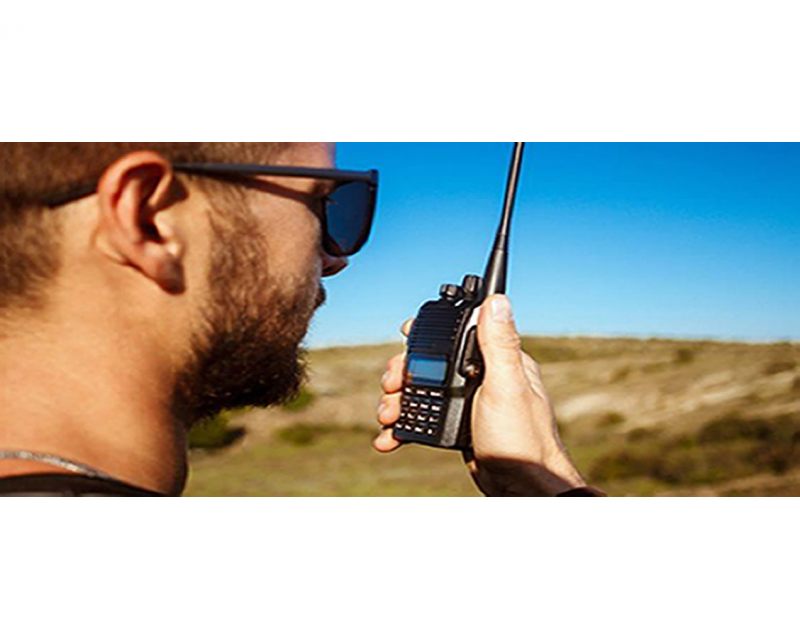 Two-Way Radio Guidelines A two-way radio is an essential safety device during every Carnity Offroad Club drive. It is the primary means of communication between the convoy members. Before the Drive Every participant must bring their own two-way radio. We highly recommend programming your radio with the Carnity frequencies listed below beforehand. We do not provide spare radios or program radios at the meeting point. For your very first club drive we can lend you a radio for that day only. Ensure your battery is fully charged before every drive. No radio = No drive. If you need help choosing, programming or operating your radio, simply create a topic on the Carnity website. Our community will gladly assist you. Radio Channels Carnity Offroad Club uses multiple radio channels so that several convoys can operate simultaneously without interfering with one another. Your Drive Lead will always announce the channel to use before the convoy starts. Recommended Radio Models and Brands UHF Two-Way Radio (400-470Mhz operating range). (VHF will not work). Handheld radio (built-in models can be purchased as extra but you need at least one handheld model. Recommended brands are: Baofeng (UV5R, UV5RH, UV5R Mini), Crony or Motorola MT777, TYT, Make sure it's equipped with a keypad so you can enter the frequency. Do not buy the models without keypad unless you are savvy enough to program with a separate USB cable and Chirp Software. Recommended Radio Settings For best compatibility with other convoy members, we recommend: Frequency Step: 6.25 kHz CTCSS / DCS: Disabled (unless instructed otherwise) VOX: Off Radio Etiquette Listen before transmitting. Keep messages short and clear. Do not interrupt emergency communications. Use the radio for convoy-related communication only. Follow the instructions of the Drive Lead and Marshals. The 10 radio frequencies are listed below: Technical Details STEP FREQUENCY: on the FM band, frequencies are spaced from each-other at a certain bandwidth. The Step frequency is basically the incremental change in your radio when you turn the rotary knob on top of your radio. When you program the radio to a certain frequency, you will need to make sure the appropriate step frequency has been set correctly. (see on the above frequency list). PTT: Short for PUSH-TO-TALK: This is the button on the side of your radio that you push when you want to broadcast a message. MON: Most radios have a Monitor button. When pushed you are basically monitoring the channel. If no-one is broadcasting you will just hear noise. But this is useful to set your desired volume. SQL or Squelch: To make sure that your radio does not pickup every little signal, the squelch acts as a gatekeeper to only allow a broadcast on your radio when it is strong enough or nearby enough. If you encounter a lot of noise that's being picked up by the radio, try changing the SQL setting a little bit. A higher setting makes the radio less sensitive to noise. RX and TX frequencies: RX stands for Receiving frequency, which TX stands for transmitting frequency. in Carnity we transmit and receive on the same channels. DCS / CT codes: These are basically encryption settings that allow a user to make sure only radios with exact same CT codes can listen in on the chatter. As these settings are confusing and complex, they should not be used (CT should not be showing on your display). Programming the Motorola/Crony MT777: Note: This radio has 2 operating modes called "Frequency" and "Channel". To switch between these modes, keep the ENTER button pressed while switching on the radio. Pressing the VFO/MR button while you're in Frequency mode will bring you to the combined mode, which is basically a screen that shows both the channel and the frequency. You can use either one of these modes during operation. To Program the Channels: 1. Make sure your radio is switched off. 2. Press the Moni (black button on top of the orange one on your left side), and MENU key together while switching on the radio. 3. Wait for the set to display SELF (which means manual setup). 4. Press Enter and it will show the Channel number. 5. You can choose which channel to program by selecting it from the rotary selector knob on the top of your device. 6. Once you have the desired channel, press ENTER. 7. Type your first frequency you want to program. 8. Press ENTER on every setting below to go through the advanced settings and verify if they are programmed as following: (If above settings are not correct they can be changed with the rotary knob on the top keep pressing enter until your set displays the next channel to be set). 03=OFF (if a number is showing here, push the *Lock button until OFF appears). 04= Enter the same frequency as the one you want to program. 05= OFF (if a number is showing here, push the *Lock button until OFF appears). 06= OFF 07= ADD 08= HIGH(H) 09= NARROW 10=-------- 9. Repeat from Step 5 to program the rest of your channels. Very useful Youtube video below: method for adding a single frequency later on, without going through the whole SELF programming mode again: 1. Make sure the radio is in Frequency Mode. Type in the frequency you want to program. E.g 446.00625 2. Press MENU and then press the VFO/MR button. The channel number will start to blink. 3. Use the rotary selector knob to select on which channel you want to save this frequency. 4. Press VFO/MR button again to confirm and exit. Keypad can be locked by pushing the * LOCK button for a few seconds. --------------------------------------------------------------------------------------------------------------------------------------------------- Programming the Crony CN888: Note: This radio has 3 operating modes called "Frequency", "VFO", and "Channel". You can toggle between these modes by pressing the orange Function button on the top left corner, followed by pressing 1 (Mode). Programming the radio as described below can only be done in VFO mode. 1. Switch on the radio. 2. Press the Function Key (orange button on top left corner). 3. Press 4 (STEP) until it shows 6.25. Press EXIT to confirm. 4. Now type the first frequency you want to program. Eg. 446.00625 5. Now press the # button. The Channel number in the corner of the display will start to blink. 6. Select with the A (up) or B(down) buttons to choose wich channel you want to save the frequency. 7. Press the C button. the radio will confirm by saying "SAVED AS RX FREQUENCY" 8. Press the # button again. The Channel number in the corner of the display will start to blink. 9. Press the D button. the radio will confirm by saying "SAVED AS TX FREQUENCY" Keypad can be locked by pushing the Function button, followed by the *F.L button. Programming the Baofeng UV5-R: When buying a radio like the Baofeng UV5R, many certain frequencies and channels are already programmed into the radio, but these are different from the ones we use in Carnity. As you will be programming 5 new channels onto Channel number 1 till 5, it is important to first delete these existing frequencies stored in those channels. You can do that as following: Step 1: Delete the existing channels from channel 1 till 5: 1- Switch on the radio 2- Press the MENU button followed by the buttons 2 and 8. (Menu 28). 3- Press MENU, and then use the UP/DOWN arrows to select which channel you want to clear. 4- Select CH1 and press MENU again, you will hear "delete channel, followed by confirmed". 5- Now go back to step 3 and do the same for the following channels (CH2-CH3-CH4-CH5). 6- Now all 5 channels are clear and ready to be programmed. Step 2: Set the step-frequency: - Switch on the radio - Press the MENU button and with the up and down buttons select STEP frequency. - Change this to 6.25 and press MENU to confirm. - Press EXIT to go back to the main menu. Step 3 Program the new frequencies in the radio: 1- Press the VFO button. You will hear the confirmation “frequency mode”. 2- Make sure the arrow is on the top line. If not, press the blue A/B button. 3- Type in the frequency you want to save. I.e 446.00625 4- Press MENU, followed by button 2 and 7 (menu 27). You will see MEM-CH. 5- Press MENU and now use the up and down buttons to select the channel you want to save it on. 6- Press MENU again to confirm. Your first frequency is now stored under channel 01. (receiving memory). 7- Press MENU TWICE again to confirm. Your first frequency is now stored under channel 01. (transmitting memory). 8- Press EXIT and repeat from step 3 onwards to program your remaining channels. Note: To program the Carnity backup frequency channel 5, you will need to set the step frequency to 12.5. When done, follow the same steps to program and save it under channel 05. You can either program these channels one by one into your radio, which is the easiest for you later on, or you can just enter the frequency without saving it. Some extra notes: Option 5 in your menu should be on Narrowband. Option 10 and 12 in your menu should be set to OFF (we are not using CT codes). BaoFeng_UV-5R_Manual_(1).pdf1 point
 -
This tutorial will describe the safest techniques to recover a vehicle from the desert. We will try to cover all scenarios and focus on the safety aspect. Although many offroaders have already learned the art of off-roading in the UAE desert, performing recoveries is a skill in itself and needs practice and clear understanding and respect of the dangers involved for the person recovering, the person being recovered, and bystanders. This is a skill that will require practice, and the more recoveries you do from different situations, the more experienced you will become. Whenever you have ANY doubt in during a recovery, you should assess the situation with other senior members and make the decision together. 2-3 people will most likely have a better total overview and will result in a safer recovery attempt. Team work is essential in this sport and all the more during recoveries. 4x4 Recovery Tools D-Shackle or Bow Shackle The D-shackle, also called a bow shackle, is the tool that you will use to connect your recovery rope to the tow-hook of the vehicle (both sides). Since the uprising of soft shackles, and the incidents that happened with poor quality D-shackles, most Off-roaders have now shifted to using soft shackles. A good quality, rated D-shackle can still be useful in some scenarios, and they are safe if the recovery is being done properly, but the risk of this projectile flying through the windshield and potentially killing people has made this shackle a tool only to be used by people who have 100% skill level and know what they are doing. Soft Shackles Soft shackles were first used in the marine/sailing world and have recently become very popular as the perfect shackle to use for off-road recoveries. They are easy to use, and in case they break they will not become a deadly projectile. They are more expensive than metal D-shackles but will last quite long and there is no compromise when it comes to safety. The shackle is made of UHMWPE, also known as Ultra High Molecular Weight Polyethylene, or Dyneema. This synthetic yarn is 10 times stronger than steel. Kinetic Recovery rope or Snatch Strap. A kinetic recovery rope is made of Nylon. The most useful characteristics of this rope is that it stretches about +/- 20% during a pull. This means the “tug” or “jerk” effect of the recovery will be dampened, resulting in less strain on the vehicle’s tow-points. The downside is that because of this characteristic, people sometimes have the tendency to start pulling much harder, which can result in breaking the vehicle’s tow-points or chassis. The recoil effect of this rope creates a massive force and that is why during a recovery we clearly instruct to not exceed 15km/h during recoveries, and to gradually build up the strength of the pull in 2-3 attempts. Do not use this rope for towing a vehicle. Due to the stretch effect it will be difficult to control the towing process, and furthermore you will damage the rope as it needs to recoil and settle after a recovery. When choosing a kinetic recovery rope, you should select a rope that has a breaking strength of 2-3 times the weight of the vehicle you will recover. For example; if you recover a Nissan Xterra which weighs 2 ton, the breaking strength of the rope should be at least 6 tons. Most recovery ropes have 10-15 Tons breaking strength. The reason for this is that the forces involved when a vehicle is completely stuck in the sand are far higher. Our club uses both the Viking Kinetic rope as well as the AOR Kinetic recovery rope with excellent results. The Viking rope costs about 350AED with a bag and 2 soft shackles included, while the AOR kinetic rope costs about 370AED without soft shackles. (AOR soft shackle cost 155 AED per piece). This rope is not the same as a Polyester Webbing sling that you will find in most hardware shops ! Kinetic recovery ropes will cost you about 350-400 AED. A Polyester webbing sling is far cheaper but does not stretch. Performing a Recovery When doing a recovery there will be tasks involved for both the person doing the recovery, and the person being recovered. It is essential that there is a clear communication established over the radio or verbally to make sure the recovery is being done professionally and safely. Bystanders should remain at a distance radius of at least 10m during the recovery process ! Scenario 1: A vehicle is crested Getting crested is an event that happens regularly during off-roading, and by following below steps you can recover a vehicle safely. The individual tasks for each person are mentioned below: # PERSON PERFORMING THE RECOVERY PERSON BEING RECOVERED 1 Will first inspect if the vehicle is front-heavy, back-heavy, and if the car can be maybe recovered without ropes. In many cases it is sufficient to clear the sand from the wheels, from underneath the body of the car, and try the self-recovery method and engage diff-locks. can help with clearing the sand from the wheels 2 When recovery with a rope is deemed necessary, he will attach the rope to a secure “recovery point” of the car. The recovery point needs to be strong enough and in perfect condition. He will not perform recoveries on worn out or heavily rusted towpoints. You need to keep approximately 2m free-play in the rope, so you have space to ramp up the vehicle before the pull starts. 3 Will step inside his car, put on his seatbelts, engage 4LO and put his car in First Gear forward or Reverse depending on the direction he will be recovered. He then announces on the radio that he is belted up, car is running in low gear, and he is ready for the recovery attempt. 4 Get inside his vehicle, engages 4LO, puts on the seatbelt, and asks the person being recovered if he is ready for the recovery attempt. Acknowledges the message and confirms he is ready for the pull. 5 Will drive a little bit forwards and backwards to create a firm track if needed, then starts off with a gentle pull. This is to test the waters and in some cases the vehicle will already come out. 6 If second attempt is needed, he will announce on the radio that he will try again. Acknowledges the message and confirms he is ready for the second pull. 7 Performs second attempt which is slightly more aggressive 8 The car comes out and is bring brought to flat ground where the rope can be safely removed. Follows the recovery vehicle to flat ground Scenario 2: a vehicle is bogged down When a vehicle is bogged down or in a ditch, and needs recovery with a rope, the same scenario as scenario #1 will be applied. You should always clear the wheels and shovel as much as you can to ease the recovery. It is also very important to properly position the vehicle to avoid sharp angles. Again, the rope should have at least 2m free play before starting the recovery. Make sure you position your rope in a zig-zag shape and verify it is not in a knot. Creating a knot in a kinetic rope will damage it beyond repair ! Scenario 3: a vehicle needs to be pulled upwards In the case that a vehicle needs to be pulled upwards, you need to be aware that the force that you will need to apply will be far higher. Some examples: - Towing a 2 Ton vehicle on the road results in a 100kg pull resistance. - Recovering a wheel-bogged down 2 Ton vehicle on flat sand results in 2000kg of pull resistance. - Pulling a chassid-bogged down 2 Ton vehicle on an upward slope of 15° results in 3500kg of pull resistance. (as photo below). This is the main reason why it is so important to clear the wheels from sand and shovel out the body of the vehicle as much as possible to reduce the resistance. Be aware that when pulling a vehicle upwards on a steep angle might damage the front bumper on the vehicle that is being recovered. Especially on slopes of 10° and more, the rope can hit the front bumper. Additional safety measures Safety Strap At a more advanced level of off-roading, safety strap is a very helpful tool to secure the rope or d-shackle during extreme recoveries. In that case it will avoid from becoming a projectile. Tow Point Essentials Most 4x4 vehicles are equipped with proper tow hooks which are welded to the chassis. In more modern SUV's which are less meant for heavy duty use, you will sometimes find a screw-in type of tow hook. These are generally ok for occasional use but for weekly recoveries they will not do as the threading will wear out and eventually they will fly out. Every Offroader should make sure he has proper recovery points on the front and back and that they are in perfect condition. During more extreme recoveries there are additional techniques we apply to distribute the load, such as a bridle rope. This rope basically distributes the load between both towpoints. In which direction should i put my vehicle when i recover someone ? This will depend on a case to case basis: When during the recovery you want to have FULL visual of the car that you are recovering, it will make more sense to attach your rope to your front recovery towpoints. In the case the recovery needs a bit more force, and you have a towbar or stronger recovery points at the back, then it makes more sense to attach your rope to the rear towpoints or tow bar. In the case that you really want to see where your own car is going (in difficult terrain with bushes for example), it will also make sense to perform the recovery by attaching the rope to the back of the car. Can i attach my shackle or rope to a tow ball receiver ? Tow balls are NEVER to be used for recovery purposes. There have been many incidents where the tow ball has come off and became a deadly projectile. DO NOT ever recover a vehicle by connecting to the tow ball !!!1 point
This leaderboard is set to Dubai/GMT+04:00