-
5.0 Stars ⭐⭐⭐⭐⭐ 628 Google Reviews
-
Posts
8,979 -
Joined
-
Last visited
-
Days Won
445 -
Country
Belgium -
Carnity Points
186 [ Donate ]
Content Type
Profiles
Forums
Advice
Business Listing
Car Deals
Recall
OBD II Car Diagnostics
Guest lead capture
STORE
Events
Gallery
Blogs
Everything posted by Frederic
-

For the people that have some spare time, this link below is like the bible of recovery: http://www.pirate4x4.com/tech/billavista/Recovery/ The indicated mire resistances are even rather higher here than the previous article:
-
Thanks buddy. The tow capacity of a vehicle is a theoretical calculation of the load that a vehicle should be capable to tow, like a boat or a trailer. This is taking into consideration that the car should be able to be strong enough to take that load onto hills, so engine and transmission power comes into play. As you won't find a pulling capacity of a car on the OEM specs, i think it's safe to use the towing capacity as a good starting point. After all, the trailer hitch is also mounted to the engine frame, just as the towing or recovery points. It would definitely have helped to spread the total load over 2 side tow points to evenly distribute the total load. But again these are indications and ballpark numbers. My proposal would be in case of certain recoveries, to use the calculator as a kind of rating from easy to severe. In the classification of serious or severe, it becomes advisable to: 1) Spread the load between 2 tow points. 2) Use the towpoint safety straps. 3) Do a buildup of several small pulls. 4) Look for alternative solutions.
-
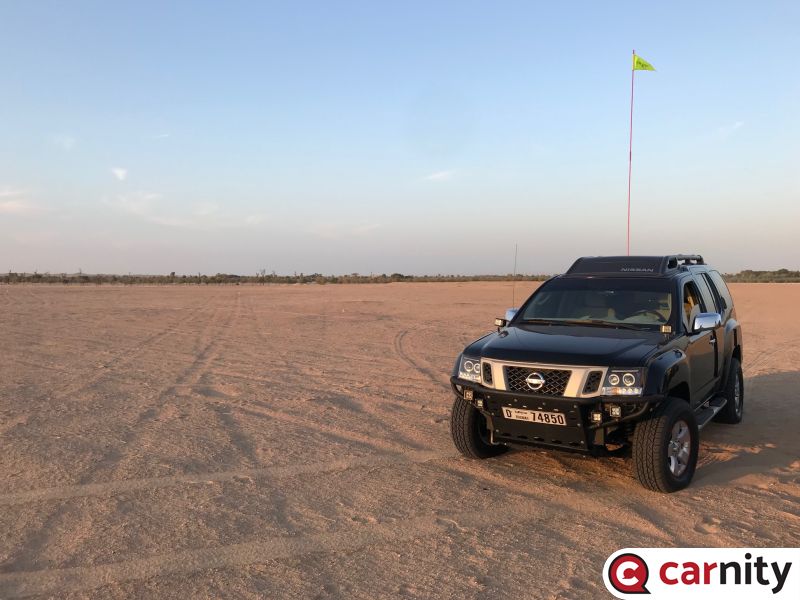
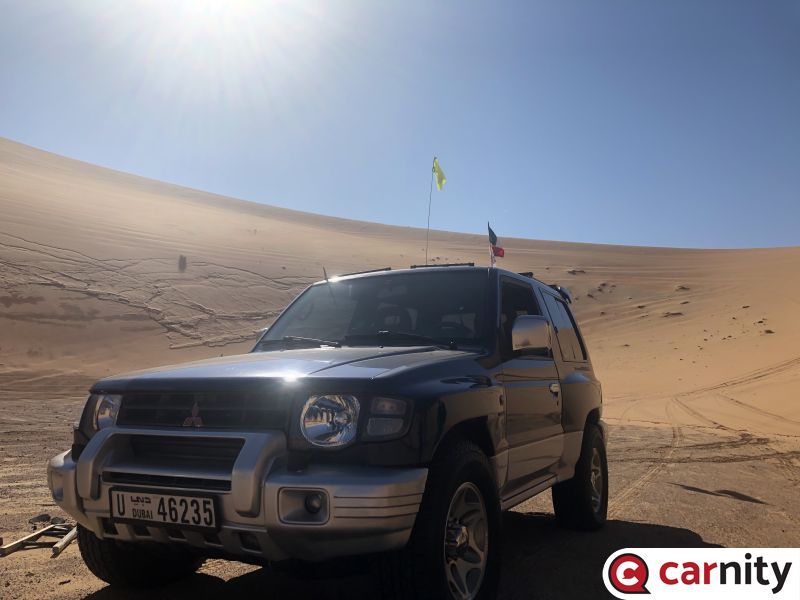
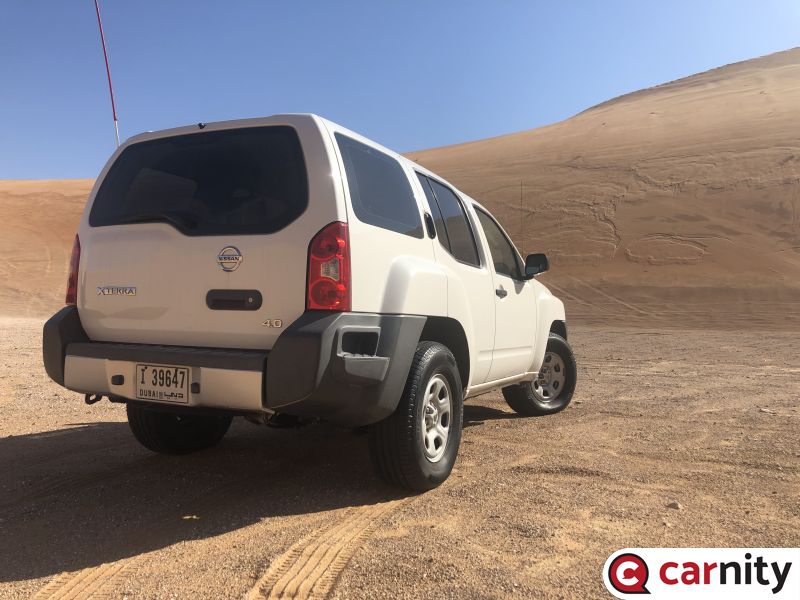
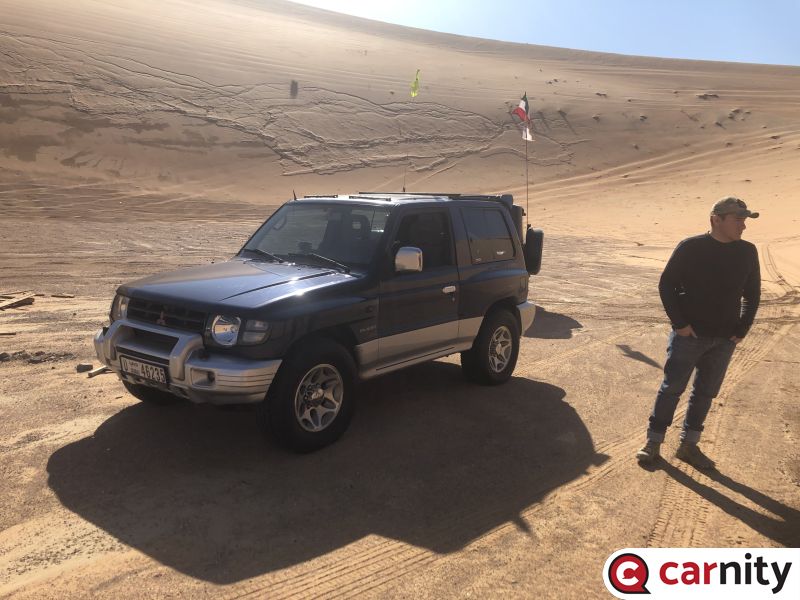
As we sometimes involve in off-road recoveries, i wanted to have a look at what the loads are when doing tows or recoveries in the desert with our vehicles. After all, we are all committed in working safely, and if i can speak for the Off-road club we constantly look at improving things as we should learn and keep learning. The biggest source of information on this topic can be found on the forums of companies and people who are working in the recovery and towing of heavy vehicles on the highways such as trailers, trucks, boats, and others. But the same calculation can be used for towing / recovering in the desert and is a good guideline to quickly calculate the TOTAL LOAD that will be involved before starting the recovery. The most important thing to calculate is the resistance of the vehicle to be towed. It is a well known rule that to pull a vehicle on asphalt, you only need to apply 5% of the total weight to move that vehicle. So for example if you'd push a Pajero SWB of 1600 kg on the road, it would take you 80kg to get it rolling. As you can probably imagine, the surface resistance is totally different on sand, and even worse when the wheels are buried in, and much worse if the car needs to be towed uphill. This is called the gradient resistance. What is resistance? Resistance is the amount of force required to move an object, given its condition and environment. It's written as a percentage of the weight that is being moved, which may be less than or more than the object's weight, depending upon conditions. That's because different surface environments, the condition of the load and the casualty, and terrain can increase or decrease resistance. Is the casualty stuck in mud? Do you have to move the casualty up hill? Both of these situations will increase the resistance to your efforts, and thus increase the amount of force you'll have to apply. So below the article i found that explains resistance: PS Disclaimer this article is taken from the certified training courses of Wreckmaster.com. I cannot take personal responsibility for the accuracy. There are 4 types of resistance encountered in our industry. ROLLING RESISTANCE MIRE RESISTANCE GRADIENT RESISTANCE DAMAGE RESISTANCE What is rolling resistance? Rolling resistance is the force it takes to move a rolling object, such as a wheel. (Remember when you were a kid and you coasted your bike down a hill? Eventually you'd slow down—and that's because of the forces that contribute to rolling resistance.) Forces that affect rolling resistance include deformation of the wheels, the surface the object is rolling on, wheel diameter, speed, and the load on the wheel. In the towing industry, we refer to a vehicle as either "rolling hard" or "rolling soft." A vehicle is considered "rolling hard" if it's sitting on a hard, flat, level surface such as concrete and has all of its tires inflated, wheels rolling freely, and its transmission in neutral. It requires 5% of the casualty's total weight to move something that's rolling hard. A vehicle is "rolling soft" if it's on a soft surface such as grass or gravel. It takes more force to move an object that's rolling soft—15% of the total weight of the casualty. TOTAL WEIGHT x 0.05 = "ROLLING HARD" RESISTANCE TOTAL WEIGHT x 0.15 = "ROLLING SOFT" RESISTANCE What is mire resistance? Mire resistance is created when a wheel or load is sunk into the dirt, gravel, mud, sand or other soft surface. The deeper it's sunk, the more force you'll need to move it. If it's sunk up to the lower part of the wheel ("tire mire"), you'll add an amount of force that's equal to 75% of the casualty's weight. If it's sunk up to the bottom of the wheel rims ("wheel mire"), add 100% of the casualty's weight. If it's sunk up to its body ("body mire"), add 150% of the casualty's weight. TOTAL WEIGHT x 0.75 = "TIRE MIRE" RESISTANCE TOTAL WEIGHT x 1.0 = "WHEEL MIRE" RESISTANCE TOTAL WEIGHT x 1.5 = "BODY MIRE" RESISTANCE What is gradient resistance? Gradient resistance is the force created by gravity when moving a load up or down a grade. It must be added or subtracted from the total surface resistance. Add it when you're moving the object uphill, and subtract it when you're moving the object downhill. TOTAL WEIGHT x 0.25 = RESISTANCE AT GRADIENT OF 15° TOTAL WEIGHT x 0.50 = RESISTANCE AT GRADIENT OF 30° TOTAL WEIGHT x 0.75 = RESISTANCE AT GRADIENT OF 45° What is damage resistance? Damage resistance is the force that resists the movement when the rolling object is damaged, for example, the wheels won't turn freely or the object has missing wheels. Damage resistance is always calculated at the same rate, regardless of surface conditions. It is two-thirds of the total weight of the object you're moving. TOTAL WEIGHT x 0.666 = DAMAGE RESISTANCE Using all the calculations above, we can calculate the total resistance required to move the casualty. HOW TO CALCULATE TOTAL RESISTANCE 1. Figure out the static weight of the load. The static weight includes all equipment, luggage, fuel, and anything else the vehicle may be carrying. You may need to adjust your static weight to compensate for weight transfer if there is more than one surface, for example the casualty is mired in mud and then will be on grass. The weight transfer number is added to the static weight, and it's calculated using the same gradient resistance numbers as we showed above (e.g. multiply static weight by 0.25 for a gradient of 15°). This adjusted number is the one you should use to calculate the surface and gradient resistance in step 2 and 3 below. 2. Calculate the surface resistance. The surface resistance is either rolling or damage or mire resistance, whichever is the largest number. 3. Add or subtract the gradient resistance. Add it if you're moving the casualty uphill. Subtract it if you're moving the casualty downhill. THREE SIMPLE EXAMPLES A 20,000-pound vehicle with four fully functioning wheels is to be towed up a 45° slope on a paved road. The total resistance would be (0.05 x 20,000) [surface resistance] + (0.75 x 20,000) [gradient resistance] for a total of 16,000 pounds of resistance. The same vehicle moved over a level grass surface would create much less resistance: (0.15 x 20,000) [surface resistance] + 0 [gradient resistance] for a total of 3,000 pounds. If the same vehicle became mired up to its body, the resistance would increase to 1.5 times its weight (1.5 x 20,000) [surface resistance] or 30,000 pounds of resistance. As above calculation is a bit tedious to do when you're standing in the middle of the desert sweating profusely and discussing with other members, i can highly advise you to install the APP called Wreckmaster, which has this calculator module built in. To have the app fully functioning the cost is around 90 dirhams. Than you can use the calculator with all functions. Once you start the app, you only need to fill in the vehicle static weight (includes fuel and equipment), and the angle of the slope. fill in 15° for uphill and -15° for downhill. Then choose the type of resistance (from hard surface to mire body depth, this means a vehicle which is completely buried up the chassis). 1* Hard grass, gravel, concrete.... 2* Soft grass, gravel 3* Damage 4* Mire tire depth ( a car little bit bogged down in the sand). 5* Mire wheel depth (a car where the wheels are buried in the sand). 6* Mire body depth (a care that has its body/chassis stuck on sand). In our Off-road scenarios, options 4,5,6 will be applicable. Let's try an example: A 1700 kg car is stuck and has to be towed on an uphill slope of 20°. The wheels are buried in (scenario 5). The result is that you will have a total resistance of 2409 kg. In that case, a car like Nissan Xterra that has a theoretical towing capacity design of 5000lbs or 2267 kg, is not designed to tow this vehicle upwards. Of course these values are merely an indication which have a safety margin, but it explains the total forces required to pull that vehicle upwards. The difference between towing and pulling/tugging is important, because the strain on the equipment is much higher because the total load presents itself in one peak, not in a gradual increase like you would have when towing or winching. I hope this article provides some clarification on the subject, the app might help us to quickly determine the total loads and severity of the situation.
-
Pajero / Montero / Shogun name bickering
Frederic replied to Frederic's topic in Mitsubishi Pajero Forum in UAE
This should explain: https://www.picknbuy24.com/column_263.html -
Pajero / Montero / Shogun name bickering
Frederic replied to Frederic's topic in Mitsubishi Pajero Forum in UAE
Shogun is indeed the UK name. Montero is not smaller than the Pajero though, they are identical. The smaller sibling was the Pajero IO. The new montero sport is a different car of course -
https://www.desertcart.ae/products/47075192 these are the magnetic pads I bought. I only have one thick black cable running along the side of the windshield that goes to the engine bay. Doesn’t bother me during the drive. I hook up the lights by using a regular three pin household power plug.
-
Hahaha that’s just the reason I crank up my volume. I always get anxious over every little squeak. I want my commute to be stress free. Being a big music fan, my only time and place to listen properly is my car.
-
http://shop.adventuredrivendesign.com/index.php?route=product/product&path=73&product_id=114 There is a growth of followers and enthousiasts on the Montero in North America due to its availability, low price, and capabilities as overland truck. I’m following lots of hem through my Instagram. It might be worth enquiring via these platforms. The Montero should be the same as Pajero, as the name was the only thing that didn’t got accepted in Spanish speaking countries 😂
-
FCCDC927-6F7E-42C7-B803-EE954088983F.jpeg
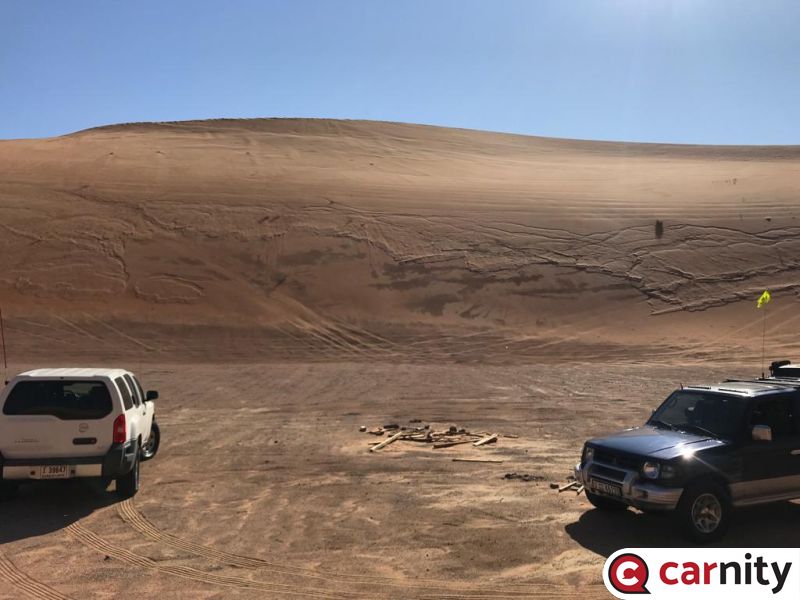
Frederic posted a gallery image in Newbie & Fewbie Drive - Awir - Mahafiz - 11 Jul 2019
-
32731F31-04B6-4C86-9CDC-3BC74377E873.jpeg
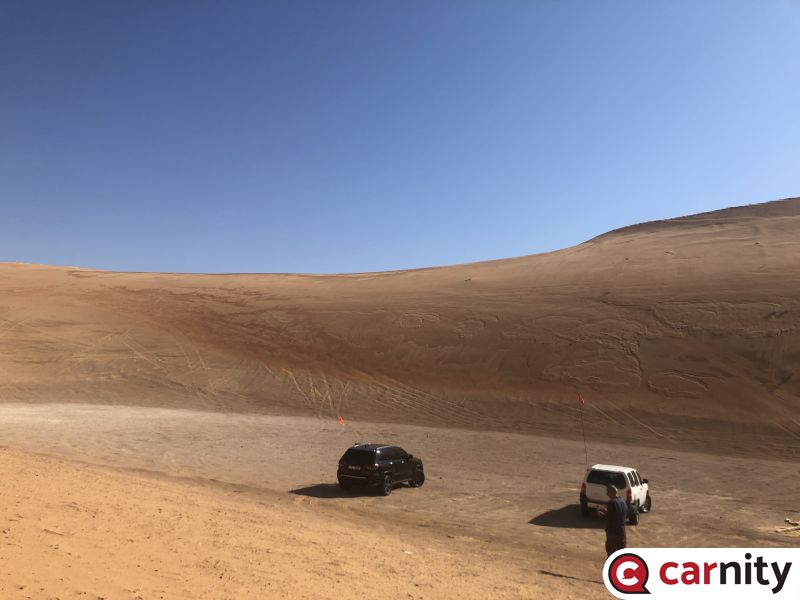
Frederic posted a gallery image in Newbie & Fewbie Drive - Awir - Mahafiz - 11 Jul 2019
-
F24E2BC3-3160-4F14-BD60-80EB2E3D3BF0
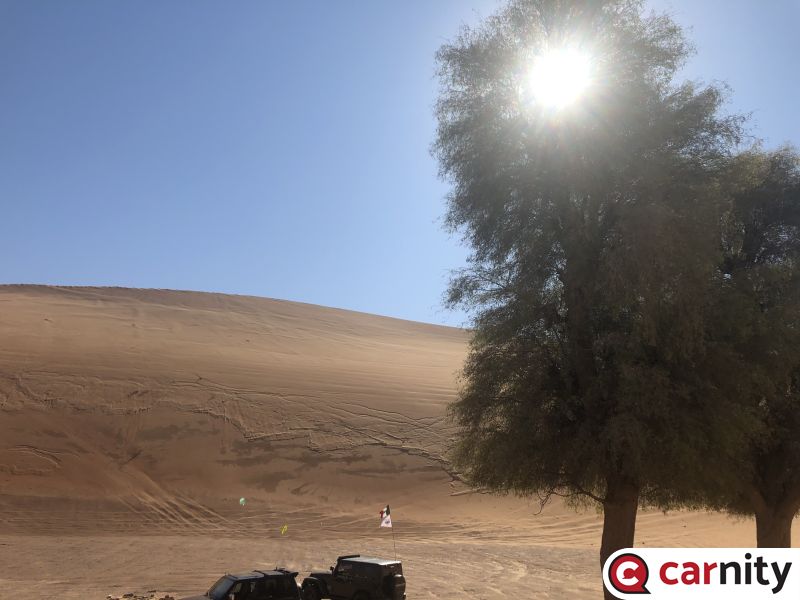
Frederic posted a gallery image in Newbie & Fewbie Drive - Awir - Mahafiz - 11 Jul 2019
-
Don’t see the issue, as I mostly drive with very loud music. But I’m always aware of my surroundings in case an ambulance or something would be coming from behind.
-
Totally agree. The logo 4x4 does not mean much anymore these days, as many of these cars are AWD, but do not possess lockers or low gearing, making them almost useful for our deserts.
-
I've had the chance to see one of the workshops in Ras Al Khor that prepares and cleans vehicles to be sold. They pull out the carpets, seats, and afterwards you won't find any traces behind that this car has been in the desert, so looking for traces of sand is in many cases not a fair reference. Personally i don't mind buying a car that has spent some time in the desert, but in this oversupplied market where you can find one that's used as a lady-driven school crawler for the same price, i'd rather go for that option. Selling a car that has been used as regular off-roader will affect your selling price, there is not mistake about that. And that's probably one of the reasons many of us are driving depreciated 20 year old vehicles in the club On a side note, what is "offroad use" ? * Taking the car for camping trips with family on sand trails ? * Dune bashing and flying on Faya ? both are considered offroad. The first one will not hurt your 4x4 as it should feel at home doing these things. The second one is another story that our senior members can reiterate too 😉
-
Exactly ! My 5year old son is crazy about Mustangs, so my plan is to take one for a drive on a 'boys only' trip
-
Superman is back Fewbie+ night drive 4 Jul 2019
Frederic replied to Rahimdad's topic in Off-Road Club's Offroad Drives
Maybe he meant side sloping- 31 replies
-
- 2
-
-
- adventure
- intermediate drive
-
(and 2 more)
Tagged with:
-
How to correctly use the Car Fire Extinguisher
Frederic replied to Gaurav's topic in General Discussions
Great topic ! We always train to use the P.A.S.S method, which is easy to remember: Also worth remembering that you cannot use ANY extinguisher for any type of fire, there are different types of extinguishers, categorized in classes: A typical extinguisher for car will be dry powder if i remember correctly. So take note when you buy one- 2 replies
-
- 5
-
-
-
-
- fire
- fire extinguisher
- (and 3 more)
-
Correct, but all off-road LED lights will be in the 6000K range probably.
-
I love that WJ '99 of yours... Give it some love and some dirhams it needs and you'll have a great offroader !
-
Good topic and i think it covers most tips. In my former life being a DJ i was always on the road in the early morning hours. The first 20 minutes when i took off was ok, but then fatigue starts to kick in, especially in the winter when your car heater is on. I'd take the nearest available exit, and take a small 30min powernap, followed by a walk around the car and a coffee. That always did the trick. Be aware that after very long periods without sleep, you will enter a stage where you are suddenly not tired anymore, and feel perfectly fine to drive. But at one point you'll fall asleep without realizing in a split second. A friend of mine who was a sales guy and did very long drives once told me the story that his car went off the highway and he woke up with the car upside down on a piece of farmland next to the highway. Luckily he survived and just broke his arm, but he kept telling me NEVER felt it coming as he kept ignoring the earlier signs from the hours before and then entered the state of being awake and not tired at all. Same thing with RedBull and others.... it delays your fatigueness, but it will hit back eventually, and then it will hit you hard..
-
I saw the rims are different, and I would suppose the original ones would be sitting with a collector in his garage, and not in Rashidiya ? 😄
-
From what I’ve seen from udrive they won’t deliver cars to you, so yes when you park the car nearby the office (has to be public parking space), you have the risk that someone else takes it. You’re not paying for it anymore anyways. Depending from where your office is you might find other udrive or Ekars in the nearby area, either a walk away, or a colleague can drop you off to the nearest car. For me in jebel Ali area, not so many cars are there, and I keep the car in front of the factory building. But chances are low that someone else will grab it.
-
Anyone tried above services and can compare both ? I've tried Udrive three times now and although the registration app was a hassle to work in the beginning, now it seems to work fine. I've seen the Google reviews and was shocked to see the many complaints and issues customers have. I've yet to give Ekar a try. Their Google reviews look a lot better. I use these services to have a car to use when my other car is in for service. Its cheaper than taxis and i prefer driving myself anyways. You pay per minute so its quite economical.
-
These are fakes, defo not the real ones...