
-
5.0 Stars ⭐⭐⭐⭐⭐ 628 Google Reviews

Frederic
-
Posts
9,253 -
Joined
-
Last visited
-
Days Won
479 -
Country
Belgium -
Carnity Points
4,365 [ Donate ]
Content Type
Profiles
Forums
Advice
Complete Onboarding & Agree to Club Rules & Guidelines
Marketplace
STORE
Events
Gallery
Blogs
Everything posted by Frederic
-
 untilDrive Details Level: Fewbie and above (all levels) Meeting time: 7:00 AM (SHARP - Without any exceptions) Meeting Point: Nearby Al Dhaid Fort: https://maps.app.goo.gl/NSNwm4EmxZCQ5paS9?g_st=ic Type of Car: Any proper 4x4 with front and back tow hooks and 8-10 inches of ground clearance. What to bring along: Loads of water, snacks (for yourself), smiles, face mask, rubber gloves, enthusiasm and willingness to learn. Approximate finish time: 11:00-12:00 AM P.S. Only join if you have a compressor to inflate your tires after the drive. LIMITED SPOTS AVAILABLE: Limited to 10 cars maximum. RSVP will close on Saturday - 9 AM. If the RSVP is full and you wish to join, please mention your name on the drive thread to add on the waiting list Latecomers will be returned back - without ANY EXCEPTIONS. Members without RSVP will be returned back - without ANY EXCEPTIONS. Members that do not confirm the terms of the COVID requirements will be removed from the RSVP list. Please withdraw your RSVP, if you aren't joining, so your spot can be taken by others. Repeated no-show members after RSVP will have their account suspended for a month.
 -
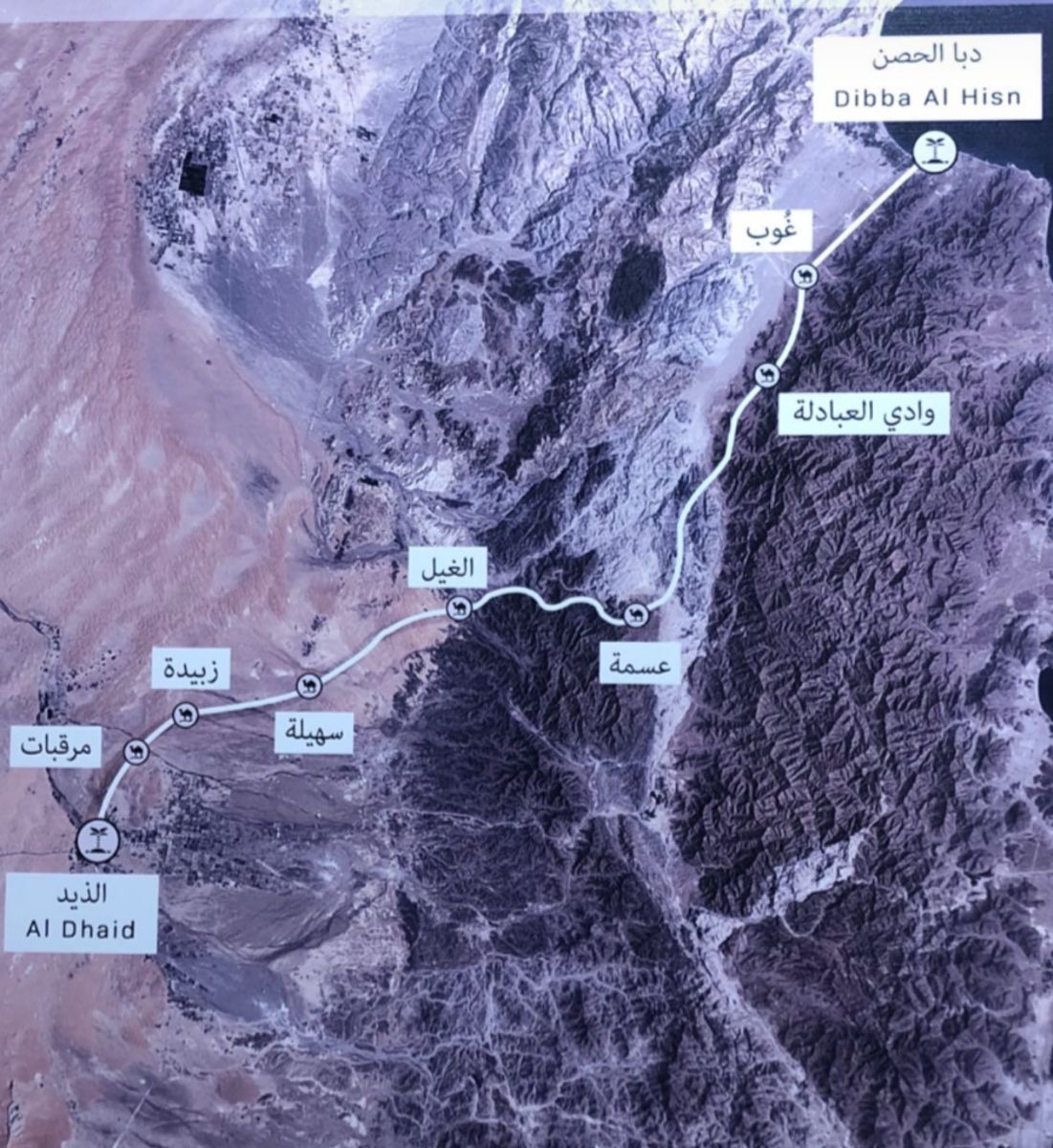
Drive Plan In the olden days, Bedouins travelled across the UAE and used various crucial landmarks that had an oasis as resting points and to resupply with water and food. Al Dhaid Oasis was one of the most well-known, and the fort was built to protect it from outsiders. We will be using backroads, farm tracks, and wadis, to make our way similar to the Bedouins did. This first session will start from Al Dhaid Oasis and will take us to Dibba Al Hisn beach. This will not be a dunebashing drive, rather an exploration on existing trails, dunes, and mountain trails, with the occasional piece of tarmac. Please take note of this. If you have done overlanding drives with us before than you will have a good idea on what to expect. There is no need to bring your offroad flag, and we will only deflate to 25psi at the starting point. MUST READ AND COMPLY Offroad Flag Guideline Two Way Radio Guideline Off road Driving Etiquette's Emergency details for all off-roaders Off Road Driving - Roles & Responsibilities Drive Details Level: Fewbie and above (all levels) Meeting time: 7:00 AM (SHARP - Without any exceptions) Meeting Point: Nearby Al Dhaid Fort: https://maps.app.goo.gl/NSNwm4EmxZCQ5paS9?g_st=ic Type of Car: Any proper 4x4 with front and back tow hooks and 8-10 inches of ground clearance. What to bring along: Loads of water, snacks (for yourself), smiles, face mask, rubber gloves, enthusiasm and willingness to learn. Approximate finish time: 11:00-12:00 AM P.S. Only join if you have a compressor to inflate your tires after the drive. LIMITED SPOTS AVAILABLE: Limited to 10 cars maximum. RSVP will close on Saturday - 9 AM. If the RSVP is full and you wish to join, please mention your name on the drive thread to add on the waiting list Latecomers will be returned back - without ANY EXCEPTIONS. Members without RSVP will be returned back - without ANY EXCEPTIONS. Members that do not confirm the terms of the COVID requirements will be removed from the RSVP list. Please withdraw your RSVP, if you aren't joining, so your spot can be taken by others. Repeated no-show members after RSVP will have their account suspended for a month. Please RSVP on below calendar
-
All About Tyre Sizes: Is Bigger Really Better ?
Frederic replied to Frederic's topic in General Discussions
Would that basically turn your 4H into a semi-4Lo ? -
Fantastic job ! which material did you use ? This is adhesive butyl ?
-
Bravoecho has been promoted to Fewbie Plus level
Frederic replied to Gaurav's topic in Off-Road Club's Announcements
Congrats and well deserved @Bravoecho ! -
Wow congrats with the new ride !!
-
I think the origin of a roof tent was also to be elevated from the ground level, in order to be safe from animals, which is valid if you go camping in Africa or Australia for example, or in Northern US where you could wake up with a black bear in front of you. Here in the UAE we don't have to worry about these things, and can easily pitch up a 2-seconds tent that can provide similar comfort and not having to worry about the heavy weight, cost, and center of gravity. I think @Fabien Monleauhad one originally on his LC79.
-
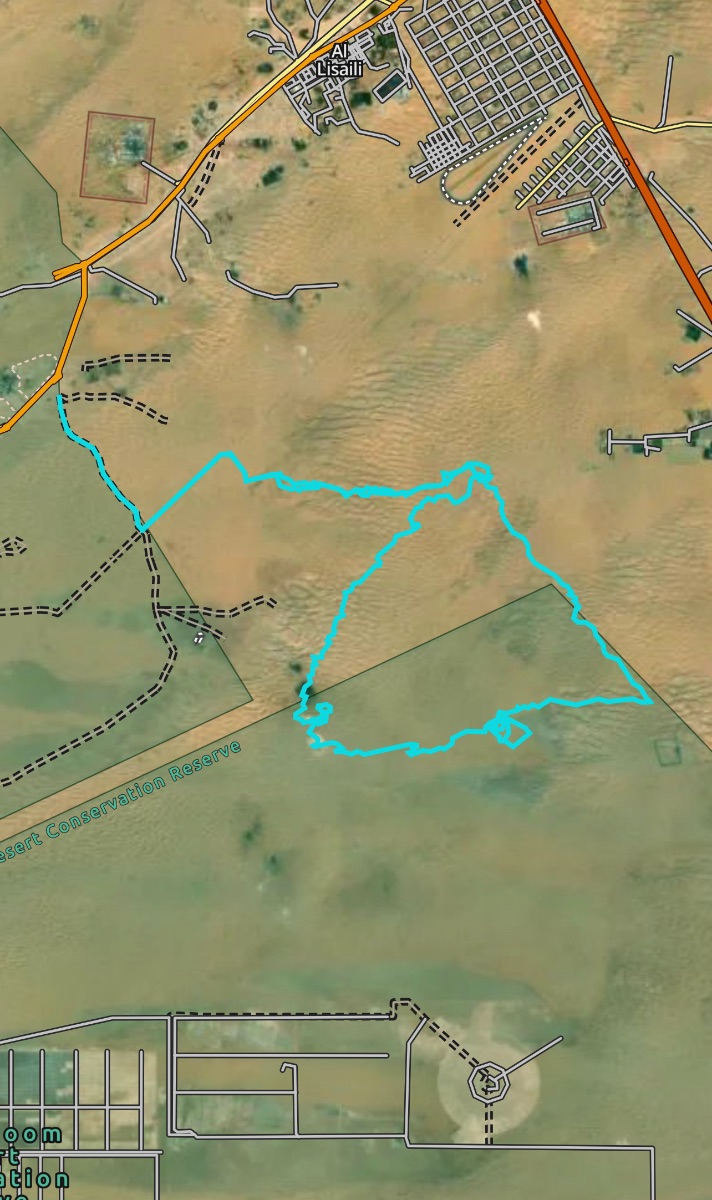
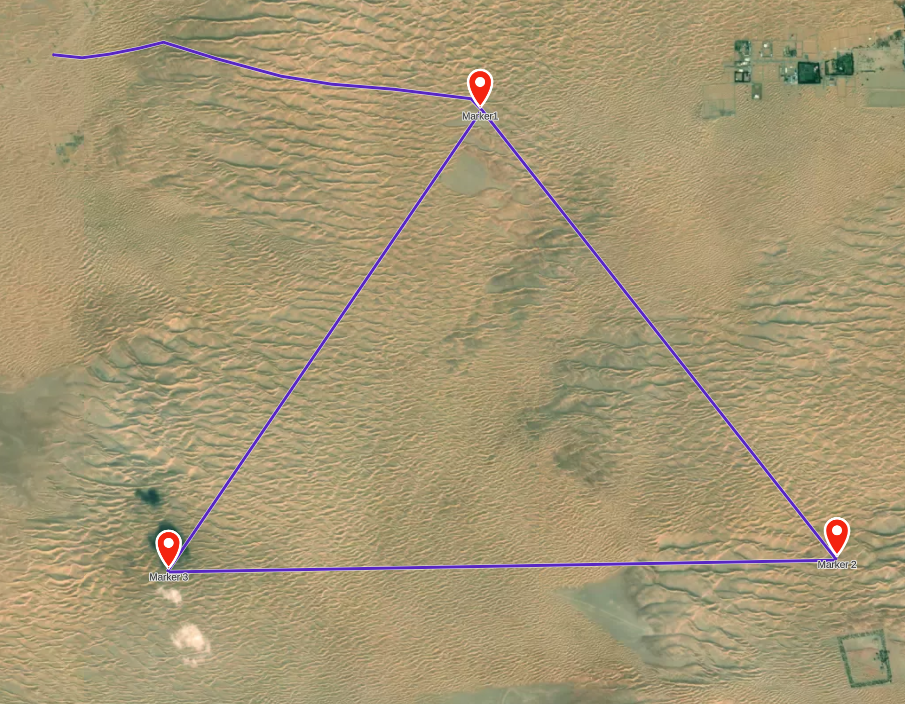
@Simon D@Michael Chattle@James Lovell@Marketa Dobesova@DP1011@Hugo@Bjoern@Rob H@Tareq Al Turq@Beide Worku@Amr Aydin@Fabien Monleau@Patrick You guys/gals rocked last night ! The terrain was bumpy and our attempt to drive in a straight line seemed easy at the start (pylon track ) but once it got dark and there were no more reference points, we had to rely on the GPS. In one particular area, and just like the countless stories of planes and ships losing their compass bearings, we encountered the exact same and I found myself looping around in a technical area while my gps was going completely bonkers ! After a short break on a sabkha, we headed back in and drive almost straight back to the starting point and exited at the same place from where we started 4hrs earlier. As usual, a splendid second lead in @Simon D, great support from @DP1011and @Fabien Monleau and a convoy that couldn’t be stopped. The so called triangle looks a bit like this: vs the planned route: Considering the fact we covered 52kms in some areas that were very technical shows the convoy strength ! See you all soon in the sand !
-
Hi @Patricksure ! See you at 6!
-
Deepak has become the spine of many convoys in the club. There will be no doubt that he will be the life of the party in the center spot
-
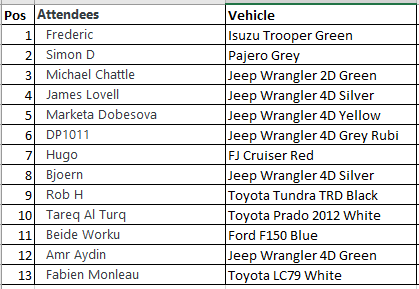
DRIVE RSVP IS NOW CLOSED @Simon D@Michael Chattle@James Lovell@Marketa Dobesova@DP1011@Hugo@Bjoern@Rob H@Tareq Al Turq@Beide Worku@Amr Aydin@Fabien Monleau Good afternoon all ! Just closed up the convoy. Please find your convoy positions posted above. We will be using Channel 2 - 446.031 Mhz See you all tomorrow !
-
Bjoern has been promoted to Intermediate level
Frederic replied to Gaurav's topic in Off-Road Club's Announcements
Congrats @Bjoern !! -
These cars have finally become quite recognized by the offroad community, and the clean examples exchange ownership pretty fast. Both places you mentioned are indeed the main sources, but be aware that often you will see them being advertised for 30kAED while the owner might be open for some haggling to bring it down to a more realistic offer (this is very common here). Take your time and if possible try to stretch your budget a bit if you manage to find a clean example that's well maintained with good service history and not abused offroad. When i purchased mine earlier this year there was a very clean 2013 model for sale for around 40kAED which i found to be way over budget, but after replacing so many parts on our 2008 model, perhaps in the long end that 2013 would have been a better option
-
One more thing, you will find the USA import models to be at least 3000kAED cheaper. I am personally not a fan, but it could be an option to consider. I think they are virtually the same as the GCC models (even same radiators i think). They might have a history of accidents in the US (write-off) but then again even a GCC 2008 without accidents would be a unicorn in my opinion. Mine is a GCC with some accident history but nothing serious.
-
Hi @CasperPLfor that budget you would find the following: 1. 2008-2010 Nissan Xterra 2. 2006 Jeep Wrangler TJ 3. 2008 Jeep Wrangler JK with the 3.8 Engine I have put the Nissan Xterra on top because it's a great on-road and off-road vehicle with plenty of boot space, and performs better than the Jeeps of this era and budget. The 4.0 engine is very powerful. The Jeep TJ is very powerful as well, but i would not recommend to use this as on-road vehicle. The Jeep JK with the 3.8 engine is not bad as well, but you will have a hard time finding a clean one, and the performance is not on par with an Xterra (and not as reliable). You will find Xterra for around 18-20kAED for the 2008 model, but to get it ready for the desert you will need to consider the following checkups: * Plugs and coils * Air filter and cabin filter * Throttle body clean * PCV valve * Clean the MAF sensor * Brake Fluids * Check exhaust system for leaks / cracks * Verify if catalytic converters are still installed. * Drive shaft u-joints * Boots on cv joints and grease * front body mounts * Engine mounts * transmission mounts * steering links and sway bars * front diff bushings * LCA UCA ball joints and leaf bushings * radiator and coolant hoses condition * Replace all fluids (engine, transmission, transfer case, differentials, coolant) I recently purchased a 2008 Xterra which had a good engine and tranmission, but spent a lot of money getting it to the condition that i wanted, which included replacing almost all hoses, bushings, all shocks, engine and transmission mounts, etc... After that add a front skid plate, replaced the weak OEM tow points with reinforced ones, installed a flag holder and you are good to go ! If you are still reading at this point and did not run away, you probably have seen by now that with your budget of 25k it will be a bit tight to get the car 100% offroad ready. I ended up spending a lot more unfortunately, but you can be lucky to find one for 25k that was well maintained. Sourcing spare parts in the used market in Sharjah is also an option but i personally preferred all new OEM parts. (cry once...) PS The offroad version would be great to have as it has rear locking differentials. But i've heard from many Xterra owners that the rear differentials cannot be found in the market secondhand (very rare) so if you need to replace the rear diff in the future that might be a big issue. There are plenty of Xterra owners here and will happily pitch in to help further ! Dubizzle and other online car sites will probably be the best source. I would avoid buying an Xterra that has been modified too much. There are still stock models for sale that haven’t seen a lot of off-road abuse. That’s the one you need.
- 18 replies
-
- 10
-

-

-

-

-
that's a very tiny area ! (0.13km2). You can probably shovel that area out in Qudra !
-
@DP1011 perhaps here next time ? https://goo.gl/maps/fg5txpMVuf3Mzppe7
-
I don't see a lot of desert here buddy:

-
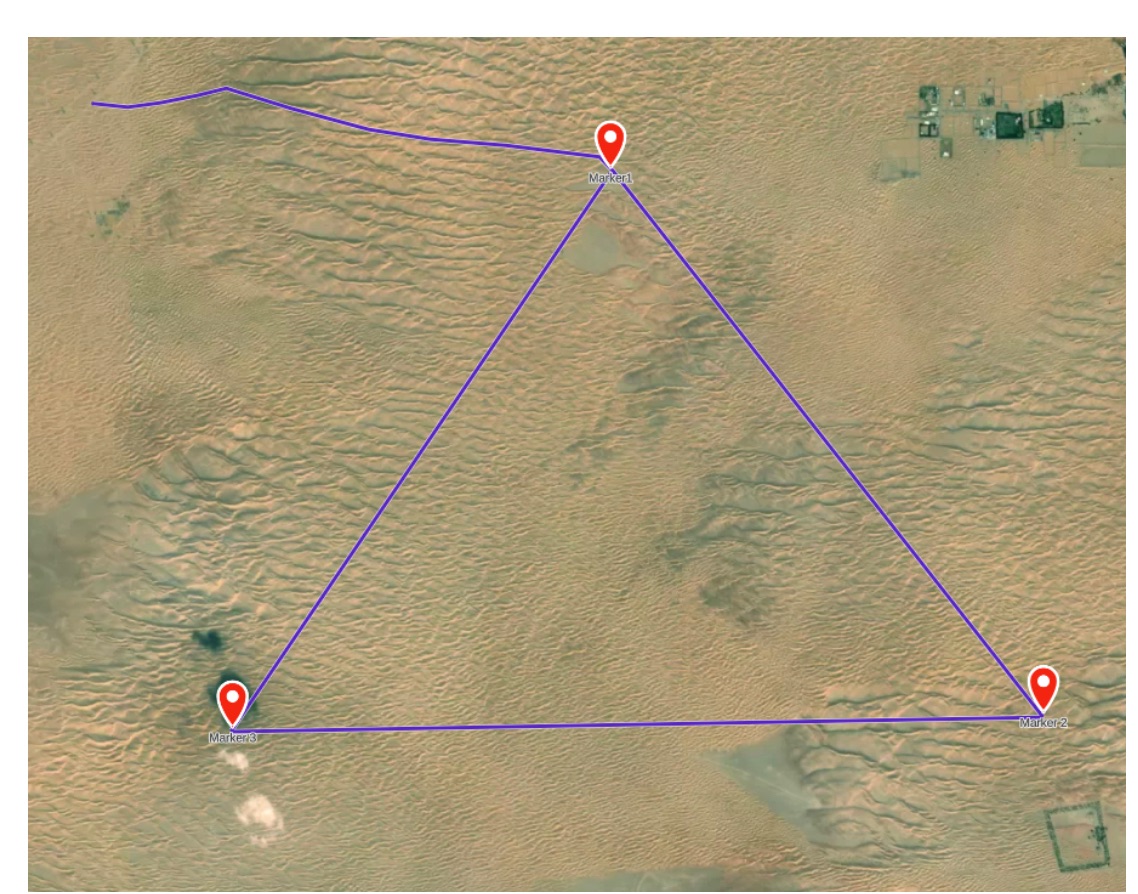
Good afternoon All ! Thanks for signing up ! Confirmed for the drive: @Michael Chattle@Felix Obst@Bjoern@Fabien Monleau@Rob H@James Lovell@Sebb@Hugo@Amr Aydin @DP1011@Simon D Waitlisted Members: Beide Worku @Beide Worku Tareq Al Turq @Tareq Al Turq Marketa Dobesova @Marketa Dobesova I wanted to share the planned area for coming weekend. Below you can see the Bermuda triangle we are planning to concquer. The Idea will be to drive along the pylon track and make our way to Marker 1 (top of the triangle). Then move in a straight as possible line to Marker 2, and then further on to Marker 3, and from there back to Marker 1. As you all know we don't usually drive in a straight line in the desert, so the challenging part will be to try to stick to that line as much as possible, even if that included going over slip faces and other obstacles This also means instead of the smooth flowing drives that i am usually well known for, this could be quite an intense drive with lots of struggles 😁 Anyways i am sure we will have fun in the sand as always and can afterwards print out a screenshot of our track and it will look 99% like below. Although that would be a real bonus If you have not driven in the dark yet, no worries. If you have additional night lights on your 4x4 that will help but it's not mandatory as you will be following the convoy anyways. See you soon !
- 27 replies
-
- 10
-
-
-
-
Hi @Thomas Collins Jayakumarthe move towards twilight drives and night drives is mainly due to the season. Usually our morning drives are from 6AM-7AM up to around 10-11AM, but as you can see by that time we are hitting close to 40°C before exiting the drive (and hoping there are no delays due to stucks or breakdowns). In these temperatures it is not advisable to expose your 4x4 to offroading and we will usually see more cars starting to overheat, apart from the fact that our trip leads and supporting members will struggle more with the recoveries and shoveling You will still see morning drives, but generally less than in the colder season. Throughout May till September it will be mostly late afternoon, twilight, or night drives, with the occasional morning drive that would start really early. Anyways, welcome to the club and see you soon in one of the drives !
-
All About Tyre Sizes: Is Bigger Really Better ?
Frederic replied to Frederic's topic in General Discussions
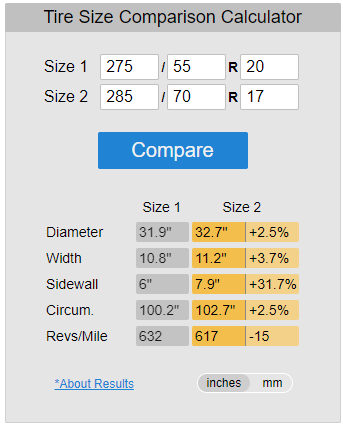
Hi @Benjamin https://tiresize.com/comparison/ You are right, these are 32" tyres as you can see from above screenshot. That size works great but has a couple of downsides: - 20 inch offroad tyres are a bit less common in the market. - the 55 sidewall is quite low and would be a bit more prone to popouts vs a 70 or 75 size sidewall (but that would make the overall wheel bigger again. The Jeep OEM tyres will do fine and are suited for a nice blend of on-road and different styles of offroad, and that is why you've been happy with them. In comparison with the Rubicon, that has smaller rims (17") they are able to go for a bigger sidewall as they have 285/70/17 if i remember correctly. That would be a 33" inch overall diameter approx. If you want to go bigger on that same 20" rim i would advise to go for a 275/60/20 or 275/65/20, and not much more than that. Otherwise once you reach 35" overall size you will be entering re-gearing terrain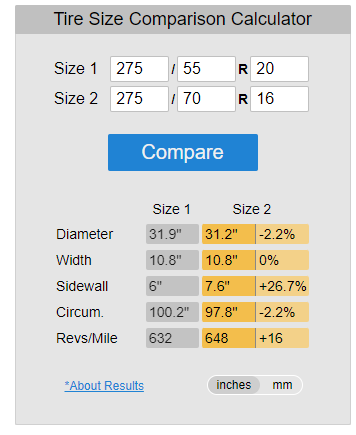
-
In this topic i am trying to go a little bit deeper into the whole concept of tyre sizes for offroading. Often, we start off with the stock 31inch tyres and find ourselves upgrading to a 32-33- or even 35 and more inch tyres, which might give benefits, or not ? First of all, we need to split into two categories: 1. Offroading in sand/dunes aka dune bashing. 2. Offroading in mountains aka rock crawling or wadi bashing. It is important not to confuse both, and they are almost opposite in terms of wheel size and i will explain this further below. We will not be discussing the fuel economy in relation of tyre size in below topic, nor the effects of the odometer reading, but rather focus on the performance aspect Category 1: Offroading in the sand/dunes What are the key parameters that determine the performance for driving in the dunes ? * Tyre weight (relation with overall size). * Surface area of each tyre on the sand when deflated. * Rolling Resistance * Tyre profile (aggressive knobby vs smooth HT tyre). Looking at above parameters, we would conclude that we are looking for a light tyre. The tyre profile in sand is not so important while driving but deflation is critical, and an AT tyre can be deflated further down safely compared to an HT tyre. We also noticed big differences during self recoveries on a smooth HT profile tyre vs a tyre with some moderate profile (AT tyres). Going for larger tyres results in higher weight on the axles, BUT seems to help with the contact patch area which is a good thing. So there is a balance that we are trying to strike. As a result of that you will see most offroaders in the dunes using similar tyres from the stock 31" to about 33" but not often 35" or more because of the negative effects that go along with that. (see re-gearing further down this topic). Category 2: Offroading in the mountains What are the key parameters that determine the performance for driving in the mountains ? * Surface area of each tyre on the rocks when deflated. * Tyre profile: AT Tyre is needed (HT tyre is not suitable for regular offroading in the mountains). * Ground clearance. As you can see, the key parameters for driving in the mountains are somewhat different because during rock-crawling you will be mostly in Low gearing and won't be needing the full top-end horsepower of your 4x4. The focus is more on using good torque and getting good clearance to overcome those boulders and other obstacles. As a result of that, bigger tyres would be performing better, simply due to the fact that you will win ground clearance without having to lift your 4x4, and the extra surface area of those tyres will give you better grip as well. And this is the main reason why we see so many Jeeps and Bronco's in the US on 35"-37" tyres crawling over boulders Re-Gearing: What's that all about ? source: https://www.4-wheeling-in-western-australia.com/differential-gear-ratio.html The differential gear ratio on a stock standard 4x4, are made to suit the tire diameter which the vehicle is originally came with. Using bigger diameter wheels/tires with stock ratios will cause more wear and tear on clutch, driveline and engine. Low range gear will also suffer as 1st gear low will now roll too fast as the tires are bigger, this becomes a problem when descending steep hills and climbing rocks and logs. Example: a stock 2005+ Toyota Hilux has 29 inch wheels/tires and fitting 33 inch rubber is quite bigger (4 inches in diameter bigger) this will cause the engine and entire driveline more stress and more power is then required due to the larger rolling resistance. The final gear ratio is suited for 29 inch, this ratio in this particular case is 3:5, referring to a chart it will state the same (29' recommended ratio is 3:5) and looking at 33 inch diameter the chart will recommend 4:1. Going by the chart any higher will make the 4x4 rev too much at highway speeds causing poor fuel economy. Changing the crown wheel and pinion is how the ratio is modified. Basically installing a new or reconditioned crown wheel and pinion with the recommended ratio will bring the 4wd driveline back to stock specification rpm and fuel usage. Once differential gear ratio mod is done the vehicle will regain its 1st gear low range and take off in high range will be improved or even back to stock. This chart is an approximate tyre size to differential gear ratio; it’s based on an RPM at 105 km/h (65 mph) and 4th gear on a manual transmission or 3rd gear on an automatic gear box (1:1 gear ratio). This is only a guide to get a general idea of which ratios would suit the vehicle in question. To get an accurate RPM the following steps and formula will give an accurate answer: Take a drive and record the rpm at 105 km/h (65 mph), the next step is to work out what the current ratios are in the vehicle. This can be revealed by calling the manufacturer or even calling a differential repairer giving him/her the Vehicle Identification Number, also known as VIN. Once all this information is known use the following formula to get the accurate differential gear ratio for the larger tires: Example: The rpm is 2806 at 105 km/h (65 mph), the current tires are 29 inch, the factory ratio is 3.73 and the new size upgraded tires are 33 inch. RPM: 2806 Stock tires: 29 inch Stock ratio: 3.727 New Tyre size: 33 inch 2806 = 65 x 3.727 x 336 / 29 (rpm = mph (not km/h) x diff ratio x 336 / tire size) Now the correct rpm is known for the vehicle (2806), the next step is working out what ratios are available for the vehicle, some makes and models won’t have as many choices as others. Say the following 3 ratios are available 3.909, 4.100 & 4.88. The new tire size wanting to be fitted is 33 inch and the rpm needs to be a close to the 2806 as possible in order to keep it to stock specs. Just a quick scan at the differential gear ratio chart it’s obvious that a ratio of 3.909 is too low at 2587 rpm, ratio of 4.88 is too high at 3230 rpm. But looking at 4.10 with the rpm at 2713 is the closest to 2809 stock rpm. New Specs: RPM: 2713 New tires: 33 inch New ratio: 4.10 Please share your experiences / feedback !

-
Squeaking leaves springs : a solution
Frederic replied to Emmanuel's topic in Nissan Xterra Forum in UAE
Get ready for squeaking the next time you bring it on sand 😁 -
That's normal: Understanding Gross Versus Net Horsepower Ratings > Ate Up With Motor WHP to HP Calculator - H Calculator

-
That statement is more made after seeing how BFG performs on different cars in the club and a couple of friends that i go camping with. On a powerful Jeep (280hp on 2000kg car), BFG will perform great as you have plenty of power anyways to deal with the fact that the tyre is heavier. Loss in climbing ability would be negligible. On a LWB Patrol Super Safari (250hp on 2600kg car), BFG will perform great on wadis and rocks, but become quite heavy on a car that's already a bit underpowered in stock version. Climbing big dunes would become an issue. People often think, "oh it's only 2,5kg per tyre difference" for example, but this is not static mass like your vehicle weight, but rotational mass, which has an effect on how the car accelerates. Anyhow you can sleep well at night @DP1011, as a Rubicon would fly up the dunes even on wooden wheels