Jump to content
Advertise here

Jeep 2.0 4 cylinder Vs 3.6 6 cylinder


Recommended Posts

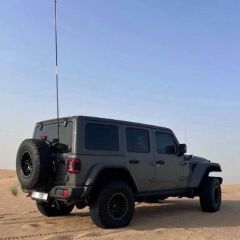
Looking to upgrade the jeep. The new ones only come in 2.0 ltr 4 cylinder while the old ones are 3.6 ltr 6 cylinder. Is any one driving a 2.0. Please share your opinions on the same.

  • Like (+1) 1
Link to comment
Share on other sites

Just to double check @Noufal - Jeep today manufactures and sells three engine version for the Wrangler - 2L turbo, 3.6L V6 and the 6.4L 392. The 3.6 is still very much in production. 

Edited by ChrisW
Link to comment
Share on other sites

Here in dubai its all in 2.0 including the rubicons. Only willys comes in 3.6 with rear diff locks. 
i test drove one today and felt its more tailored to city use or rock crawling.

hands down 3.6 

  • Totally Agree (+2) 1
Link to comment
Share on other sites

Ahhh interesting, thanks for explaining @Noufal. I understand more generally that Stellantis can be a bit selective on which dealers get which cars, and they've got some unusual mixes now that the 4xe has been withdrawn.


I think we have a couple of people in the club with the 2L turbo, let's see if they post. From discussions that we had, it didn't seem to make much difference with their off-road driving. 


Here's a comparison of the 2L vs 3.6L engines on the dyno:


image.png.8fd40797bbb6a69388475cf68f1cd834.png


The graph is a bit of a pain to interpret - but basically the black lines are the 3.6L engine (HP is the line that slopes upwards peaking at 6700 RPM, torque is the one that rises up to 2600 RPM and then sits fairly horizontal) and the green lines are the 2L engine (power slopes upwards from 2500 RPM, peaking at 5600 RPM, torque is the line that sharp goes up peaking around 3500RPM and then sitting level).


Couple of observations:

1.) The power band in the 3.6L is wide and progressive, but you need to get all the way to near redline to get all the power.

2.) The power band for the 2L is tighter (3500 RPM to 5600 RPM), but you get most of the power above 4000RPM.

3.) The 2L has marginally less power (6 HP is not much), but has more torque.

Initial thoughts: The two cars like-for-like are pretty much the same weight. The 2L is very likely to be able to go everywhere the 3.6L can go. The 2L might require more careful handling during a dune climb (staying in the RPM power band). The increased torque might be nice on the road, and probably won't make much difference in the desert.


So at this point I think it now comes to price and maintenance...!


Edited by ChrisW
  • Like (+1) 1
  • Thanks (+1) 1
  • Well Done (+2) 1
Link to comment
Share on other sites

Me either interested to find how my new 2L turbo is going to perform against my old 3.6L. On road, the small distance I drove today after taking delivery didn’t find much difference, rather awaiting for the next weekend to experience my first off-road with the new 2L Turbo. Perhaps I can share my experience after that. Cheers. 

  • Like (+1) 2
Link to comment
Share on other sites

I agree on graph and paper 2.0 looks good. While driving i did not feel the initial pick and the power you get from 3.6 in comparison to 2.0. I felt fast but i dint feel the power and torque. This is just my opinion on the road. Only some one who has tested these on the sand would be a better judge. 

  • Like (+1) 1
Link to comment
Share on other sites

22 hours ago, ChrisW said:

Ahhh interesting, thanks for explaining @Noufal. I understand more generally that Stellantis can be a bit selective on which dealers get which cars, and they've got some unusual mixes now that the 4xe has been withdrawn.


I think we have a couple of people in the club with the 2L turbo, let's see if they post. From discussions that we had, it didn't seem to make much difference with their off-road driving. 


Here's a comparison of the 2L vs 3.6L engines on the dyno:


image.png.8fd40797bbb6a69388475cf68f1cd834.png


The graph is a bit of a pain to interpret - but basically the black lines are the 3.6L engine (HP is the line that slopes upwards peaking at 6700 RPM, torque is the one that rises up to 2600 RPM and then sits fairly horizontal) and the green lines are the 2L engine (power slopes upwards from 2500 RPM, peaking at 5600 RPM, torque is the line that sharp goes up peaking around 3500RPM and then sitting level).


Couple of observations:

1.) The power band in the 3.6L is wide and progressive, but you need to get all the way to near redline to get all the power.

2.) The power band for the 2L is tighter (3500 RPM to 5600 RPM), but you get most of the power above 4000RPM.

3.) The 2L has marginally less power (6 HP is not much), but has more torque.

Initial thoughts: The two cars like-for-like are pretty much the same weight. The 2L is very likely to be able to go everywhere the 3.6L can go. The 2L might require more careful handling during a dune climb (staying in the RPM power band). The increased torque might be nice on the road, and probably won't make much difference in the desert.


So at this point I think it now comes to price and maintenance...!


Looking at the narrower power band, I gather the 2.0 comes with more gears?

Link to comment
Share on other sites

@_Herman_ I’m fairly sure they all share the same automatic gearbox, a ZF 8-speed. 
 

The final drive ratio can change between models. My 2024 Rubicon is 4.56 (default is usually 4.10). I’d expect the 2L to be 4.10 or 4.56 too. 

  • Thanks (+1) 1
  • Totally Agree (+2) 1
Link to comment
Share on other sites

On 2/7/2026 at 9:00 PM, Noufal said:

I agree on graph and paper 2.0 looks good. While driving i did not feel the initial pick and the power you get from 3.6 in comparison to 2.0. I felt fast but i dint feel the power and torque. This is just my opinion on the road. Only some one who has tested these on the sand would be a better judge. 

This is correct observation and this is so called turbo lag..

image.png.c40dbd34d7283a83da959ab4a142fe28.png

This graph is the smoking gun for why the dyno never lies! You can see the 2.0L  is basically asleep until 3,000 RPM, while the 3.6L  is already putting in work right from the jump. In the dunes, that delay is a death sentence; with the 3.6L, you press the pedal and climb, but with the turbo, you’re stuck waiting for a "power permit" while you're already moving. By the time the boost finally kicks in, you've either missed your window or you’ve overcooked the gas and started digging a hole to China. It’s exactly why naturally aspirated is king in racing—you need throttle control, not a waiting room for your horsepower. Just go with the 3.6L and leave the "lag and dig" lifestyle to someone else! :)))

Edited by DG707
  • Totally Agree (+2) 1
Link to comment
Share on other sites

Create an account or sign in to comment

You need to be a member in order to leave a comment

Create an account

Sign up for a new account in our community. It's easy!

Register a new account

Sign in

Already have an account? Sign in here.

Sign In Now
×
×
  • Create New...

Important Information

Terms of use