
Leaderboard
Popular Content
Showing content with the highest reputation on 06/13/2025 in all areas
-
Looking forward to joining everyone for what will be my 50th Carnity drive!7 points
-
Great I get to test my new bat signal rear light that shoots straight up into the air! Can't wait 🏁5 points
-
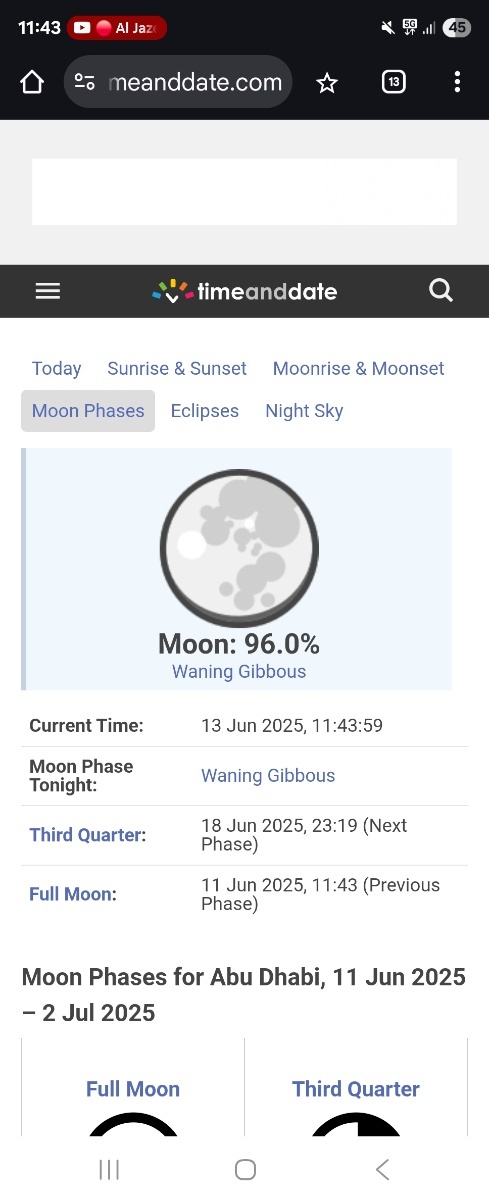
Great I get to test my new bat signal rear light that shoots straight up into the air! Can't wait 🏁 Full moon so we have help from upstairs
 3 points
 -
Congrats @ChrisW, enjoy the big FIVE ZERO!3 points
-
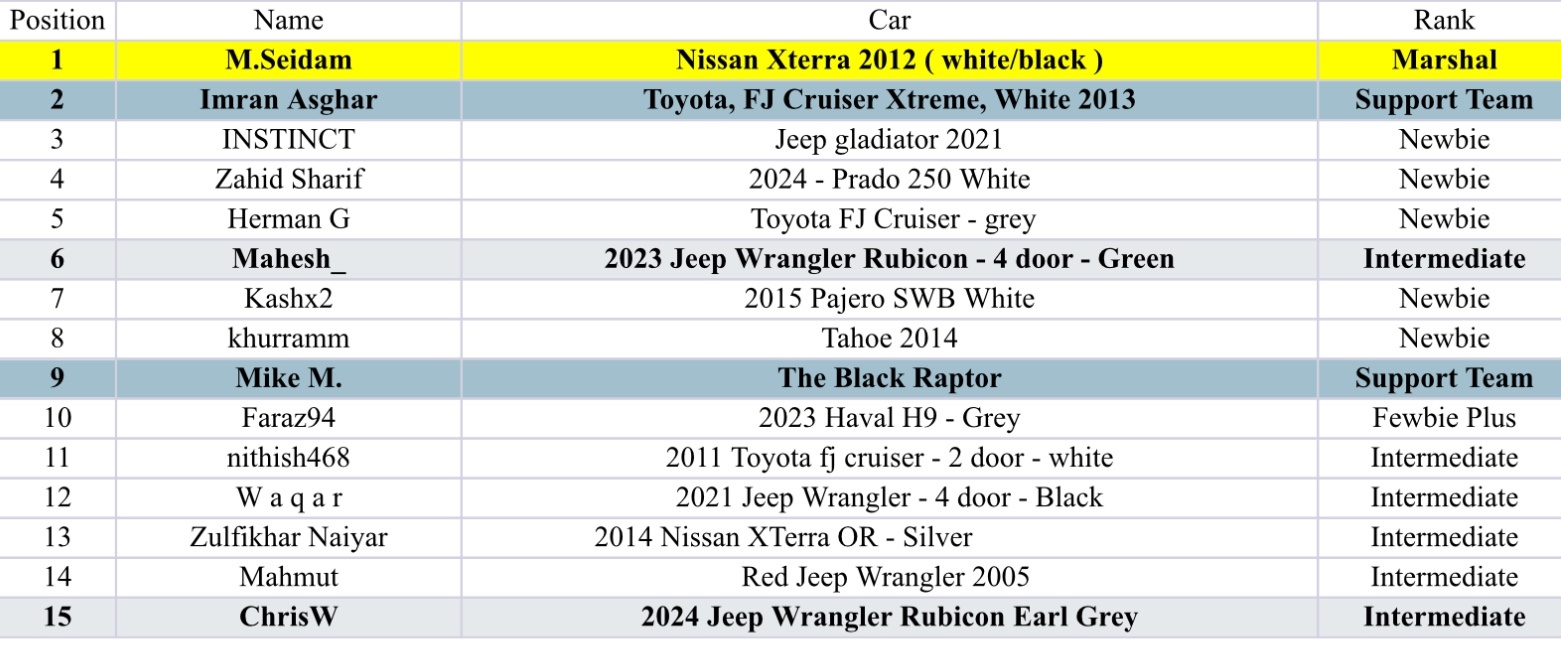
@Imran Asghar@INSTINCT@Zahid Sharif@Herman G@khurramm@Mike M.@Kashx2@Faraz94@nithish468@waqar@Mahesh_@Zulfikhar Naiyar@Mahmut@ChrisW Dear Friends Please note : RSVP IS CLOSED Will communicate on RADIO CHANNEL 2 Final check on your Gear as per level , Full charged Radio and Falg please check your stock head lights and fog lights that are working I highly recommend to have your legs and feet covered for your own safety hand or head light source would be useful at all time when you out of car please be on time 8 pm or bit earlier at meeting point above in the topic CONVOY ORDER
 3 points
 -
If more support is needed I'm available last minute! 😅2 points
-
1 point
-
@M.Seidam Yes I will be happy to join. Confirmed.1 point
-
No worries @JC_E ! I removed you from the list @Kashx2 the system drown you automatically to the drive RSVP . Please confirm you coming tonight . Let’s see till 6 pm if no one drops then really sorry dear . After 6 pm the convoy order would be final1 point
-
Yes please, thanks @Ale Vallecchi. It's been awhile since I drove with you 🎉1 point
-
Dear @Sam Selim and @Andrei S if you wish and confirm I can extend the convoy by 2 cars, to include both of you. Please let me know if I should add you. Thanks1 point
-
Hi Ale, could you please share an approximate entry point? thanks Andrei1 point
-
" As I listened I thought once again how precarious was the existence of the Bedu. Their way of life naturally made them fatalists; so much was beyond their control. It was impossible for them to provide for a morrow when everything depended on a chance fall of rain or when raiders, sickness, or any one of a hundred chance happenings might at any time leave them destitute, or end their lives. They did what they could, and no people were more self-reliant, but if things went wrong they accepted their fate without bitterness, and with dignity as the will of God. "1 point
-
Dear passionate off roaders When I had my first absolute newbie couple weeks ago it was short cut by bad nose landing ( was entirely my fault and I know it ) . Thank God zero human injury and the Iron was repaired as brand new. Actually from that point the real story begins and I realized how important to see the things from different angles to analyse and to learn how to avoid various problems in the setting of off road dives .I searched the various resources online and I found what I was looking for in this respectful community. and now with all the support of all of you, especially @Gaurav who was the first who drove me to safety at the very beginning and to @Gaurav @Rahimdad and @Frederic whom I had the honour to drive under their leads where I got all support and help, I can proudly say that I got my first zero refusal/stuck after 4 drives in a row as a newbie including the absolute newbie. Special Thanks to @Chaitanya D my friend and colleague who spared no effort helping me find my current off road vehicle Xterra and all the tips along. I personally believe that off road drive has a unique learning curve climbing it requires time, patience, determination , awareness of the known common risks and problems and above all that sharing and transmitting what is available from knowledge in the scene either directly by witnessing it if possible ( situation might not allow at the scene like terrain condition , weather , and now covid19 time ) as safety comes on top of the list or indirectly by capturing pictures , clips ..etc for the stuck or refusal and how we deal with it . in carnity discussion I found about what went wrong in terms of off road accident or refusal or stuck and even wrong recovery techniques and discussion about it which is good to see mistakes of others or even own to learn and not to repeat. here I put the initiative and from our own drives how recovery either self or assisted is done by our expert leaders directly or under their direct supervision and I request every one if at all possible when we are not in motion to try take the chance to take some videos ( one hand cant clap ) from another angle so after each drive the one who didn't have the chance to see it live can at least see it here. discussion is open and I would appreciate the feedback from our leaders as always. Cheers and Drive Safe1 point
-
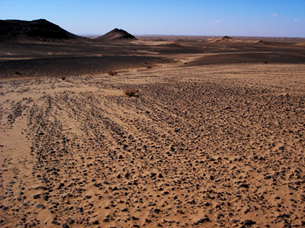
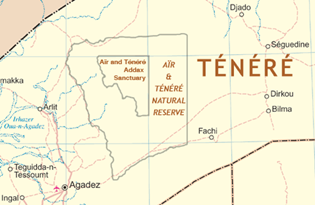
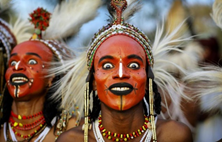
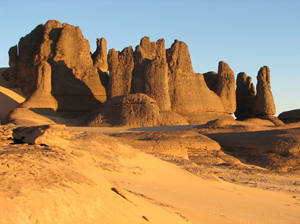
INTRO There are extraordinary places that, once visited, leave a lifelong mark on a person's life. Some people catch a "bug" for cities (using myself as an example, that would be Bangkok, or Buenos Aires), for countries (India), even for a continent (Africa). More rarely, it's a natural feature that leaves a lifelong mark on someone's mind, urging her/him to return to it, time and time again. For some, it's being out at sea, for others being up in the mountains. I am sure all of you, Carnity Desernauts, can sympathize with me for being unable to resist the call of the desert. Most people would find this inexplicable, and, bewildered, will say "but there is nothing in a desert", or "what can you do in a desert, don't you get bored with its emptiness?". I surely don't need to give you the answers to those questions (or you wouldn't be reading this post at all). Hence, I would like to take the "opportunity" of my FJ being momentarily "out of action", to spend some time reminiscing those very places which stole my heart and mind, from the very beginning of my desert-going years. In fact, there was a time when I moonlighted as an organizer, and guide, of adventure travels, specialized in desert locations. It was a magic period, when terrorism had not yet taken a hold of most of Northern Africa and other parts of the continent, and extensive travelling was possible, even to the most remote and wild locations. To most people, the sandy stretch covering the north of Africa is simply known as the Sahara. The word itself is self-explanatory, meaning "deserts" in Arabic (in the plural), but also "moon", "wilderness", and "dawn" or "before dawn", with similar variations in different languages. Seven million years old, and with an area of 9,200,000 Km2, it is the largest hot desert in the world. Concentrating on its plural form, "The Sahara" is an assembly of many, fabulous, sometimes mythical, individual deserts: the Adrar, the Ténéré, the Air, the Ennedi, the Tibesti, the Hoggar, the Tassili, the Fezzan, the Nubian Desert, the Gilf el Kebir, the Great Sand Sea, the White Desert, the Danakil, and more to the east, the Sahara's natural extension, The Arabic Desert, with The Rub al Khali. Amidst these legendary deserts, rise cities and oasis just as fabulous, with origins lost in the mist of time: Chinquetti, Ouadane, Mopti, Timbuctu, Gao, Agadez, Arlit, Fachi, Bilma, Djado, Tamanrasset, Djanet, Ghat, Kufra, Dakhla, Dallol, and (why not?) Liwa. These are the magical places I was lucky enough to visit before politics and terrorism closed most of these locations to travelers. I'd like to take this forced period of absence from our UAE deserts, to look back on those times, and share with you some memories, and stories from the campfire. Before getting into the thick of these travels, a few reminders of what The Sahara is, and how it is unique. Contrarily to common belief, only 15% of the Sahara's deserts are made of sand. Inhabited by only 2.5 million people, covering 1/3 of all of Africa's surface, the majority of its landscape is made of "Hamada", or rocky plateau, such as the Algerian Tassili, depicted below. The flat desert pavement, called "Reg", is the second most prominent feature of this region. while the dune fields most associated with the Sahara are known as "Erg". Other geological formations that may be encountered in the Sahara, are the Wadi (dry river), Oued (dry lake), and the Chott (salt flats). Mudflats, usually known as “Sabkha”, are more typical of the coastal deserts of the Arabian Peninsula (as in the UAE), and are not found in the Saharan landscape. Going back to our most favorite feature, the Erg – i.e., the familiar sand dunes we are used to driving on - these associate their names to fantastic Saharan locations. Some of the better-known ones to motorsports lovers have provided a stunning backdrop to the original Paris-Dakar rally: The Grand Erg Oriental, the Erg Issaouane, the Erg de Bilma, these are endless dune fields, which take days to cross, and are only rivaled by our own Rub al Khali, in terms of sheer size and remoteness. Having said all this and sending you to read Fred’s essay on dune formations, for more information on the matter, I’ll get on with lighting the first campfire, and share with you some memories from the Sahara. I will start, on my next post, with perhaps the most legendary of these deserts: The Ténéré. In the language of the Tuaregs who inhabit it, the word means…”desert”. While this repetitive calling deserts by their own common names may seem to reveal a lack of fantasy, to me it implies an utmost respect for their absoluteness: to the Arabs, as well as to the Tuaregs, these locations are THE one and only Desert. Most of the Ténéré is a flat basin, once the bed of the prehistoric Lake Chad. In the north, the Ténéré is a vast sand sheet (a Reg) - the true, featureless “Ténéré” of legend reaching up to the low hills of the Tassili du Hoggar along the Algerian border. In the center, the Bilma Erg forms rows of easily navigable low dunes whose corridors make regular byways for the azelai, or salt caravans. To the west, the black basaltic feature of the Aïr Mountains rise up. To the southeast, the Ténéré is bordered by the Kaouar cliffs running 100 km north to south. At the base, lies a string of oases including the famous Bilma. Periodic outcrops, such as the unusual marble Blue Mountains in the northwest near Adrar Chiriet, or the Agram hills near the oasis of Fachi and Adrar Madet to the north, are rare but notable landmarks. The entry point to the Ténéré is the Tuareg village of Agadez. This city built with mud can be reached after an exhausting 16-hour drive from Niamey, the capital of Niger. Along the way one can meet some of the local tribes, the most stunning of which is the Bororo tribe. The best time to visit this tribe would be during the Gerewol Festival. This is an annual courtship ritual competition among where eligible youths dress up in elaborate ornamentation and, made up in traditional face painting, gather in lines to dance and sing, vying for the attentions of marriageable young women. The feature which wins the lady’s hearts is the whiteness of the eyes and teeth, hence the young men’s grinning and wide open, seemingly psychotic, yet love filled eyes. Back to Agadez, one usually arrives in this mud-built city late in the evening or at night. Nothing better, at this time, then paying a visit to Vittorio, at his hotel, restaurant, camping ground, entertainment venue. Built by this Italian expat (legends say fugitive from the law), who moved to this remote outpost decades ago, the Hotel Telit, and its Le Plier Restaurant, are now local institutions, where Vittorio and his Tuareg wife never fail to welcome the wary travelers, on their way south to the capital, or further north, to the Ténéré, and onward to Algeria. Time to go to bed now, resting for the last time within the safe mud wall of Agadez, before venturing into the endless openness of the Ténéré. Stay tuned for the next installment of “Deserts of the World”, when the adventure begins.
 1 point
 -
Great Ale @Ale Vallecchi really can’t wait to live the adventure through your story !!1 point
-
LONG TREKS – OBJECTIVES, PREPARATION, AND MANAGEMENT (Part 3...before the actual trip begins) Nobody takes long desert trips looking for gourmet cuisine as part of the experience. Yet, one may occasionally be surprised by the ability of the cook to overcome the shortage of ingredients, and be as creative as possible, with local food and interpretations of more international dishes. The galley is usually stocked on a special “kitchen” car, where only the cook seats, next to his driver. Based on the size of the convoy, sometimes an assistant cook travels with the group. Most of the foods are non-perishable dry or canned items, while fresh vegetables, and sometimes fresh meat, usually last only for the first few days, and can be resupplied only if the trip includes a stop at a local market. As usual, the order of service is breakfast, lunch and dinner, plus at least 1 tea stop along the way. Breakfast is always done with dry cookies, left over from the bread made the evening before, jam and honey, and sometimes with the bonus of a typical Italian cake (Panettone for December trips, and Colomba for Easter time travels). Tea and instant coffee are always available. Lunches allow exclusively for cold dishes, which require minimum preparation, without dismounting the whole kitchen: salads (as long as fresh vegetables last, or as soon as they can be replenished at one of the possible oasis), canned tuna, rice dishes, cheese and fresh or dried fruit (oranges and apples usually last for quite a long time). Possibly even the leftovers from a cous-cous from the previous night. For dinners, the full kitchen set up means warm dishes: after an aperitif (cold cuts, bits of cheeses, some olives and pates), the omni-present soup, key to rehydration after the long warm/hot day, followed by another hot plate, ranging from local cous-cous accompanied by bread cooked under the sand, rice (the cold remains of which, as in the case of the cous-cous, will be served the following lunch), spaghetti, or, less often, some grilled meats (the leaner parts, while the bones and cartilages are used to enrich the soup). Wine, courtesy of the travelers, often is served during dinner, while tea invariably closes it, being served around the fire. There is always one person from the agency's staff who is the official tea maker. He stores the dry tea leaves, and the fresh mint, with great care, stashing them in two separate bags inside his tea pots, usually enamel ones with the colors blackened by the fire's soot. When the evening's tea is prepared by a Tuareg, as it would be in this case, it becomes an unforgettable moment, always to be longed for, during, and especially after the trip. The preparation is a rather complex and long procedure: you need green tea (usually strong Chinese tea), fresh mint leaves in large quantity, and a lot of sugar (approximately five teaspoons of sugar for one teaspoon of tea leaves). You’ll also need two pots. The tea is first put in the teapot and a small quantity of boiling water is added. The tea is left to infuse for a short time (approximately 20-30 seconds), then this initial liquid is poured in another pot, and kept aside. This is the “spirit” of the tea (essentially a strong, deeply flavored liquid from the initial infusion, which adds extra flavor to the final infusion), and will be added back to the final infusion, to restore its “spirit”. The tea leaves are then “cleaned” by adding a small quantity of boiling water, that is poured out after one minute (this lessens the bitterness of the tea). This process may be repeated more than once. Mint and sugar are added to the tea leaves, and water at the boiling point is then poured in the pot, which may then be further heated to increase the flavor of the infusion. After three to five minutes, a glass is served and poured back in the pot two to three times, to mix the tea. A final taste, and addition of more sugar, if needed, will complete the infusion. Now, the tea is poured into glasses from a height, to swirl loose tea leaves to the bottom of the glass, whilst gently aerating the tea to improve its flavor, and, last but not least, to produce a layer of fluffy “foam” on top of the tea itself. A Tuareg’s tea should always be enjoyed 3 times over a period of several minutes (usually while talking around the fire), to fully appreciate all its nuances, due to the evolving concentrations and balance of tea, mint and sugar. For a Tuareg this triple tea tasting is not only the proper way to fully enjoy the beverage, but it also becomes a representation of life. As the saying goes “The first glass is as bitter as death, the second is as strong as life, the last as sweet as love.” And remember… “A tea without foam is like a Tuareg without his turban” (Tuarge’s proverb). Normally, while the kitchen prepares dinner, the weary and dusty travelers set up camp. Tents are supplied by the local agency. It is their task, before every trip, to check and fix all the zippers, clean the tent poles from the sand that will surely have sneaked inside the joints, and repair any breaks in the fabric. Ferrino is usually the go-to brand of tents we use, while I have almost never used those automatic deployment tents. Mattresses are also provided by the agency, which occasionally also brings a fabric enclosure used to protect the kitchen and eating areas from the wind. Everything else is care of the traveler. In order of importance: the sleeping bag (in winter time, at least good to give comfort at -5 degrees), a canteen, toilet paper, a head lamp (with batteries), wet towels, duct tape (great to repair any kind of tears in your equipment), a small spray bottle for washing/showering, a towel, a folding knife, eating utensils, and any medicines necessary to the individual (always best to have something against stomach ailments, including laxatives, eye drops, disinfectant, band-aids and gauze, antibiotic cream, and for those who suffer from it, never leave home without Preparation H….). Now that we have taken care of the cars, water, fuel, food, tea and gear, we are really ready to leave Agadez, and venture in one of the largest, most desolate, diverse and sparsely inhabited deserts in the world: The Ténéré.1 point
-
LONG TREKS – OBJECTIVES, PREPARATION, AND MANAGEMENT (Part 2) As anybody can guess, one of the most critical ingredients of a successful desert exploration is water. In order of importance, the need for water is for drinking, cooking, car maintenance, and finally, washing. From the physiological point of view, once a person looses through perspiration approximately 2 liters (or 2-3% of its body weight in water), she/he starts to experience loss of concentration, fatigue, dizziness, and general discomfort. So, replenishing your body’s reserves of water is a must. Perhaps few know that there are optimal times for drinking water, to maximize absorption. Locals know well what are the ideal water drinking times: in fact, if you notice a Bedouin or a Tuareg’s habits, they would drink water only in the morning and in the evening, without takin countless sips during the day. What they take countless sips of, during the day, is tea. With lots of sugar. This forefather of energy drinks resets the body’s dehydration gauge. That is, simple water passes rapidly through the system, reducing its benefits mostly to cooling the body, while sugared tea gets processed more slowly, providing a deeper and longer lasting hydration of the cells. Of course, one still needs water to make tea, so the requirement for water in terms of supplies will not change. How much to drink may vary depending on the season. Also, the first days of the trip may also require more water, as the body adapts to the drier environment. All things considered, in general we calculated that each person should need 3 liters of drinking water per day (these may be reduced to no less than 2 liters in winter, or upped to 5 liters if trekking were involved), while on a daily basis we accounted for a usage of 2 more liters for cooking and brewing tea, plus 1 additional liter for washing/shaving (even though this consumption may be reduced by using wet towels to wash), and, finally, another 1 liter for potential car maintenance. That makes a total of 6 or 7 liters per person each day, just to be on the safe side. So, for 12 days out in the desert, a group of 14 people will require a supply of almost 1,200 liters of water. WATER REQUIREMENT: Done. Next chapter – Fuel supply. We only used to get a little anxious about the need to refuel when the gauge in our cars started reading “Kilometers left: --------“. Since Cafu appeared on the UAE scene, we do not even have to worry about that. Now, imagine a 2 (or 3) week drive, 1,000 km from the nearest Cafu truck, and fuel, once again, becomes a major concern. At this junction, knowing your vehicle’s fuel consumption comes in handy, to establish your requirements for the whole trip. Let’s start with the assumption that a Land Cruiser normally goes just under 6Km with 1 Liter of gasoline, in city driving conditions. Add some extra consumption to account for driving on sand: let’s say a benevolent 5Km/Lt (or an equivalent of 20 Liters to cover 100 Km). Under these assumptions, and considering the cars we were using (Land Cruisers 70 Series) were equipped with a dual tank, their 130 Liter capacity would last for Kms 650 (130 Lt/20 x 100 = 650). Adding to this calculation the fact that the cars will travel with a full load (4 passengers plus gear and supplies) and keeping a minimum safety margin (one never wants to be running on fumes), let’s say each full tank will be good for 600Km. Therefore, planning for a 1,500 Km trip means that each car would need to carry approximately 200 Liters of extra fuel (to be on the safe side). That’d be 10 jerry cans of 20 Liters, to be stacked on the roof rack. Clearly quite a load to carry, which would force the group to greatly streamline their luggage. Thankfully, regardless of how remote some of the locations we would pass seem to be (and actually are), they happen to find themselves along major trading routes. Originally, of salt caravans, and pilgrims on their way to Mecca; nowadays, salt is still traded along these lanes, but other commercial goods are motor trucked across the Sahara, from Central Africa to the coast of the Mediterranean. So, thankfully, Bilma, Dirkou and Arlit are either equipped with proper gas stations, and, more likely, with refueling points, where gasoline is pumped out of barrels. Considering that our two refueling points, Bilma and Arlit, were respectively 550 Kms away from Agadez, and another 600 Kms away (Arlit from Bilma), we were able to carry “only” an extra full tank worth of jerrycans. Incidentally, water can also be resupplied at the same locations (which they also happen to be oasis), so that the load of water tanks needed for the whole trip could also be reduced. FUEL SUPPLY: Done. Next chapter – Kitchen and camping equipment.1 point
-
10 years later .... In a weekend I and my wife paying a visit to our elder son’s house .. after a nice dinner my son’s wife prepared , we decide to have our dessert on the terrace to enjoy what was left from the reflection of the sunset on the landscape.... time for bed every one got to bed and next morning and as my biological timer to wake up at dawn for the prayer and never go to sleep after that. Walking on my cracking toes in an attempt not to wake up the folks... gently preparing my double espresso without sugar ( Lavaza has been always my second wife , she knows it and happy as long as it doesn’t go further 😆 ) .... watching the fascinating sunrise I leaned my back on the super soft couch and closed my eyes and just let go ... 10 vehicles unrecognizable from far away , though their flags to the contrary were familiar carrying the symbol of big Gray C in a red back ground enclosed in a black circle.... in a sec I wondered was it a dream .. when I opened my eyes the sun as It didn’t move as if it got stuck waiting for a rescuer ! ... I turned my head and as if a shock struck me when I read the title of a book on my son’ s side table DESERTS OF THE WORLD - stories around campfire by @Ale Vallecchi1 point
-
LONG TREKS – OBJECTIVES, PREPARATION, AND MANAGEMENT Waking up on the first morning of a long desert trek is always very exciting, and a little concerning (let’s say 80% excitement and 20% concern). While for the group’s members the objective of the trip is to see as much as possible, take nice pics, and have fun (for them it’ll be excitement 100%), from the point of view of the group’s leader and the crew, the objective is to provide the above services while ensuring that the whole itinerary is covered timely and without incidents, with the security and comfort of the passengers as the first and foremost concern. Thus, let’s focus on that 20% of concerns which must be dealt with before the trip starts. These would normally fall under the following headings: local team, local cars, water supply, fuel supply, kitchen, camping equipment. Usually, these tours are managed with the support, and active participation, of a local team. They usually come from local tribes (in the case of Niger, but also Mali, Algeria and Libya, it's Tuaregs), and are headed by a senior, and most respected, member of the local community. The stature of the leader (in an abstract sense, even though Tuaregs are also very tall) is very important, as these trips usually cross areas of conflict, often between local tribes and sometimes between local tribes and national authorities, which require not only a person of experience in desert caravans, but also someone capable of commanding the respect of, and being able to mediate with, anybody interested in making the life of the convoy difficult. This particular itinerary was going to take us to the border area with Niger and Tchad, skirting the foothills of the Tibesti plateau. This is an area of conflict between Niger’s government and local Tebu tribes, which control this territory, and defend it in arms, including land mines. Other conflict areas may be the south of Algeria, the border between Egypt, Sudan and Libya, some areas of Mali, and border areas between Ethiopia and Eritrea. Here we already knew of another Italian convoy travelling toward the Tibesti, led only by their tour leader, who had ventured into a contested area, only to see one of the cars explode on a land mine, and 1 of the group's members losing his life. Their downfall had been the tour leader's wish to stray into an unknown area, and refusal to bring along a local Tebu guide, for the time necessary to cross that particular stretch of desert (these Tebu “guardian angels” stop all convoys along the beaten tracks, and board the leader’s car to escort non-army, non-governmental caravans, through the danger area, in exchange for a “donation”). Remembering this unfortunate accident, we had made sure our team was led by a senior Tuareg, and that he carried also enough money to manage any unplanned detours and carry out any “voluntary” transactions. LOCAL TEAM: Done. Next chapter – Local cars As the group usually travels to these distant locations by air (although I have friends who have driven their own cars, one holiday at a time, from Italy all the way down to these remote places), sourcing local, and most of all, reliable cars is essential. Toyota, with its Land Cruisers, has the monopoly of the Saharan market. The cars are all manual gears, and for the most part with minimal electronic equipment, which enormously facilitates their repairs, if needed, during the trip. Besides a local “chief”, each convoy usually is manned with a professional mechanic (and drivers, as well). Almost all drivers have either an army background, or have driven these routes with commercial trucks, hence are all experienced in impromptu repairs. These may range from simple things such as fixing a punctured tire, to averagely complex things, like changing a belt (there is always an extra belt aboard each of these cars, knotted around the shift lever), to more complex problems such as repairing a leaf spring suspension, plugging a leak in a radiator, or fixing the gear box. The mechanic’s ingenuity is directly proportional to his previous experiences, and sometimes reaches fantastic heights. For example, how do you fix a punctured radiator if you don’t have a soldering iron? Of course, first try with toothpaste: plaster it on top of the puncture, and hope the heat hardens it, and plugs the leak. Failing that (which in this trip, it did), you should clearly put some tobacco from your cigarettes inside the radiator, so that (don’t ask me why, or how), it “boils” up toward the leak, and plugs it from the inside. And this we did, to momentarily solve a radiator problem which occurred in the middle of the Erg of Bilma, for long enough (2 days) to reach the village of Dirkou, and its better equipped mechanic. Therefore, seasoned Toyota Land Cruisers, a good mechanic surrounded by experienced drivers, a minimum of essential spare parts, and a lot of creativity (and some luck) in solving problems: that’s all is needed to face a major desert trek. LOCAL CARS: DONE. Third chapter - Water requirements1 point
-
Sorry Doc @M.Seidam i need to withdraw from tonights drive. Have fun everyone!0 points

This leaderboard is set to Dubai/GMT+04:00