
Leaderboard




Popular Content
Showing content with the highest reputation on 11/15/2023 in all areas
-
Please download and print this final rule book for Desert Champions Trophy 2023. Kindly read this full, without any distractions and agree to abide without any excuses. DCT 2023 Rules and Regulations.pdf7 points
-
@GauravSoni @Davie Chase @Looper @Rizwanm2 @Zed @Asif Hussain @Icon Auto @Wissam Hope you have all gone through the Rules and Regulations, in case you have any doubts, feel free to reach us.5 points
-
Dear all, Due to personal reasons, I have come to the point and decided to leave @Carnity. It was a pleasure meeting you all. Wish everyone health, happiness and success. Regards, Hisham Masad
 1 point
 -
Thank you all for a warm welcome 😀 @Gaurav, the Sunday drive was amazing! Looking forward to the next one!)1 point
-
1 point
-
1 point
-
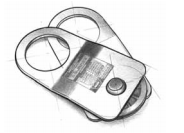
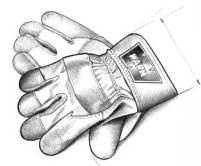
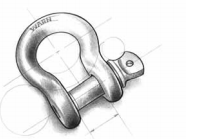
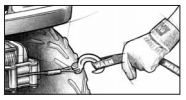
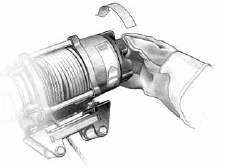
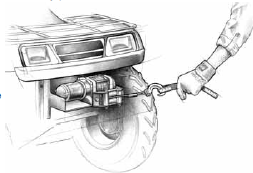
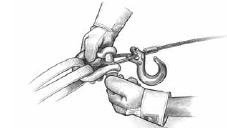
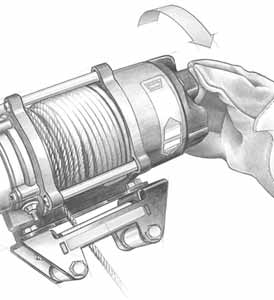
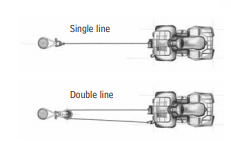
This tutorial is aimed at providing you a basic understanding of your winch and the proper way of using it, with an emphasis on safety. As every winch recovery is different, it is impossible to describe every possible scenario. But with providing you the basic techniques you will be able to understand how to operate your winch, and in the case of an assistant/buddy , know what to do when assisting during the recovery process. The main important aspect of winching is to THINK through each situation BEFORE jumping into action. Applying a bit of common sense goes a long way and remaining calm is ESSENTIAL. WHICH ACCESSORIES SHOULD I HAVE Hook Strap The Hook Strap is used to hold the hook and keep fingers away from the fairlead as the rope is being spooled in. Snatch Block The multi-purpose snatch block allows you to: (1) increase your winch’s pulling power. A double line rope pull will halven the load on your winch. (2) change your pulling direction without damaging the rope. Rope gloves Having proper gloves is essential to perform winching. On a steel rope you can easily cut yourself, while with a synthetic rope there is risk of burning your hands if you hold on to the rope. D-Shackles or Soft Shackles Will be used to connect your winch to the object that need to be winched. If your winch has a hook, then you can use the hook directly. WORDS OF CAUTION -Never attach a recovery/kinetic rope or strap to the winch hook to increase the length of a pull. Use a Winch Extension Strap. -Never operate winch with less than 5 wraps of rope around the drum. Rope could come loose from the drum, as the rope attachment to the drum is not designed to hold a load. -STAY CLEAR FROM THE ROPE AT ALL TIMES WHEN IT IS UNDER LOAD. STRETCHING YOUR WINCH ROPE FOR THE FIRST USE The life of a wire rope is directly related to the use and care it receives. Tensioning the wire rope is critical to ensure a long product life. Tensioning the wire rope will prevent outer layers of wire rope from pinching and deforming the inner layers. During its first use, a new wire rope must be spooled onto its drum under a load of at least 500 lbs. (227kgs). Use the following instructions toproperly stretch the wire rope onto the winch drum: BEFORE YOU PULL Practice using your winch before you get stuck. A real situation is no time to be learning how to use your winch. Whether you’re recovering another vehicle or pulling a stump from the ground, knowing the proper winching techniques can help keep you and others around you safe. And perhaps the most important part of the winching process, regardless of the situation, is what you do BEFORE you pull. 1. Always take your time to assess your situation and plan your pull carefully. 2. Always take your time when using a winch. 3. Use the right equipment for your situation. 4. Always wear gloves and do not allow the rope to slide through your hands. 5. You and only you should handle the rope and operate the remote control switch. 6. Think safety at all times. 7. Practice. Practice and practice the steps. RIGGING FOR THE PULL The following steps describe how to recover your vehicle with rigging a single line pull. Double or multiple line rigging techniques follow the same basic steps,but use a snatch block to assist the process. Step 1: PUT ON GLOVES. Step 2: DISENGAGE CLUTCH. To allow free spooling of the winch drum, rotate the clutch lever on the winch to Disengage. Freespooling conserves battery power. Step 3: FREE THE WINCH HOOK AND ATTACH HOOK STRAP. Free the winch hook from its anchor point. Attach hook strap to the hook (if not attached). Step 4: PULL ROPE TO THE STUCK VEHICLE Pull out enough rope. Be sure to keep certain amount of tension in the wire as it can become twisted and overwrap when slackened, leading to rope damage. To prevent loosing the end, hold the winch hook in the hook strap while you work. Step 5: SECURE TO THE STUCK VEHICLE. Use Soft Shackles or a rated D-Shackle. Step 6: LOCK THE CLUTCH. Lock the winch drum by rotating the clutch lever on the winch to Engage. Step7 : CONNECT THE REMOTE CONTROL. Be careful not to let the remote control cord dangle in front of the winch. Always disconnect the remote control when not in use. Step 8: PUT ROPE UNDER TENSION. Using the winch switch, slowly wind the rope until no slack remains. Once the rope is under tension, stand well clear, and never step over it. Step 9: CHECK THE VEHICLE THAT WILL BE PULLED. Communicate with the vehicle owner about your course of action, and ask him to put the vehicle in 4LO. Do a last inspection of the connection before starting the pull. Step 10: CHECK ROPE. The ropeshould be neatly wound around the spooling drum. Improper winding can cause damage to the rope. Step 12: LAY SOMETHING OVER THE ROPE, if you decide it is necessary, midway between the winch and the anchor point to absorb energy should the rope snap loose. A winch dampener can be used, or a heavy jacket might also do the trick. Step 13: MAKE YOUR INTENTIONS CLEAR. Be sure that everyone in the immediate vicinity surrounding the winching operation is completely aware of your intentions before you pull. Declare where the spectators should not stand — never behind or in front of the vehicle and never near the rope or snatch block. Your situation may have other “no people” zones. Step 14: BEGIN WINCHING. With the winching vehicle’s engine on and light tension already on the rope, begin winching slowly and steadily. Be sure that the rope is winding evenly and tightly around the spooling drum. The vehicle may be steered while winching but not driven. Driving vehicle causes rope to become slack and entangled. It is advisable to winch in "blips" by pushing the button for 2-3 seconds, followed by a pause of 5-10 seconds. This helps to keep the winch motor cool and during this time you can keep inspecting if the rope loops well on the winch or if no damage is occuring to the stuck vehicle. The stuck vehicle can also give gently blips of throttle to help the recovery process. During recovery of another vehicle, it is not advisable to keep the winching vehicle in (P) Park, as this causes a huge load on the transmission and might even damage the transmission. Use your handbrake, stay inside the vehicle, and keep your brake pedal pressed in hard. Use the remote to control the winching process, and have a buddy standing on a safe distance to act as a spotter. Use your radio to communicate with the stuck vehicle and your spotter. SOME LAST HINTS: A winch is very powerful, yet you should ALWAYS try to reduce the stress of the recovery, by deflating the stuck vehicle further down, and shoveling/creating a path where the vehicle can drive out with assistance of the winch. So make sure the wheels are free and can freely rotate. A winch recovery should always be done straight, and not under an angle as this will severely increase the risk of damage to the rope or stuck vehicle. If you need to pull from an angle you can use a snatch block. When you have finished the recovery, make sure to spool the rope back to the winch properly, by having 1 person to keep the rope under tension with his body weight, and another person to guide the rope back into the winch by guiding It from left to right, so the winch is rolled up evenly along the surface of the drum.
 1 point
 -
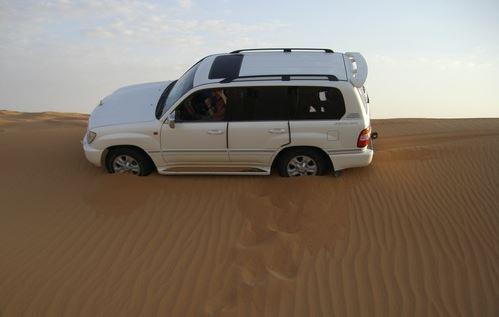 Basic Guide to Self-Recovery For newbie here is the recommended to read beginners guide to off-roading before you jump to reading this topic. We have already looked at the very basics of driving in the desert, lets look at another aspect. Sooner or later you will experience another, but not so pleasant but inevitable facet of this sport or hobby. Getting stuck, now we will talk here about that or to be more precise, how to get yourself unstuck without any help or if you are on your own, which by the way is not a very good idea to start with, specially if you've been just introduced to this activity. Getting bogged down happens all the time, whether its your first day in the desert or your a seasoned professional with the scars to prove it. The very first thing to do is NOT to panic. You are not the first one this has happened to and your not going to be the last. Panicking will only make the situation worse, so its always better to keep a calm and collected mind to help you through this ordeal. The other thing is to realize that your actually stuck and leave it at that and learn to accept that, yes, you are stuck and not going anywhere anytime soon. I have noticed many a times that someone does not accept the fact he is stuck and making the situation worse, What usually happens is the individual goes into denial mode and thinks that power alone can help him out, forgetting that his old friend momentum has abandoned him because he was mean to it. Then you see huge trails of sand being thrown up as he or she digs deeper into the earths crust. You see every time a wheel spins in a stationary position is displaces more sand underneath it effectively acting as a drill, remember our goal is to stay on top of the sand not under it, so this ego push will make things worst. Most of the times by simply reversing out to where you came from will solve the problem, specially when you have a slightly rising gradient in front of you. But start of with the gas slowly making sure not to spin the wheels, a little slip here and there is acceptable. Best way to do this is to pop your head out of the window or simply open the door and peek at your wheels. The advantage of this is two fold, first you can see your tires and second very quickly you'll learn not to spin them as doing so sends a tons of sand in your direction and fill the interior of your car with sand. Also before you do this, its best to step out of your vehicle and analyze the predicament you've gotten yourself into. This gives a good idea of what exactly needs to be done next. One effective technique to self recover from desert and one that I personally feel is dying out is the art of rocking. No its not some kind of ritual dance to appease the sand gods so they will let you free from their clutches. It is pretty much what it says. You literally rock your car out. This usually works best if you are knee deep in it and on relatively flat surface, has limited to no effect if the car is stuck sideways at a sharp angle. This works best if your driving a manual transmission but not totally ineffective on autos too. First thing to do is engage low ratio as this gives you more torque and you shall require oodles of it here. In low gear now bring the clutch to it's friction point, and I do hope you know what that is, if not look it up. Just when you feel the car is about to move, press it back in, just before it stalls. You don't need to use the gas pedal here. You might even stall a few times but its perfectly OK to do so, try again. Now once you do this you'll realize that the car gets a slight jolt like some one just gave it a wallop. Do this a few times and you'll feel with every movement of the clutch the car gets more movement than the last. What is happening is your disturbing the sand that has a death grip around your tires. With every jolt the car is trying to make forward, some of that sand is moving into place where your tire used to be, all the while making some space for the tire to move about. After a few attempts in one direction change gear, if you were in 1st put it in reverse and vice versa. Now this pushes the sand on the other side of the tire. All the while you will see your movements getting bigger and bigger gradually, now the trick is to keep the clutch engaged just long enough to move the vehicle as much as possible before it stalls out and you will see the car has now started to rock. What is happening now even if you have half a foot or less of travel in either direction is, sand is sliding in when you move and when you go over it the weight of your vehicle is compacting it, so you will slowly start to rise out of the sand. Sometimes the surface could be flat or the sand coarse and not sliding in at a fast enough rate or not at all. Now what you will do is what many will find extremely odd some might even disregard it. Pile up sand on your tire sidewalls. When I mean pile up, I don't mean bury your entire tire, just till sidewalls should be enough and you might have to repeat this. When you do this and rock that sand pile flows into that little tract your making like a small bulldozer and slowly the elevation starts to get higher. Now that you've got a good rocking motion going for you, you can feel your almost free. Now get the timing right on the edge of your swing, throttle it down and most of the times you will jump right out, sometimes you might misjudge it or the sand is playing tough, you might have to start over. Another thing to keep is mind is you have to make sure you are not grounded. This is when any other part of the undercarriage i.e chassis, differential etc is in contact with the sand, even if by a little. You'd be surprised how stubborn sand can be sometimes. Best to clear your car to such an extent that nothing other than your wheels are in contact with the ground. For an automatic rocking is less effective simply because of lacking a clutch, and not being able to give those life saving initial jolts. What one does is play between D and R. D a little movement forward, the same in R. Do this a few times and see if your getting any movement in any direction and if only in one direction, then play with that side first and then slowly going in the opposite direction. The concept is the same but just takes longer and your not rocking, rather paving your way out. You can try and achieve a rocking motion by alternating between a gear and N, but this is not recommended. Also keeping in mind not to over do it and automatic transmissions are prone to overheating, give it a little rest in between tries by simply putting it in park or neutral to cool itself down. Another way if your driving an automatic or you cannot rock for whatever reason. Is crawling. Now this is different and nothing like rock crawling. Crawling is basically struggling and fighting your way out. More like a battle with the sand to show it whose the boss, but don't get too cocky here, mother nature always has the upper hand. You might win the battle but will always loose the war. First of all is see if there is a downhill slope in any direction, even a very slight one, always remember to never underestimate the power of gravity. Similarly aim away from any uphill slopes, yes even very tiny ones and this goes for almost all types of situations where you get bogged down. How to crawl, very simple but can be physically strenuous at times. As always engage low ratio and apply differential locks if you have them. Now if the down hill slope is behind you engage reverse or forward if in front, first we have to get it going, then if it is on any one side we try to come out of it. You have to give it enough throttle that your wheels start to spin slowly, again stick your head out of the window for the two reasons mentioned above. Usually this is in between 1500 to 2000 rpms. Initially you might have to go a little over just to get the ball rolling, easing back down once you do. I don't think I need to mention again that you do not want to be spinning them as if your doing a burnout, just keep it steady. Now while that is happening, do full lock to lock turns with your steering wheel from left to right and than from right to left again. Do it with a little enthusiasm and not as if granny is trying to parallel park. You might notice that front wheels might stop turning between those lock to lock turns but that's OK. Keep at it. What is happening here is that your oscillating wheels are clearing out loose sand from its path and depending in which direction you are moving either pulling or pushing your car. Of course the rear wheels are also helping. Also if you got mates with you a little push also helps out a lot. By this time you should have some kind of movement. At first it could come is short bursts, but keep at it. If you notice you are getting lateral movement only within a specified arc of the steering i.e only half a turn in either direction and rest of the movement of the steering wheel is pretty much doing nothing. Then limit the the turns to that much. Trying out complete lock to lock turns again in the middle to see if the situation has changed or you lost movement in the your intended direction. If the downhill slope your aiming for is on one side then steer more on that side. Limiting turning to the opposite side. If your lucky and there is a downhill slope close by you will feel the car is starting to struggle less as it tries to free itself and gravity giving it a good helping hand, this is when you start to give it a little more gas. this is also when you realize how even a slight slope helps. Slowly but surely if you don't over spin you tires and keep at it, your vehicle will come to a harder patch of sand and now all you have to do is keep going until your well clear. And of-course when all else fails, use your trusty shovel and a little bit of elbow grease. But know how to use it wisely don't just go about it, a little shoveling in the right place goes a long way, rather than a lot of shoveling in the wrong place. First of all make sure as mentioned earlier nothing other than your tires should be in contact with the ground. If there is a build up of sand in front or at the back of any of the tires, clear that out as well. Once you've done that try to break free if it doesn't work the first time see where the problem is and shovel a little more and give it an another shot. One type I will not cover in detail here as it is a subject all on its own is when you get stuck sideways, only the very raw basics as it is always advisable to get help from others first, only if your by yourself and you have no other option. The simple aim here is you want either the nose or tail of the car to point downhill as much as possible. If it is very steep slope with very loose sand and your tires dug in quite deep on the down side, in that case call for help. If it is not that steep, or high and the sand is not all that soft and your not dug in too deep, then you can try to get out of that situation, but raise caution again if your not 100% confident of what your doing it is best to ask or call for help. Anything over 30 degree of tilt I would leave it alone, more experienced drivers might attempt steeper angles but they know what they are doing and do not try to emulate them. Thing to do here is see which side of the car is pointing more down and has a clear path that is no obstructions like bushes. You want to go in that direction. Sometimes you could land up in what will once again have your car stuck, i.e: a ditch or pocket but being stuck level in a ditch is any day better than being stuck sideways on a slip face. Try to crawl out first but of course not steering up in this case. If you feel your getting some kind of movement then keep on going if not, give it up. As you advance more in desert driving you will lern to assess the situation very carefully and correctly and then you might want to physically move some of the sand out of the way and try again but very very careful and cautious as sometimes that sand on the lower side wedged up against your car is the only thing keeping it from rolling over. So if you disturb that you could end up in a world of hurt. And last but not least as every stuck is unique and requires its own set of solutions to get away, sometimes you will have to use one of the techniques mentioned here sometimes all of them, or even more, never give up on ingenuity, but always step out and access your situation before you start trying.1 point






This leaderboard is set to Dubai/GMT+04:00