
Leaderboard



Popular Content
Showing content with the highest reputation on 01/26/2017 in all areas
-
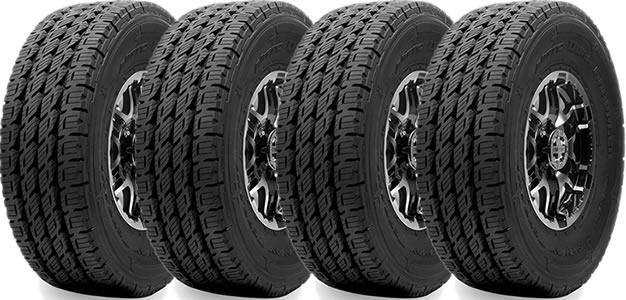 Set of 4 used: Twice Vehicle used: Land Discovery and Nissan Pathfinder Number of years used: 5+ Years Value for money: 5 / 5 On-road comfort: 5 / 5 Off-road performance: 4 / 5 Overall Performance: 4 / 5 Tires are one of the most important and integral part of your car. I have used Michelin Latitudes tires on my Jeep Commander 5.7 Hemi and Pirelli Scorpions tire on my Land Rover Discovery. I love both these tires equally with an inch extra respect for Michelin due to their softer side wall for extra road comfort and better sand flotation. While I was in market for tires for my Discovery, there were offer on Nitto I came across for our off-road club and to be honest Nitto tires were very competitively priced. After fair evaluation and considering my tight budget, I thought it was a good compromise to consider Nitto Dura Grappler for my Land Rover Discovery. This first set of Nitto Dura Grappler tires lasted me for 4 years for roughly 60,000 kms that includes on road and regular off-road driving every week. So in end I was very happy with this forcible compromise I have to make 4 years back due to budgetary constraints. The Nitto tires are made in Japan so it gives you that added peace of mind for your investment. I drove them for 4 years in all sorts of terrain: sand, wadi, rocks and road and here is what I think about the Nitto Dura Grapplers. On road they are really quiet and offer a very comfortable ride although their side walls are not as soft as Michellin, plus with the technology they call "Revolutionary Dura-Belt™ 3 Steel Belted Technology" that gives them good grip on the road in all weather conditions and avoids inconsistent ware of these tires. They lasted me 4 years with total abuse off-road, they always remained very smooth and quiet on-road and I felt confident having them on. My main concern however came how it does perform off-road being a highway terrain tire? The answer is simple, it was amazing as the straight threads of a highway terrain help them float better in the sands, although they seem a bit heavy (which is a bit negative mark from off-road side for stock cars). They served me very well for over 60,000 kms and I was very pleased with their overall performance. Recently I have changed my off-road vehicle from the Land Rover Discovery to a Nissan Pathfinder. And without a doubt I have got a second set of the Nitto Dura Grapplers again. I recently went to Liwa with my new set of tires, to test if they are still the same or not? The answer is mostly yes, they are still smooth, quiet and comfortable on-road even at 140 kmph and gives you good control with different maneuvers. This time however I found something different in off-road, that I have to deflate more in the sands. Instead of the 15 PSI that I used to drive it on, I had to go down to about 12 PSI. It did well for some time, but in the really soft patches the car sunk, what amazed me was that they have done something with the tire thread that pushes the car upward and takes you out of the soft stuff if you have your technique right. Even though the car would be lifted from its spot and move a bit then again bog down in the soft sand. The trip leader advised me to deflate it down to 10 PSI a couple of times, but I was hesitant to not to have a pop-out. Having to be pulled out on 2 occasions I decided to listen to my trip leader and deflated further down to 10 PSI. The result was amazing, I never got stuck again for the rest of my liwa trip, even in soft sand where it seem the car would just get stuck, I continued to push and felt the tire just found the smallest bit of traction that would keep the car moving and a lift upwards which just did the trick and did not allow the car to bog down. In conclusion I would only like to say, these are my second set of Nitto Dura Grapplers on 2 different rides, and if I was not impressed the first time around, this time it has surprised me with a change for the better. I am very happy to own the current set and feeling relieved that I have made a great investment for the next 4 years to come.2 points
 -
I have got this crap from small time shops too for my pajero obdII not compatible and they have to change the switch and I need to leave the car and pay 300 dhs. Took the car to barry expecting same story, and in one minute he found the right adapter and scan the car for free (in promo). Moral: If you go to big garage they have proper scanner that comes with loads of adapter to fit and these small shops must be getting cheapest obdII scanner with limited adapters. @Barry when next you are running free scanning promo for carnity members again...?2 points
-
And it's official.. Thats 638bhp n 550lb ft of torque from 3.5L TTC v6. Ford also claims the GT is faster around the track than the 675LT and 458 speciale.. Cant wait to see it in action. http://performance.ford.com/content/dam/fordracing/enthusiasts/Media Room/2017/01/2017_GT_Tech_Specs.pdf1 point
-
1 point
-
@Barry provides an excellent description of the difference between a professional technician, and a hack mechanic who should not be allowed to work on a wheelbarrow, much less a Honda 50. I also use the scanner Barry mentions in his post, and for any doubters out there, my machine sometimes catches pending codes that my dealer-grade Bosch equipment misses. The foregoing just to say that if you need codes extracted, @Barry has the equipment to do it.1 point
-
I have a huge box of adapters but 99% of the time I just use one one Bluetooth adaptor. It's standard odb shape with 16 pins but has some trick circuitry inside that allows it to adapt to read almost anything. Generally, I only need a different adapter for older cars like BMW and Mercedes that have a different plug shape but nowadays it's all standardized. I'm using Launch X-431 Pro software on android which is basically a copy of the dealer software and gives me full scan and programming capability. As long as I stay on top of the updates, if the main dealer can do it, I can also do it. I can remember using some of the older snap on diagnostic systems where you had to change different 'keys' in the the adapter in order to read the ecu. Things have come only really fast, even in the past 2 years. As for some garages not being able to read some cars, that's the difference in spending 50dhs on a generic code reader and spending 9000dhs on the proper tool for the job. One thing I've seen a lot of is 'mechanics' scanning for fault codes and blindly changing parts to make the problem go away without any real understanding of what the code means or how the system works. For example, a code will come up for airflow meter. They will fit a new one at 6-700 without even have taking any readings to see what is actually going on. The problem could have been a loose hose clip but they just fitted a 700dhs airflow meter which didn't fix the problem, 'because that's what the computer said'. There's a lot of guys here who call themselves 'full mechanic' when realistically all they are good for is changing oil and brake pads. I spend a lot of my time teaching and training and honestly, it can be frustrating sometimes. A lot of it spent trying to undo bad habits and false information that has been taught by people who shouldn't be working on anything bigger than a Honda 50. Anyway, I digress, initial computer diagnostic scan will always be free with me for carnity members.1 point
-
@brandan 600 bhp from a 3.5 is nothing really. You could extract that from a 2.0 with proper tuning techniques. You'll need a big turbo but it is doable. If you guys are ordering food I'll have masala dosa please.1 point
-
After 15 years of working on vehicles in one form or another from road cars to racing cars to trucks and heavy plant equipment it's fair to say I have done a lot of oil changes. I wouldn't even like to guess at how many I've done, how many times I've spilt oil around my feet, how many times it has run down my sleeve. I can do rough work, I can patch vehicles up to get them moving but generally, my work is completely professional and I like to do things properly. If I know I did a bad job during the day I would have trouble sleeping at night. I'm a professional automotive technician. This is what I do, it's my passion and my life's work. Coming from working in various places in Europe, I have only ever serviced vehicles to the manufacturers specification. I have always used the correct oil and I have always advised my customers when to come back for their next service according to what the manufacturer has specified. This is all I know, it is what I was trained to do. It came as a big shock to my system when I first came to UAE and started working in Sharjah and discovered the whole 3k, 5k, 10k oil change bullshit that is going on. I haven't heard of a car built since the 1960s where the manufacturer specified that the oil had to be changed every 3k. Even then, they had recommended grades, not just whichever barrel is closest like what happens here. I have recently tried to educate myself on this topic and have found out that it happens in parts of America too. Bullshit, bullshit, bullshit. I'm sorry but that's the only word I can find to describe it. This is all a ploy that has been concocted by service centres to sell their shitty, low quality oil and Chinese aftermarket oil filters in high quantities and make huge profits at the expense of you. These guys don't care about you, they don't care about your car or it's engine. They just want to make money. Changing your oil every 3k, 5k or 10k means absolutely nothing when they're putting in the wrong oil and your engine will get sludged up anyway. Check out these videos I took of an engine I recently opened. The engine had only 70k on it, was serviced religiously every 10k but they put shitty, cheap, nasty oil in it. Its seriously about time the public started standing up to these people and said no, you're full of shit and you just want to empty my wallet. Educate yourselves. Read your cars handbook. Join marque specific car forums. Learn as much about what properly servicing your car actually entails. Don't fall for this bullshit and succumb to the scam. Tell your friends, tell your family. Letting service centres put any random oil into your car is damaging your engine. Know what oil should go into your car and know how often it should be changed. Some manufacturers now recommend 18-24k oil changes. This is absolutely fine as long as you are using the oil that they recommend you use. If the recommended oil is 30-40 dhs more expensive then so what? What can you even buy for 40 dhs nowadays? It's cheaper than paying someone like me 5000 dhs to rebuild your engine after the cams, main bearings and crankshaft fail because one of the roadside service stations used whatever oil they happened to be making commission on at the time. TL:DR The whole 3k, 5k, 10k oil change is a scam. Know how often your oil should be changed and know which oil should be used.1 point
-
Asking which brand of oil is the best out of the three you mention, is like asking which colour of paint is best- red, blue or green. All three brands have both good and bad characteristics, and how well each works depends on the engine, driving style, fuel quality, environmental conditions (heat, dust, humidity), and how well the PCV system on that engine works. The best thing to do therefore is to try all three brands, and see which gives you the best fuel economy and throttle response. You may also find that the engine runs cooler with some brands of oil, so combine all these factors, choose the brand of oil that works best for you, and then stick to that brand and formulation.1 point
-
Many data link connectors look the same in that they have 16 pins, but some are wired differently, which is why some readers cannot connect to the ECU. If you have the right adapter, the wiring sorts itself out, and contact between the scanner and the ECU can be established.1 point
-
@Barryis right- quick lube joints are a plague upon the face of the earth, and they should be eradicated. How to do this is perhaps a topic for another discussion though. @desertdude is also right when he says that heat is one of the biggest factors that break down oil, but heat does not break down the base oil- heat breaks down the additives in the oil, and especially the detergents, which is mainly what causes the sludge that Barry found in the engine he shows in his post. However, ambient heat is not the problem. The real problem is that the ultimate temperature the oil reaches, (as Gaurav correctly points out), moisture in the oil, poor quality additives, and mixing different brands of oil all combine to reduce the overall lubricity of the oil in the engine. Let’s look at each factor- 1.) Moisture collects in all engines when they cool down. Eventually, this moisture combines with the sulfur in the base oil, and when this mix is heated as the engine warms up, you end up with sulfuric acid when certain combustion products are added to the mix. There is nothing anyone can do about this- it is a simple chemical reaction that occurs in all engines that use mineral oil. 2.) Some oil manufacturers use the cheapest additives they can find, but more importantly, they do not always balance the proportions of these additives to ensure efficient lubrication from one production batch to the next. For instance, friction modifiers need viscosity improvers to prevent the friction modifiers from settling out, so if they do not add enough viscosity improver of the correct type and grade, you may end up with all the friction modifiers in the bottom of the sump, instead of being evenly distributed throughout the oil matrix. 3.) NO two oil companies use the same additive packages in their final product, even though their spec sheets “confirm” that the product meets or exceeds any number of specifications. Thus, it often happens that when you mix different brands of oil, you end up with a mix where one type of additive interferes with the function of the same type of additive in the oil already in the engine. This happens more with detergents and anti-foaming agents, and it can even happen that two different detergents can “cancel” each other out, which means that the oil mix in an engine may have no, or very little cleaning properties Then there is the issue of oil standards. For instance, oil that conforms to the America SAE standard does not have to take into account the special needs that same engines may have. All American oil has to do is pass the crude standards of the Clean Air Act, and then just barely. By comparison, European oil standards require that all oil grades bearing the ACEA (European Automobile Manufacturers' Association) seal must comply with standards that are specified by European car manufacturers, which is why sludge in European engines is unheard of in Europe. This has nothing do with European sensibilities; it has to do with proper quality control standards, which state (among other things) that all ACEA oils of any given grade must all contain additives of the same quality, and in the same amounts, regardless of who the ACEA-approved oil manufacturer is. Overall, and because all things are NOT equal when it comes to engine oil, I agree with @Gaurav when he says that the onus is on the car owner to make sure he gets the oil that is best for his particular vehicle. However, I will be the first to admit that this is not an easy thing to do in a market where used oil can be collected, mechanically filtered, and then sold as “virgin oil”. Thus, the only real advice I have is for people to stick to the oil grade and brand recommended by the manufacturers of their vehicles, and NEVER to mix oil brands, even if they are of the same grade. How often oil is changed is largely up to individuals, and if they can afford it, there is nothing wrong with replacing oil more frequently than the manufacturer of their vehicle specifies, but there is really no need to replace oil every 3000, or even 5000 km. This is just wasting money. However, oil change intervals should NEVER exceed recommended times, but changing oil a few thousand KM earlier cannot do any harm, and especially on vehicles with 15 000 km (or longer) oil change intervals. Bear in mind that the additive problem applies to synthetic oil as much as it does to mineral oil, since synthetic oil is nothing by an improved version of mineral oil that is distilled from various hydrocarbon-rich gases. Synthetic base oils also require additives to work, but because the molecules in synthetic oils are all the same size, this type of oil lasts longer because the load of lubricating the engine is shared equally among all the molecules, which is not the case with mineral oil. Nonetheless, new generation synthetic oils do NOT mix well with ANY other oils, including most old- generation synthetic oils, so if you want to use synthetic oil in an engine that is not designed specifically for synthetic oil, make damn sure you get the right synthetic oil that will mix with what you have in your engine now, or, end up with the amount of sludge Barry found in the engine he shows.1 point
-
In a country where even a can of coke that costs AED 1.50 is being ordered over the phone to deliver to the house, or someone blocks traffic just to stop by a grocery store to honk and get it delivered to his car when he could park his car about 2 minutes walk and get it himself, it is a tough ask for such lazy people to read and understand their car. They rather go to someone who treats them like arbab, charge them a dime and get his engine to give torubles after some time so that their garage is full and they can earn more from the damage done to these engines. In a population where we have over a million cars on road, an excellent forum like Carnity has less than 15,000 members out of which many are not active. Not everybody is as passionate about their cars to know more about it, all they want to do is have the biggest, baddest ride in town and being totally unaware of what is happening underneath the hood. A few active people here can talk all they want, but these are the people who are aware and care about their rides and have some knowledge, and dig out information from like minded people when needed. Others just don't care, but they are not on the forum to read and understand and base their actions on advise from the great people in this community. Keep sharing @Barry, @Gaurav, @taqirr, @desertdude. You guys are doing a great job sharing such important information, just hoping that more people would be involved. Some of us buy second hand cars and just imagine if we were to get our hands on a ride from one of the idiots who knows nothing about his car. Just recently I did not make a purchase f a Jeep Grand Cherokee 5.7 litre hemi because of the attitude of the person who was selling it. When i started asking him questions about the maintenance of his vehicle, he snapped at me and said if you don't want to buy the Jeep than thank you for wasting my time. Shocking.1 point
-
I seriously think onus is on the owner, as all petrol station here sells the most expensive (fully synthetic) to most cheapest (mineral oil) in all emirates. I remember when I had Cayenne turbo who needs topping up 1L every 1500 kms I used to buy fully synthetic oil from ENOC and never had any issues. Having said that, I do not get the oil change at any petrol station as I love one specific oil brand that I always stick to, it's kind of brand loyalty because whenever I put that in my car I can see the instant improvement from response, idle pinking, mileage and so on. I think barry reaction is of the interval more than the temperature rating to be honest, as outside temperature is only 25% of actual temperature inside the sump, in excess of 250 degrees. Second big thing is all owner MUST read and stick to car manufacturer specifications, as that's the best and safest way to keep your car happy. Once you know which type, then you can select the brand based on price vs experience vs convenience. I agree with desertdude that changing oil little early is much better than waiting for exact kms, as oil is so cheap and readily available that one should never ignore or delay that.1 point
-
Not to say I disagree with everything you've said. I'll say I wont agree to everything you've said either. Once again as in most your post, you bring in your European sensibilities into the middle east. You being a professional should know first hand what is oils biggest enemy, heat. In a climate where its close to 50C for better part of the year, I don't think any oil will last close to 25k kms in this heat. As you know one of the reason why sludge forms is when oil gets over cooked Maybe in Europe and colder climates like up in N.Amerca and Canada where the temp hardly crosses 30C even in the hottest of summers and that also for a few days in year, you can have such huge intervals. As you you're self said consult your manufacturer and most manufacturers list such temps and dusty climate as extreme duty usage, sometimes cutting the oil interval changes in half. I remember reading this very thing in a VW owners manual I do agree that also consult you manual as to what grade of oil. I personally have seen people not put in cheap oil but expensive or good oil but of the wrong grade and mostly because thats what the official parts seller sold them as and many a times the dealer himself. And I think that is the biggest blunder that happens here. Putting in 30W oil at the peak of summer time, that oil is not going to last very long in this heat and dust. At the moment I wont name names here but I pretty much sure most know who I am talking about. One of our members work for a local oil company here and I remember asking him if all the specs mentioned on their cans are true or they just print them out on it with actually meeting those grades and specs for example API and SAE ratings. Unless you're buying oil which is cheaper than bottled water made in a shed somewhere in Saniyaistan from recycled old oil. I think you'd be alright with any decent brand, stick to the recommended grade and interval and you should be alright AND as I always say, oil is cheap but and transmissions arn't. IMO no harm done to an early oil change with right oil. How much extra you gonna spend in a year if you do, worth the extra peace of mind IMO And always before our valued internet warriors come crashing down on me, consider this, this is a still very debated subject, there are 1000s of pages on the interwebz on this, you can choose to be on whatever side you choose to be. This is just my own opinion and advise, as always free to accept it at your own risk and free to disregard it. Thanks From my cars manual
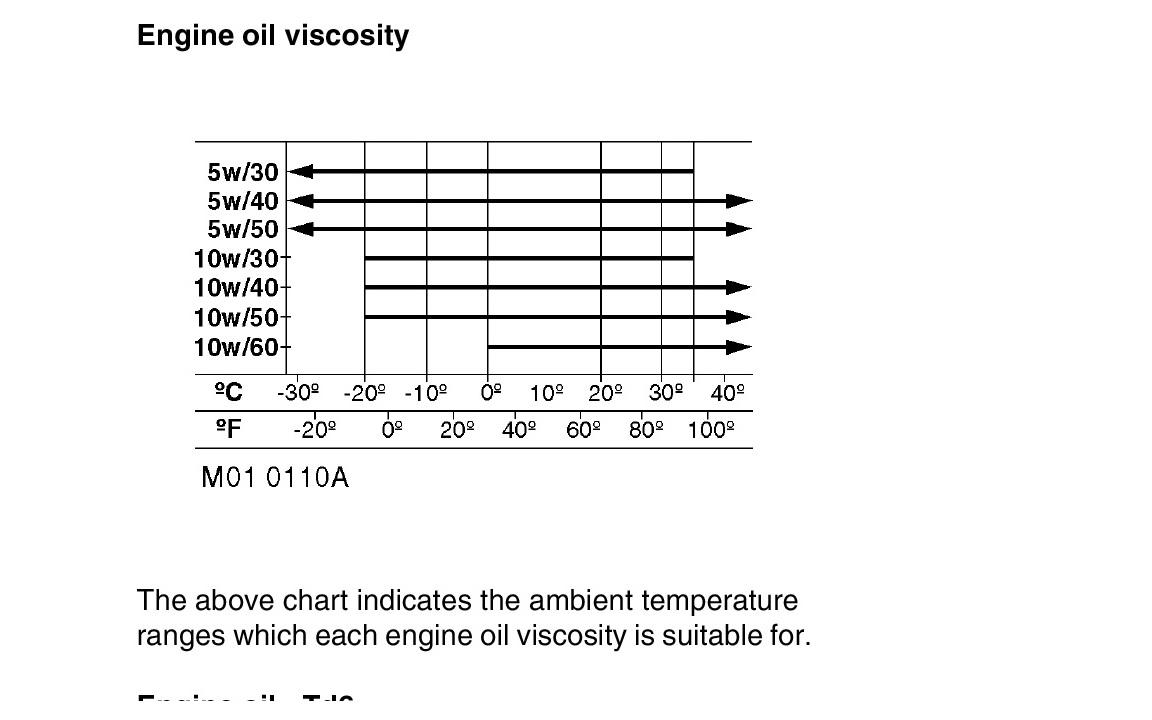 1 point



This leaderboard is set to Dubai/GMT+04:00