
Leaderboard


Popular Content
Showing content with the highest reputation on 12/15/2019 in all areas
-
4 points
-
4 points
-
4 points
-
4 points
-
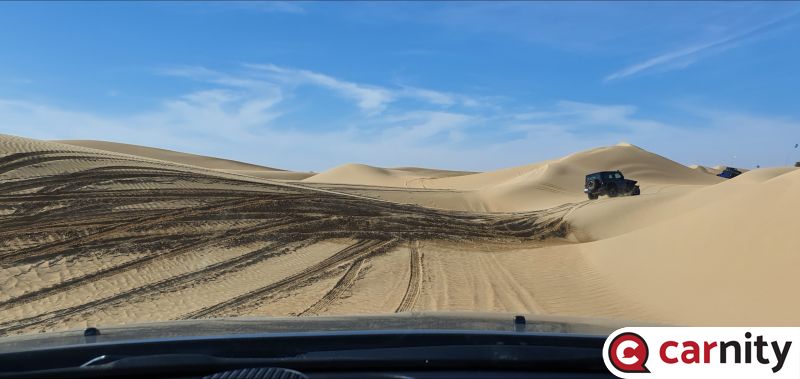
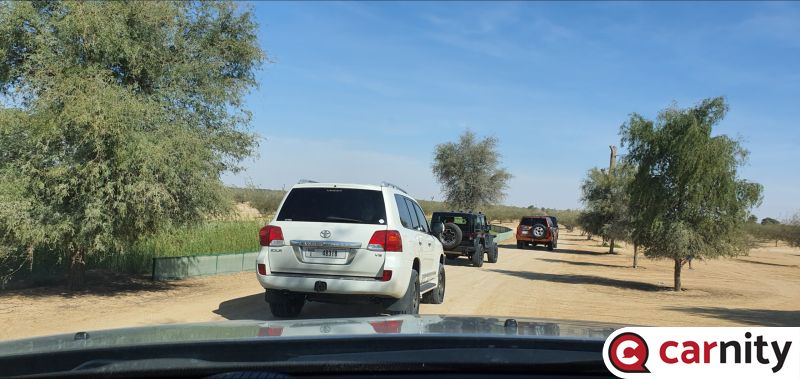
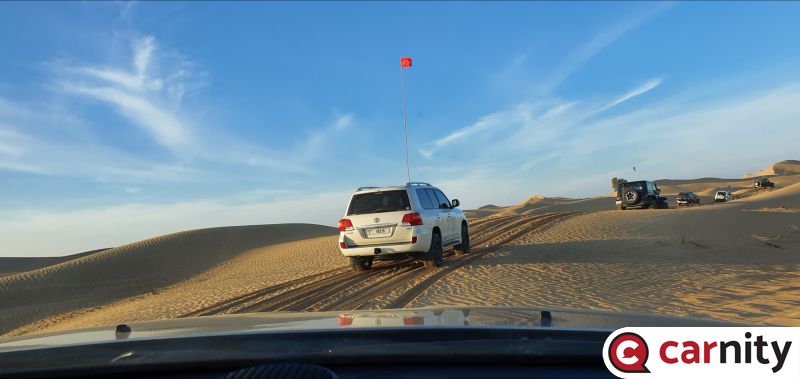
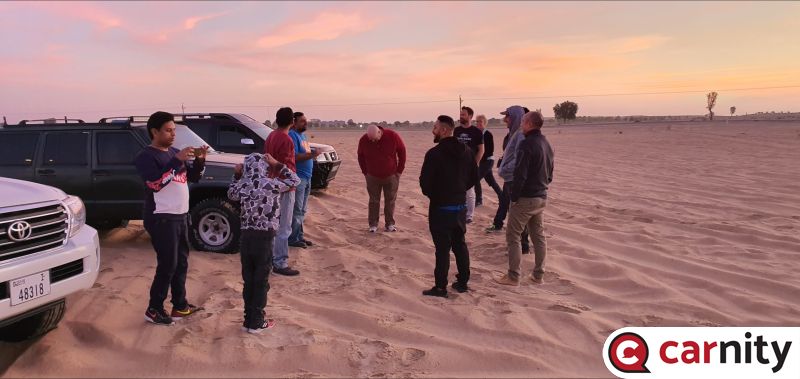
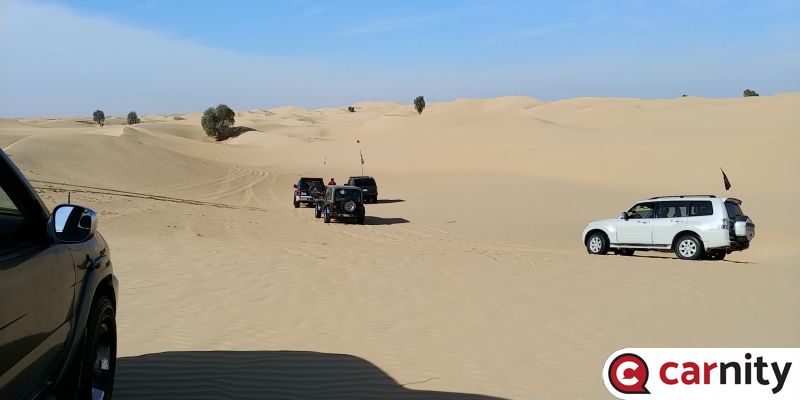
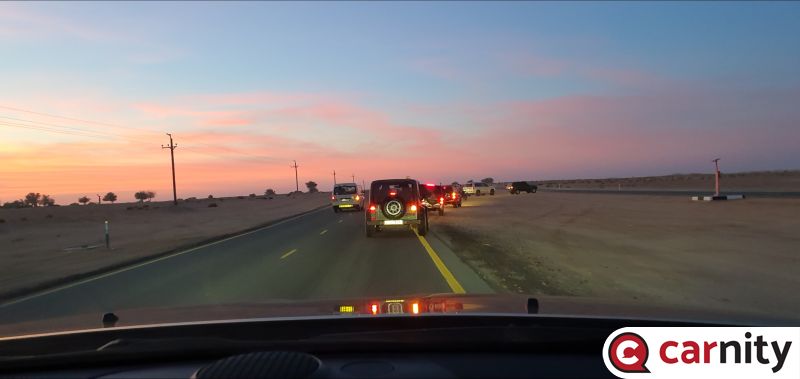
As the name suggests this drive is good for newbies and fewbies alike. The plan is to have the initial part as a newbie drive for about 2 hours from Mahafiz to Fossil Rocks, and we will break for a bite and some drinks before the newbies can be escorted out. From the Fossil Rocks to Faya will be a fewbie level and hoping for a quick run to reach Faya and have about 30 minutes of pa time there. Newbies and Fewbies will have a great chance to see and learn the real fun that off-roading offers in a very safe and organized environment. Since timing will be crucial I request everyone to respect everyone and be on time. When: 20 December 2019 Meeting time: 6:00 AM, the convoy will move at sharp 6:15 AM Where: Adnoc Petrol Station Maleha Road GPS Coordinate: https://goo.gl/maps/ye28yTnTSYr Level: Newbie, Fewbie and above. Type of Car: Any proper 4x4 with front and back tow hooks and 10 inches of ground clearance. Plan: Drive, train and enjoy till about 11:30 AM What to bring along: Snacks - whatever you like with little extra to share, water, liquids, smiles, stories, enthusiasm and willingness to learn. Approximate finish time: Newbies about 9:30 AM and Fewbies around 11:30 AM Please RSVP on the below calendar.3 points
-
So basically they are just throwing shit at the wall hoping something will stick Start with the utter basics like checking wheel balancing then go down the list. Caster and camber angles Lift the tyres in the air and see if there is any play at the 12 n 6 and 3 n 9 position. Check all suspension bushings with a big tie rod for any play. Then check for any play in the steering. Then for any play in the drive shafts Finally check if your disc brakes run out in within spec Oh also no harm in having tyres checked out again. Ive heard and experienced newish tyres here go out of round or get bulges after a long day of driving in the rain. I was driving my friend's car last year and he had recently changed tyres. After being stuck for a couple of hours on a water logged mbz road. On the way back to Rak a vibration started to appear and got worse and worse. By the time I reached RAK it had gotten real bad. Turns out a bulge had formed. I think they were zeetex brand tyres and clearly being partially submerged for a few hours had messed them up.3 points
-
3 points
-
3 points
-
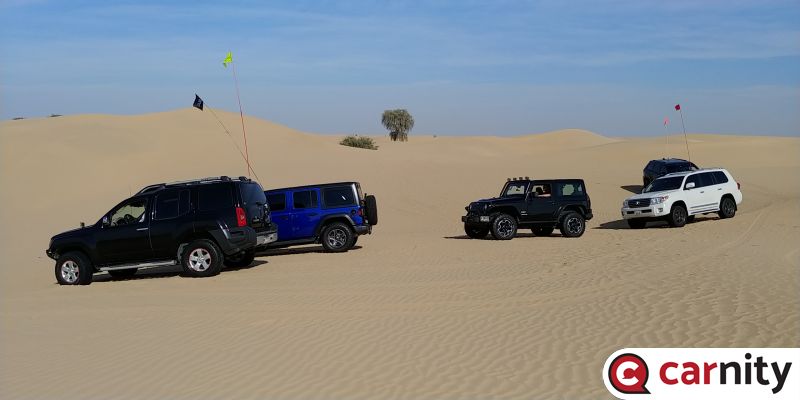
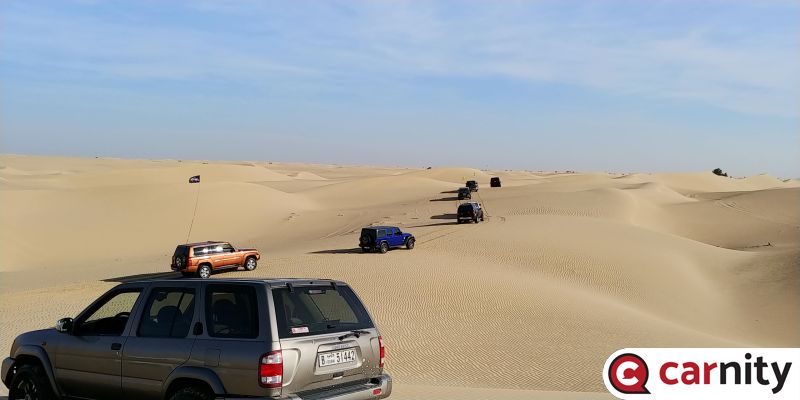
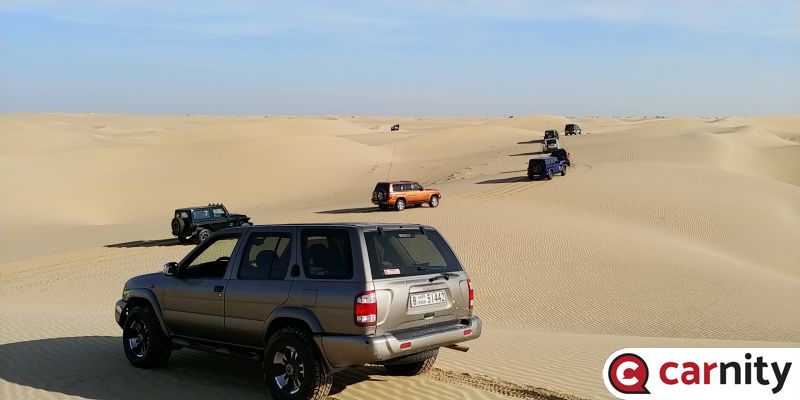
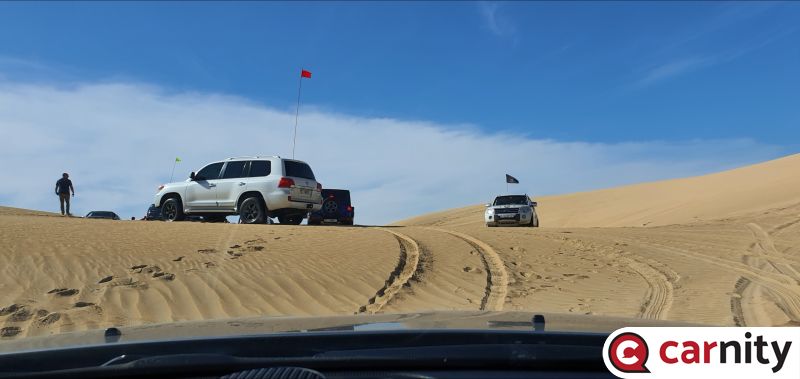
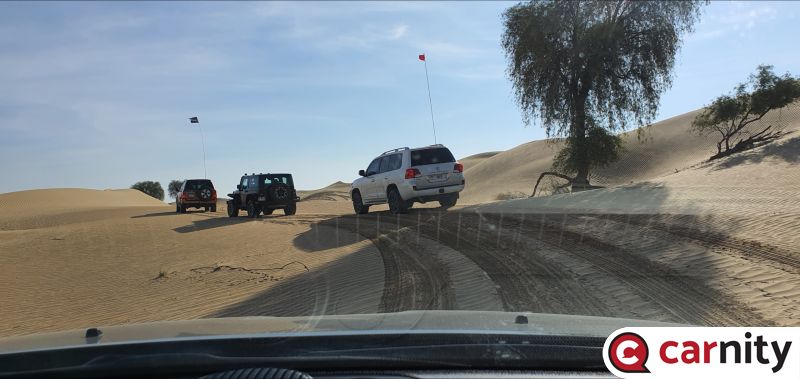
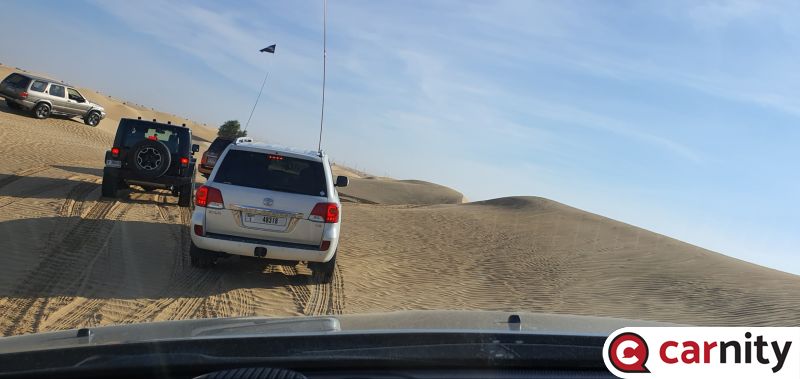
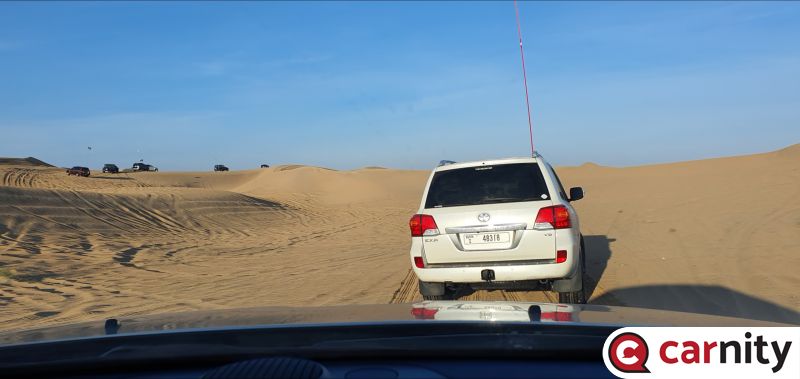
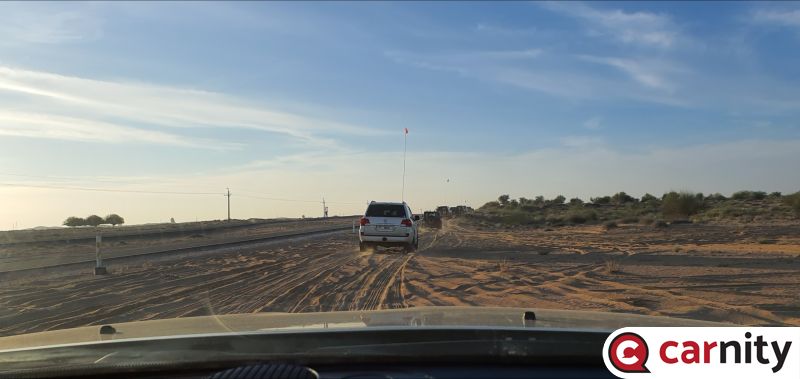
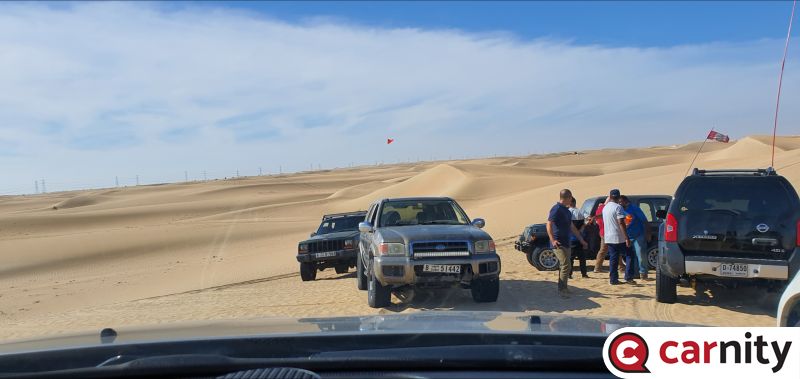
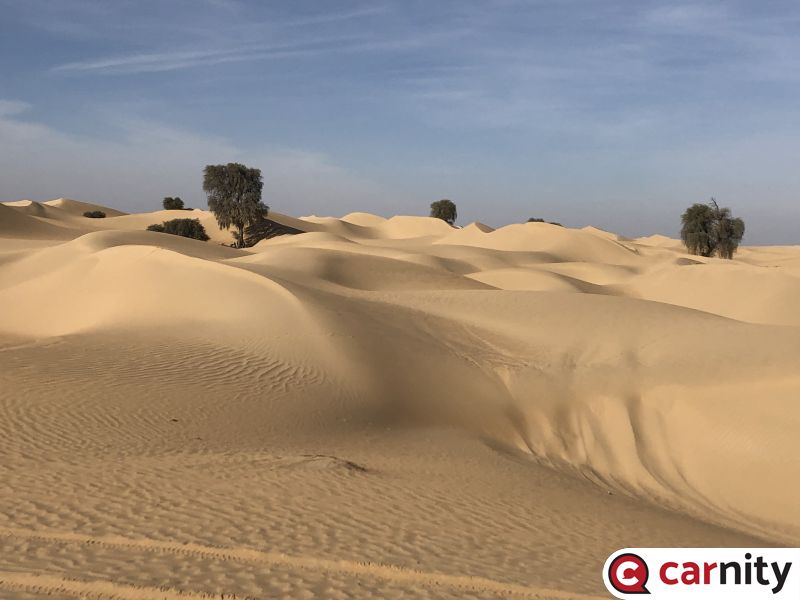
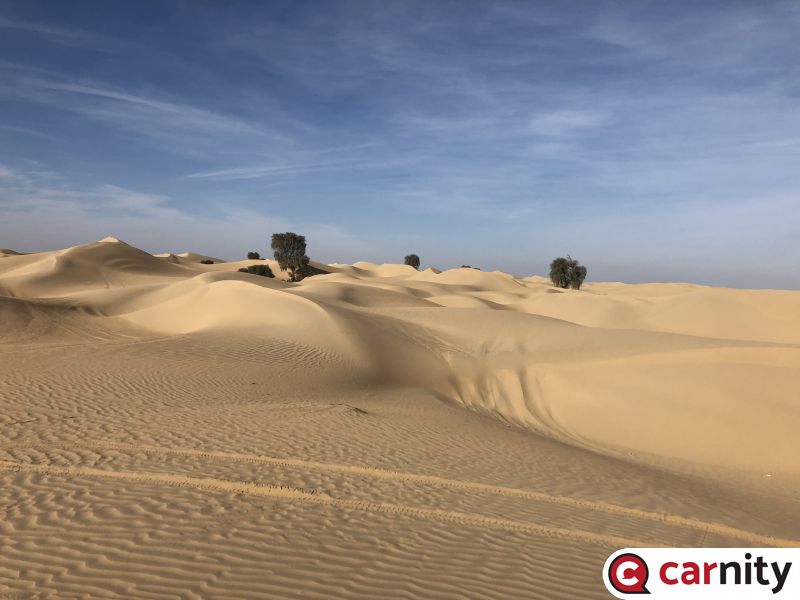
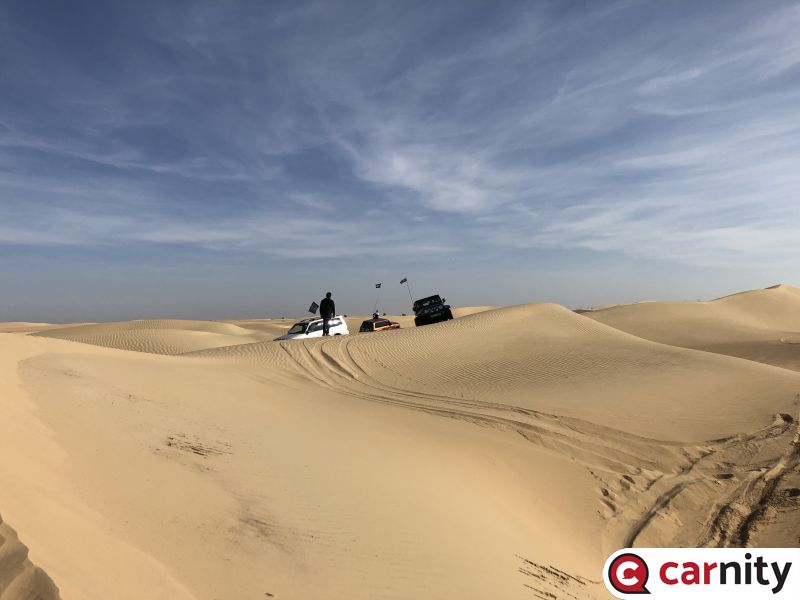
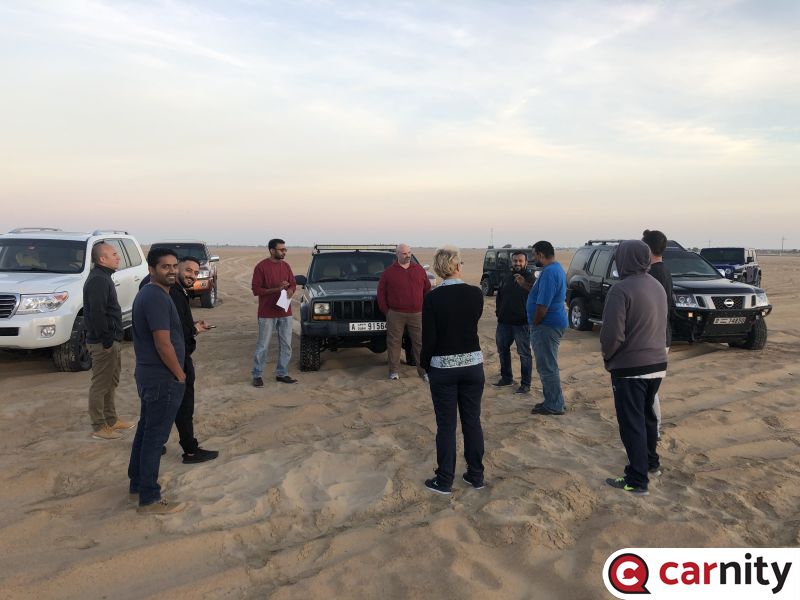
Thank you, everyone, for such an amazing drive have a look at this video of our off-road drive3 points
-
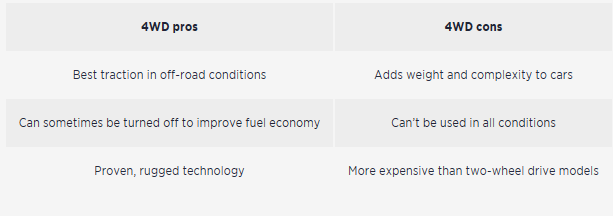
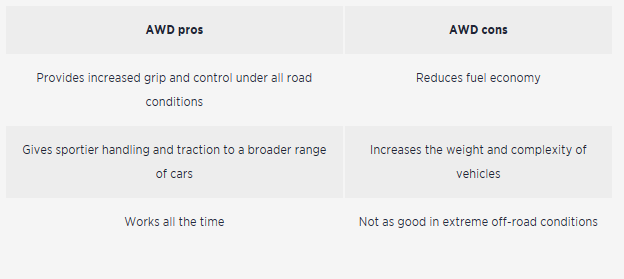
Four-wheel drive (4WD) Let’s start with four-wheel drive. Displayed often as 4WD, and sometimes referred to as four-by-four or 4×4, this system’s main distinction is that it’s typically used on vehicles designed and built to handle the unpaved wilderness. This includes rugged trucks and SUVs such as the Jeep Wrangler, Mercedes-Benz G-Class, and the Toyota Land Cruiser. In a nutshell, it’s a system that sends power to all four wheels equally and without vectoring (controlling the division of power delivery between the wheels or axles), meaning each wheel will spin at the same constant rate as all the others. Power flows from the engine, through the transmission, and normally into a device known as a transfer case that divides it between the front and rear axles. The equal split of power is great for maneuvering through tough and low-traction situations, but it isn’t very friendly on the pavement. Driving a four-wheel drive car on solid ground can make simple actions like turning around in a tight street very difficult, because the wheels are no longer in sync. Most modern 4WD systems are “part-time” and at the flick of a switch four-wheel drive can be engaged Imagine yourself doing a u-turn. In a four-wheel drive car, the inside wheel has to turn more slowly than the outside wheel, which is covering more ground. You might hear a rubbing noise or feel the car hopping when you approach full lock. This is why most 4WD systems are part-time systems that can be disabled. The car operates in two-wheel drive in normal conditions to improve on-road drivability, but still offers four-wheel traction when you need it. What about part-time vs. full-time? Most modern four-wheel drive vehicles are equipped with a part-time system, meaning they operate in two-wheel drive mode in normal driving conditions. The driver can engaged the four-wheel drive system by flicking a switch, pressing a button, or yanking on a center console-mounted lever in low-traction situations. Some 4x4s feature a transfer case with multiple settings, like 4-Low or 4-High. 4-High limits and vectors available power to the wheels so you can move quickly over slippery surfaces (up to about 60 miles per hour). To get the most available power, however, you’ll want 4-Low, which means 4WD with low-range. This low-range gearbox is for low-speed maneuverability, such as rock crawling or getting unstuck, and is only for such conditions. You really don’t want to go too fast in 4WD-Low because things will start breaking, and your trip will start getting expensive. To avoid complexity, a word of advice: You really don’t want to go too fast in 4WD-Low because things will start breaking, and your trip will start getting expensive. Most newer vehicles with part-time systems have an automatic deactivation when the vehicle goes beyond a certain speed to avoid this damage, but older trucks typically do not. Part-time four-wheel drive systems generally feature locking and unlocking differentials. Between each axle sits a differential that compensates for wheels spinning at different rates. By locking a differential at a front or rear axle, you are inhibiting any slip from occurring at the axle, forcing each wheel at said axle to turn at the same rate. Full-time four-wheel drive systems typically don’t come with a two-wheel drive (2WD, or 4×2) mode, so the system is active all the time. It sends power to the four wheels at the same times with limited-slip capabilities. This system is becoming increasingly obsolete, because a part-time system makes more sense for most consumers. Most drivers don’t need four-wheel drive all the time. Older trucks, such as 1990s Toyota Land Cruisers, have full-time systems. They come with an additional center differential to enable limited slip for better drivability on the road, and the system handles power distribution on its own. All-wheel drive (AWD) All-wheel drive is a much more recent innovation, and it’s a little bit more complicated, but also considerably more user-friendly. It crops up on everything from supercars like the Audi R8 to grocery-getters like the Buick Encore. While a four-wheel drive system tries to send as much power to the four wheels as equally as possible for maximum traction, all-wheel drive is all about varying the amount of power sent to each wheel, either mechanically or electronically. Think of all-wheel drive as similar to the part-time four-wheel drive system, except for cars and some crossovers. All-wheel drive is often associated with road-going vehicles, such as sedans, wagons, crossovers, and even some larger SUVs. Crossovers like the Honda CR-V, the Toyota RAV4, andthe Mazda CX-3 tend to fall under the “car” category while SUVs like the Chevrolet Tahoe and the Toyota 4Runner fall under the “truck” category. All-wheel drive is similar to the part-time four-wheel drive system we just described, except it’s used on cars and crossovers. It’s also completely automated. The system is constantly active, and it needs no activation or input from the driver to work. Most newer all-wheel drive systems send power to a primarily axle, either the front or the rear, and transfer power away from the slipping wheels when they detect a loss of traction. This helps improve fuel economy. To quote Subaru’s ad campaign, all-wheel drive “transfers power from the wheels that slip to the wheels that grip.” All-wheel drive is becoming increasingly common in performance applications, too. The Mercedes-AMG E63 is a perfect example. It is now sold only in AWD in the United States because its 600-plus-horsepower output can overwhelm the rear wheels if they try transferring it to the pavement on their own. Even when we aren’t talking about tire-scorching performance cars, splitting power evenly means added stability in all types of weather. All-wheel drive does have some clear advantages over 4WD. AWD isn’t quite as robust as 4WD, and it can’t match the acute power delivery necessary for low-speed off-roading like rock crawling. The maintenance and complexity of these systems can also get extraordinarily expensive, but ensuring they function as intended is crucial to your safety. All-wheel drive does have some clear advantages over 4WD, though. These days, computers are involved in most AWD systems. Sensors on each wheel monitor traction, wheel speed, and several other data points hundreds of times per second. An engine control unit (ECU) analyzes traction conditions and decides which wheel receives power. This type of system, usually called torque vectoring, appears on everything from the Subaru WRX to the Dodge Charger. Torque vectoring has allowed massive improvements in handling and all-weather capability. So, which one do I want? Ultimately, the system you choose largely depends on your driving needs and where you live. Four-wheel drive is your best bet if you plan on using your vehicle off-road and in difficult terrain on a regular basis. It’s normally found on SUVs and pickup trucks that boast the durability to match the ruggedness of a four-wheel drive system. For most people, however, all-wheel drive makes more sense. In the sort of winter road conditions most drivers experience, a modern all-wheel drive system that responds instantly and automatically is good enough. Additionally, all-wheel drive vehicles normally have a better weight distribution, which improves traction and performance. [Courtesy : https://www.digitaltrends.com/cars/awd-vs-4wd/]
 2 points
 -
In the case of my 99 Pajero it was the left CV axle that was on its way out and responsible for vibration at around 80kmh.2 points
-
2 points
-
2 points
-
Many many Happy Returns Of The Day, Happy Birthday 🎉2 points
-
Have fun guys2 points
-
I and my friends are camping at Tal Moreeb on 2nd and 3rd and will return back on 4th morning. If any intermediate drivers and above are around on 3rd jan, we can go for a spin around Tal Moreeb area. PM or Call me at 0506990411.2 points
-
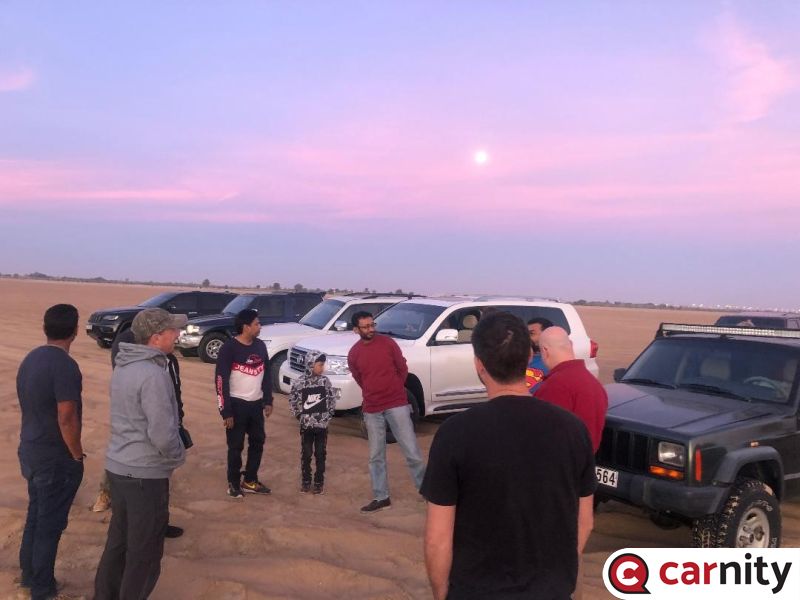
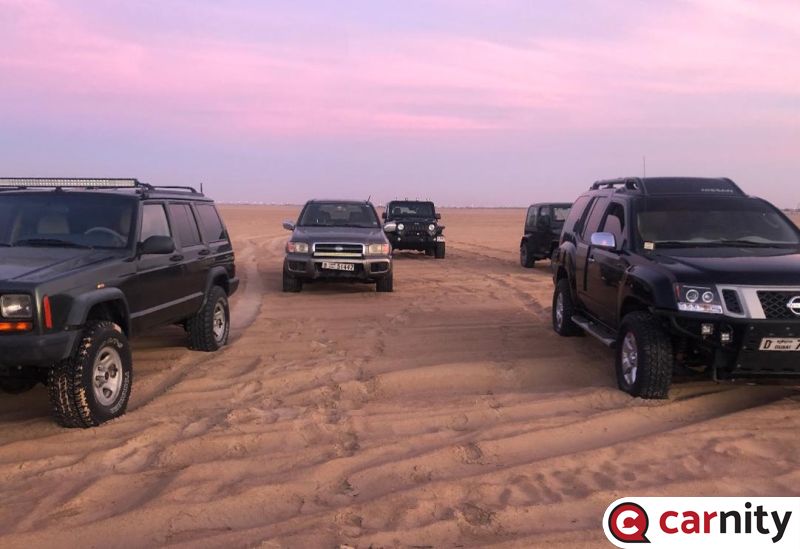
@Wrangeld Thanks for the nice write-up. Your posts should become our advertisement post for Carnity. You describe the exact feeling i also get when waking up early in the morning and driving to the meetup point. Always looking forward to the next adventure and people to meet. @Srikumar has again treated us with fantastic dunes and when I look at how everyone managed this terrain so well I am fully sure that the guidance, briefings, confidence , and mentorship skills that he applies on every drive is the main reason for this. @Shamil and @Rahimdad did great sweep duties. Thanks for having our backs every time. This will be my last drive for 2019 so I’m currently dusting out and cleaning the little blue one and giving her a bit of rest. I’ll be back in 2020 and I wish all my Carnity friends a warm Christmas and blessed New Year !2 points
-
Happy birthday2 points
-
Cheaper or replica wheels are PITA for balancing and alignment. Also for offroad use they are quite risky, seen few bend or broken with extreme offroad use, stick to reasonable brand or buy used stock ones they are much safer to use and last.2 points
-
@Srikumar If you are going to change the wheels, I would start with searching the wheels you like with less offset. For example; if your rim has ET0, go for -30, that would be the same as a spacer of 30mm. Regarding different size and offset compared with the original, you can check it with this: https://www.wheel-size.com/calc/?wheel1=285-70-17X8ET50&wheel2=295-70-17X8.5ET0&scl=1.96875in&wcl=1.1875in&fcl=1in&sr=0in I would give it a try in Sharjah, a set for 4 wheels costs between 1000-2000 aed (you need probably 5) (chinese copy) I have no idea for your XJ, but don’t give up if they don’t have your wheels with the offset you like. Try the next shop, they might have a set somewhere upstairs stored. If you can’t find your wheel with correct offset, then I would go for spacers. Quality spacers are not cheap, so I am sure u will be cheaper of when you go for wheels with correct offset. Good luck2 points
-
Deep dish rims are good ides to solve both issues but it is expensive and also require some custom brake job to fit them. H&R spacers are good but majority here are fake unless you buy from authorized retailer. It's a very good known brand and that's why market are flooded with replicas. I would go with spacer choice (reversible mod) and stick to your model specific ones even if you have to import from US with xaf overnight delivery option, lol.2 points
-
I was meaning between wheel spacers and reduced backspacing rims. What is the difference?2 points
-
Are you sure that aluminium would corrode? The heavy steel wheels were stock, which I didn't change. But now that I am looking to widen the stance I thought that maybe I can change the rims to 15 inch aluminium with less backspacing so that it solves both issues at the same time. Would anyone be aware of the approx costs of both options and if there are any advantages / disadvantages of each?2 points
-
Spacers are aluminium so there is a chance of corrosion. Maybe not manufactured to support heavy steel wheels BTW question is why do you still have heavy steel wheels?2 points
-
Ah ah thank you @Gaurav ! Thanks Xaf and Brette.2 points
-
Happy Birthday Emmanuel. Have a super year. Cheers.2 points
-
Double check if you can use steel rims with the spacers. Mine are saying, "don't use with steel rims"2 points
-
bon anniversaire Emmanuel!2 points
-
https://www.titanwheelaccessories.com/products/1980-2001-jeep-cherokee-hub-centric-wheel-spacers-5x4-5-bolt-pattern?variant=129431383572712 points







This leaderboard is set to Dubai/GMT+04:00