
Leaderboard




Popular Content
Showing content with the highest reputation on 07/14/2019 in all areas
-
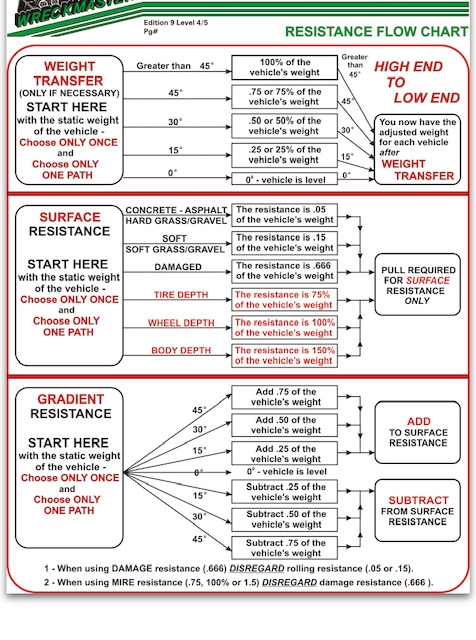
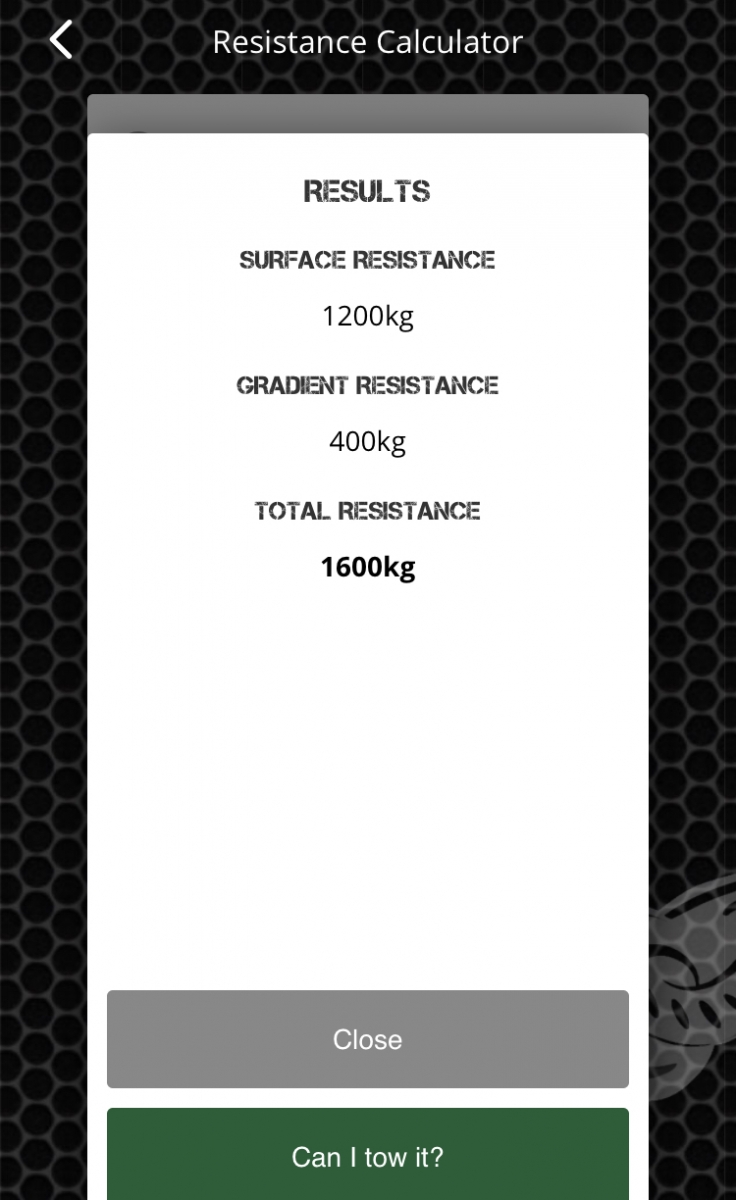
As we sometimes involve in off-road recoveries, i wanted to have a look at what the loads are when doing tows or recoveries in the desert with our vehicles. After all, we are all committed in working safely, and if i can speak for the Off-road club we constantly look at improving things as we should learn and keep learning. The biggest source of information on this topic can be found on the forums of companies and people who are working in the recovery and towing of heavy vehicles on the highways such as trailers, trucks, boats, and others. But the same calculation can be used for towing / recovering in the desert and is a good guideline to quickly calculate the TOTAL LOAD that will be involved before starting the recovery. The most important thing to calculate is the resistance of the vehicle to be towed. It is a well known rule that to pull a vehicle on asphalt, you only need to apply 5% of the total weight to move that vehicle. So for example if you'd push a Pajero SWB of 1600 kg on the road, it would take you 80kg to get it rolling. As you can probably imagine, the surface resistance is totally different on sand, and even worse when the wheels are buried in, and much worse if the car needs to be towed uphill. This is called the gradient resistance. What is resistance? Resistance is the amount of force required to move an object, given its condition and environment. It's written as a percentage of the weight that is being moved, which may be less than or more than the object's weight, depending upon conditions. That's because different surface environments, the condition of the load and the casualty, and terrain can increase or decrease resistance. Is the casualty stuck in mud? Do you have to move the casualty up hill? Both of these situations will increase the resistance to your efforts, and thus increase the amount of force you'll have to apply. So below the article i found that explains resistance: PS Disclaimer this article is taken from the certified training courses of Wreckmaster.com. I cannot take personal responsibility for the accuracy. There are 4 types of resistance encountered in our industry. ROLLING RESISTANCE MIRE RESISTANCE GRADIENT RESISTANCE DAMAGE RESISTANCE What is rolling resistance? Rolling resistance is the force it takes to move a rolling object, such as a wheel. (Remember when you were a kid and you coasted your bike down a hill? Eventually you'd slow down—and that's because of the forces that contribute to rolling resistance.) Forces that affect rolling resistance include deformation of the wheels, the surface the object is rolling on, wheel diameter, speed, and the load on the wheel. In the towing industry, we refer to a vehicle as either "rolling hard" or "rolling soft." A vehicle is considered "rolling hard" if it's sitting on a hard, flat, level surface such as concrete and has all of its tires inflated, wheels rolling freely, and its transmission in neutral. It requires 5% of the casualty's total weight to move something that's rolling hard. A vehicle is "rolling soft" if it's on a soft surface such as grass or gravel. It takes more force to move an object that's rolling soft—15% of the total weight of the casualty. TOTAL WEIGHT x 0.05 = "ROLLING HARD" RESISTANCE TOTAL WEIGHT x 0.15 = "ROLLING SOFT" RESISTANCE What is mire resistance? Mire resistance is created when a wheel or load is sunk into the dirt, gravel, mud, sand or other soft surface. The deeper it's sunk, the more force you'll need to move it. If it's sunk up to the lower part of the wheel ("tire mire"), you'll add an amount of force that's equal to 75% of the casualty's weight. If it's sunk up to the bottom of the wheel rims ("wheel mire"), add 100% of the casualty's weight. If it's sunk up to its body ("body mire"), add 150% of the casualty's weight. TOTAL WEIGHT x 0.75 = "TIRE MIRE" RESISTANCE TOTAL WEIGHT x 1.0 = "WHEEL MIRE" RESISTANCE TOTAL WEIGHT x 1.5 = "BODY MIRE" RESISTANCE What is gradient resistance? Gradient resistance is the force created by gravity when moving a load up or down a grade. It must be added or subtracted from the total surface resistance. Add it when you're moving the object uphill, and subtract it when you're moving the object downhill. TOTAL WEIGHT x 0.25 = RESISTANCE AT GRADIENT OF 15° TOTAL WEIGHT x 0.50 = RESISTANCE AT GRADIENT OF 30° TOTAL WEIGHT x 0.75 = RESISTANCE AT GRADIENT OF 45° What is damage resistance? Damage resistance is the force that resists the movement when the rolling object is damaged, for example, the wheels won't turn freely or the object has missing wheels. Damage resistance is always calculated at the same rate, regardless of surface conditions. It is two-thirds of the total weight of the object you're moving. TOTAL WEIGHT x 0.666 = DAMAGE RESISTANCE Using all the calculations above, we can calculate the total resistance required to move the casualty. HOW TO CALCULATE TOTAL RESISTANCE 1. Figure out the static weight of the load. The static weight includes all equipment, luggage, fuel, and anything else the vehicle may be carrying. You may need to adjust your static weight to compensate for weight transfer if there is more than one surface, for example the casualty is mired in mud and then will be on grass. The weight transfer number is added to the static weight, and it's calculated using the same gradient resistance numbers as we showed above (e.g. multiply static weight by 0.25 for a gradient of 15°). This adjusted number is the one you should use to calculate the surface and gradient resistance in step 2 and 3 below. 2. Calculate the surface resistance. The surface resistance is either rolling or damage or mire resistance, whichever is the largest number. 3. Add or subtract the gradient resistance. Add it if you're moving the casualty uphill. Subtract it if you're moving the casualty downhill. THREE SIMPLE EXAMPLES A 20,000-pound vehicle with four fully functioning wheels is to be towed up a 45° slope on a paved road. The total resistance would be (0.05 x 20,000) [surface resistance] + (0.75 x 20,000) [gradient resistance] for a total of 16,000 pounds of resistance. The same vehicle moved over a level grass surface would create much less resistance: (0.15 x 20,000) [surface resistance] + 0 [gradient resistance] for a total of 3,000 pounds. If the same vehicle became mired up to its body, the resistance would increase to 1.5 times its weight (1.5 x 20,000) [surface resistance] or 30,000 pounds of resistance. As above calculation is a bit tedious to do when you're standing in the middle of the desert sweating profusely and discussing with other members, i can highly advise you to install the APP called Wreckmaster, which has this calculator module built in. To have the app fully functioning the cost is around 90 dirhams. Than you can use the calculator with all functions. Once you start the app, you only need to fill in the vehicle static weight (includes fuel and equipment), and the angle of the slope. fill in 15° for uphill and -15° for downhill. Then choose the type of resistance (from hard surface to mire body depth, this means a vehicle which is completely buried up the chassis). 1* Hard grass, gravel, concrete.... 2* Soft grass, gravel 3* Damage 4* Mire tire depth ( a car little bit bogged down in the sand). 5* Mire wheel depth (a car where the wheels are buried in the sand). 6* Mire body depth (a care that has its body/chassis stuck on sand). In our Off-road scenarios, options 4,5,6 will be applicable. Let's try an example: A 1700 kg car is stuck and has to be towed on an uphill slope of 20°. The wheels are buried in (scenario 5). The result is that you will have a total resistance of 2409 kg. In that case, a car like Nissan Xterra that has a theoretical towing capacity design of 5000lbs or 2267 kg, is not designed to tow this vehicle upwards. Of course these values are merely an indication which have a safety margin, but it explains the total forces required to pull that vehicle upwards. The difference between towing and pulling/tugging is important, because the strain on the equipment is much higher because the total load presents itself in one peak, not in a gradual increase like you would have when towing or winching. I hope this article provides some clarification on the subject, the app might help us to quickly determine the total loads and severity of the situation.

 2 points
 -
Easiet way is to just look down the lenght of the car and you'll wavy panels. more obvious if you bob your head a little to the left and righr. People are also cheap youll sometimes see one sparkly new headlight and one crusty old yellow one. Usually means front end collision. Lift the hood and see if the slam panel is nice and straight with all the original warning labels. on the side see of the bolts holding the fenders are no messed with or painted over. Take out the door seals and see if metal lip they sit on is nice and straight. lift the carpet in the boot and see if everything is straight and true there. Other obvious things as mentioned are mismatched paint, tape lines, over spray etc etc etc Ive sold painted cars to aweer dealers who have brought out expensive paint testers and tested every panel and 9 tines out of 10 it cant tell or being used wrongly. It just reads paint thickness via ultrasonics2 points
-
Just to add to the confusion, Montero Sport is called Shogun Sport in Ireland, even though it’s a totally different body style from the Shogun.2 points
-
For the people that have some spare time, this link below is like the bible of recovery: http://www.pirate4x4.com/tech/billavista/Recovery/ The indicated mire resistances are even rather higher here than the previous article:
 2 points
 -
Thanks buddy. The tow capacity of a vehicle is a theoretical calculation of the load that a vehicle should be capable to tow, like a boat or a trailer. This is taking into consideration that the car should be able to be strong enough to take that load onto hills, so engine and transmission power comes into play. As you won't find a pulling capacity of a car on the OEM specs, i think it's safe to use the towing capacity as a good starting point. After all, the trailer hitch is also mounted to the engine frame, just as the towing or recovery points. It would definitely have helped to spread the total load over 2 side tow points to evenly distribute the total load. But again these are indications and ballpark numbers. My proposal would be in case of certain recoveries, to use the calculator as a kind of rating from easy to severe. In the classification of serious or severe, it becomes advisable to: 1) Spread the load between 2 tow points. 2) Use the towpoint safety straps. 3) Do a buildup of several small pulls. 4) Look for alternative solutions.2 points
-
Its not allowed to be imported because there are not many parts in those markets for the montero/pajeros LOL but I get why they changed the name to montero if I was back home I would never buy something called Pajero2 points
-
And please dont buy that car report site .ae for 99 dhs, its hell useless. Bought it for my range and laughed at it, I even requested refund but they never replied.1 point
-
Yes, heck yes. The majority of people don’t care about a quality job, they just chase the cheapest price, no matter how shitty the work is.1 point
-
My god, i just drowned on the last post... so much of tricks in just a few lines. Thanks so much, i should start using them next time i see a car.1 point
-
It’s usually pretty easy to spot when a car has been painted. Paint is never 100% match and it’s never flat. I don’t know why so many painters here have an aversion to wet sanding to correct their work. If you can park the car under a yellow street light at night it always shows the faults. Small fluorescent strip light is handy too, shine it on the paint and and you can see where the paint or metal work isn’t straight.1 point
-
Having personal experience with them. Paint testers are totally useless and a waste if money. A keen eye is nore useful.1 point
-
Not yet, as every part dealer do a hush hush pricing and don't wanna disclose their pricing online.1 point
-
Superb research and fact finding to help everyone with the ballpark numbers before we carry out any recoveries. Also any idea, if Xterra would have would used both side tow points, would have helped...? Also any vehicle towing capacity and pulling capacity is same?1 point
-
2900-3100 seems excessive for a simple oil change, 80km doesn't seem to be mayor service (besides the possible brake pads replacement) but even on the first month of the service contract they are charging you almost the same amount. Seems they are forcing you to take the service contract. I guess you'd have to go with the contract if you want to keep the warranty. If it's off the warranty I would say take it somewhere else. It's just not worth it. I've also heard from some friends the Toyota maintenance prices are a ripoff. I would like to hear from Toyota owners here. land-cruiser-prado-150-series.pdf1 point
-
Shogun is indeed the UK name. Montero is not smaller than the Pajero though, they are identical. The smaller sibling was the Pajero IO. The new montero sport is a different car of course1 point
-
Excellent! Thanks a lot! I need to do something similar =)1 point
-
Just an update, was not able to source the transmission hose anywhere in Sharjah too so I ended up getting the aluminium welding done to the old hose and it seems to be working fine now. Just need to get the ECU reset now since the transmission oil was changed. Thanks for all the suggestions guys and see you'll soon.1 point
-
As per habtoor OEM springs is only one type showing with my chassis number - MB932851 Priced at 784 for one (not pair) as a special order from Japan, available after 30 days. As per online these springs are same for 3.0, 3.5, LWB, SWB, hard top, soft top etc. Good source for Mitsubishi owners: https://mitsubishi.epc-data.com1 point
-
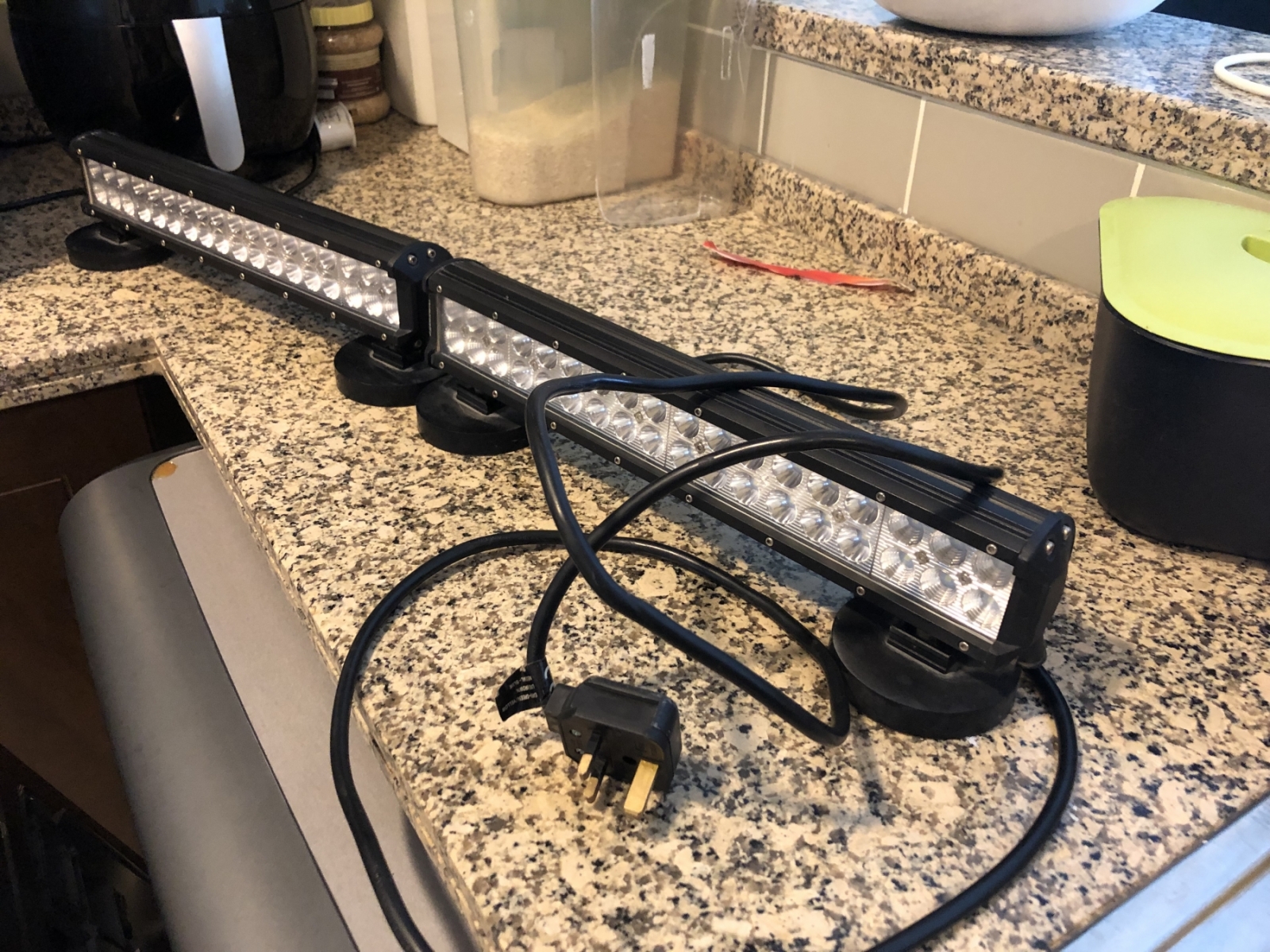
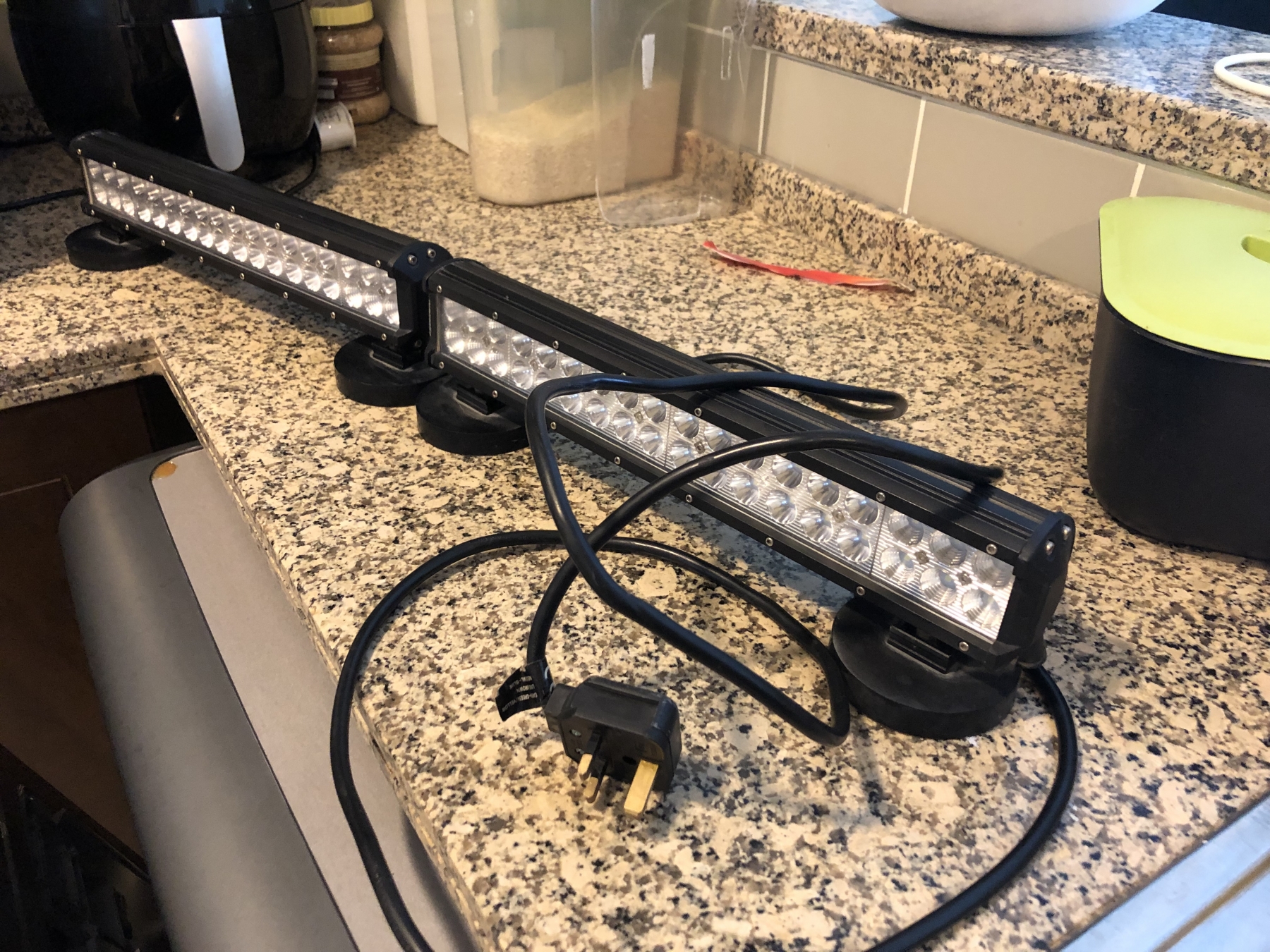
https://www.desertcart.ae/products/47075192 these are the magnetic pads I bought. I only have one thick black cable running along the side of the windshield that goes to the engine bay. Doesn’t bother me during the drive. I hook up the lights by using a regular three pin household power plug.
 1 point
 -
Seeing is underrated. If you don’t spot the flashing blue lights 500 metres away in your mirrors then maybe you shouldn’t be driving.1 point
-
I also think that this 'challenge' is more applicable to us in the lower income tier - those whose daily drive are also used in dune bashing as compared to most here who have a separate toy for dune bashing. I am not saying that I have used my car for dune bashing, just in case the future buyer of my car is reading this... Anyway, I noticed that the thread title/topic was slightly edited. I posed this topic more out of curiosity and as a point of discussion. Because at some point, we were a 4x4 used car buyer and later on a used 4x4 seller (or vice versa). And during the time we were wearing the buyer hat, we were as expected more critical if a vehicle was offroaded/dune bashed as compared to when we are the seller (with selling spiel such as: "I've only done a couple of desert drive more comparable to a Gulf News drive so car's definitely not abused"...)1 point
-
Based on my recent purchase which till date I am extremely happy, my experience is as follows: 1. Try to get a low mileage car even if its an older model 2. Check for the complete service history. This is very important. Service done at dealer is preferred and its worth paying the little extra premium. 3. Get a reliable mechanic to do a thorough inspection of the car. Better than the RTA comprehensive test 4. Not meaning to be biased, but some nationalities do tend to keep the car in better conditions than others. Even if there is a small work, they will get it fixed. 5. You can check the accident record on the MOI website (https://portal.moi.gov.ae/eservices/PublicServices/AccidentsInquiry.aspx?Culture=en), just enter the chasis number and you get the entire record for non-Dubai vehicles. For Dubai registered vehicles, the link is as follows: https://www.rta.ae/wps/portal/rta/ae/home/rta-services/service-details/?serviceId=58100031 point
-
Basic Pointers from my end Ensure to check the exterior of the vehicle in bright sun light. Avoid evening time as you may find it difficult to see the difference in paint else you shall have paint thickness check pen. When you turn on the engine check for any abnormal noises. Better to open bonnet to ensure no oil leaks. When you go for a test drive ensure to keep all window open to check for any noise during drive. Better to take a test drive on unpaved road to check suspension and jerks if any. Try reverse gear too just to check. Apply brakes and check if the vehicle deviate from its actual path. Inspect tires manually. Follow coin rule or even check with your finger for the tire thread. ensure tires are not very old. Check all electronics like all windows, lights, wipers, sunroof mechanism, if its open roof, check for roof mechanism. Ensure that vehicle is GCC specs. Check for service history and recent repairs. Check for cleanliness of interiors.1 point
-
Exactly ! My 5year old son is crazy about Mustangs, so my plan is to take one for a drive on a 'boys only' trip1 point
-
Trip Report. What a night, Superman truly back into action caught flying all over Area 53 after 3 weeks of exposure to kryptonite. With myself in the lead, @Javier M in second lead, followed by @Roshan Abraham, @MATHEW FELEX, @Shamil and @Frederic and @Gaurav bhai in the sweep. Earlier @Gaurav and myself were flying to the meeting point to brief the new personal on board, but had to wait and thus got somewhat delayed in our start. The first bit itself was fun but soft sand which made it difficult for all 7 cars to go through. A little reroute saw better results with 400 meters without a stuck, but it was that kind of a night where the sweep team had to do overtime to keep the convoy moving. Every time I tried to make through closer to Iftar bowl we were faced with a soft sand wall which was impossible for all 7 cars to clear. Slowly but surely we moved around the Iftar Bowl to find a path that would finally let us through. There were a lot of hits and misses, but close to early morning hours we finally found a track and almost made it through. Just edging at the back side of Iftar Bowl waiting for the rest to catch up, I came to find out that one of the cars was caught up in an awful pocket. I made my way back to the sweep team and assisted with a couple of tugs that had the vehicle in a better position. From here @Gaurav bhai took over and got it out in a jiffy. With the sun coming out, we played a while on the Iftar Bowl. This was time for @Javier M to bow out as his friend Ramon was not feeling so well. Rest of us headed 100 meters away from the action to a safe spot with a shade which was not going to last very long. We lay our spread and enjoyed recapping the horrid night behind us. With the sun becoming just a bit unbearable we had a quick ride in the daylight to exit. We all inflated our tires and promised to meet another time. So in short the drive was challenging yet fun. It had Superman written all over it but not without the help of the sweep team. So until next time I bid you all farewell. See you all soon.1 point
-
Anyone who buys a new car must be a special type of mental but if it wasn’t for these people there would be no second hand market. If people want to buy new cars I say let them. But don’t fall into the warranty trap. I posted a thread on here before. There is no legal obligation to stick to the dealer for servicing. It’s a scare sales pitch. If the dealer Denys warranty, there are ways where Dubai government will help you. Check manufacturer regulations. Know the rules. Just say hey I’m sending an email to Japan and most dealers will fall to their knees because they are scared of losing the agency. Know your rights1 point
-
1 point
-
This is always the issue once the wife gets the license. Get a Pathfinder 3.5 in clean condition. That would help both as a daily driver + weekend excursions.1 point
-
Yes you can mix and still be running on 78.08% nitrogen or maybe more in your case1 point
-
@Emmanuel I'm you biggest fan and with this thread you have won my heart and sure to win many more. Rightfully no shame and good to learn from such videos. @WiLfY spot on, sometimes we should leave little extra space in such situations as we cannot be sure how the car in front will react. Once we drive together in a few drives we pick up on drive habits and judgement gets better.1 point




This leaderboard is set to Dubai/GMT+04:00