
Leaderboard



Popular Content
Showing content with the highest reputation on 07/15/2019 in all areas
-
Some tips on how to extend the lifetime of your brakes and fuel: Plan your brakes: Anticipate the traffic or turn ahead of you to avoid hard braking. Always keep an eye on brake light of 3-4 vehicles ahead of you and leave the acceleration as soon they brake. This will give you enough time to slowly approach the braking vehicle and slow down your car with little or no brake. This conserve lot of fuel and also saves the brake pads and brake rotors/disc. Always keep a long enough following distance to the vehicle directly in front of you to avoid having to adapt your own speed to the traffic flow all the time. Maintain a following distance of at least four to five seconds to avoid continually having to brake and accelerate.3 points
-
The Taiwan bushes should be perfectly fine and won't affect performance. These things are not rocket science. With lathe pressing they mean that they will take off the complete arm and use a hydraulic bench press to insert the bushes into the holes of the arm. This is recommended instead of hammering them in which would again damage the bushes and limit their lifetime. @shadow79 did my Pajero recently and the difference with the new bushes is amazing. Your brakes don't wear much from off-roading as we avoid using them in the desert as you'd get bogged in too easily. They wear from using them often, and that depends much on your driving style. Many people can't seem to read the traffic and keep driving hard until the last minute and then smash on the brakes. Not saying that you are one of those drivers but just stating that the biggest influence of brake wear is wheel alignment and driving behavior. How many miles did you do in those 18 months ? 1700 dirhams looks ok for these works.3 points
-
3 points
-
Their is nothing as good car and bad car. For a seller all of his car on sale are excellent cars. For a buyer every car he is interested will be under scrutiny. It totally depends on your skill to inspect the car. I would suggest if you are going to see any car and have a doubt, please ensure that you take someone(may be friend) who has knowledge on the subject. Ask questions on everything and anything you are not comfortable with. After all its your hard earned money!!3 points
-
One time it was me pulling him from a soup soft sand pocket as he ignored my radio of "Don't Come". On third little harder tug frontend was out, it was because of back design partially as hook was not on frame.2 points
-
I haven’t seen this mentioned yet. Giving a sharp tug or snap may very well exceed the rated capacities. One of our resident off roaders who has lost his front end in more than one occasion can maybe comment on this 😬2 points
-
When I started driving I used to go through a set of pads every 3 months. The security guard at work had a nice Mercedes C class so I started chatting to him about it. Old model but clean and well looked after. Turned out he bought the car brand new 9 years previously and was still running the original pads. I asked him how? He told me the harder you press any of the pedals, the more it will cost you, so just relax and enjoy the scenery.2 points
-
I know a few drivers like that. Its either full accelerator or full brakes. No middle ground. You start to get woozy after 5 mintues of sitting with them.2 points
-
Agreed!. I have come across a shop which have branches in UAE. Dubai branch price is comparatively higher than the Sharjah branch2 points
-
Those bushes should last unless you go superman with them...which will surely drop it life...and 35% should last you till 1 more oil change lat it run till then...as you are opening up the arms you must get alignment checked as well2 points
-
I have worked in automotive manufacturing and all manufacturers would sell the parts to the car companies so they would just put them in a box that said Nissan, Toyota, Mitsubishi, etc. but the manufacturers would also sell them as other brands but it was exactly the same part inside. With the only exception that the "genuine brand" part would sell twice as expensive. Granted, there are quality standards that "some" car companies would require to the manufactures, but once that is set they would have the same production standards to all products.2 points
-
2 points
-
You clearly are waaay overthinking it. Is this going to be your 1st car here ? If you have decided what to get and how much you are willing to spend on it 80% of the battle is won, now you just have to wait for the right one to come along, sometimes it can even take several month. I know the feeling a close friend of mine is also looking for a car at the moment and we have seen atleast half a dozen in the last two weeks. Sometimes it works to put out a wanted adv. Long back I was looking for a Range Rover Classic and even back then they were rare as hens teeth. After waiting for a month or two and not finding anything I put out a wanted adv in Izzle. Immediatelty an older british gentleman reached out to me. Said he had one for sale. Went out to look at it, he was the second owner and he had bought it from a friend who had left the country. Car was in excellent nick, always parked in a closed garage with only 79.000kms on i. Really low kms for a 1991 He only used it on the weekends to go to beach with the kids. We could not make a deal, because I was not budging from my price and he from his. 3 or 4 years later another friend wanted a RR Classic and I happen to still have his number so I called him and he still had it but closer to 85k ish kms this time and he would still sell it. Eventually my buddy bought the car for 8k drove it for a year and then sold it to another friend who still has it to this day. P.S : You can actually go check out the cars physically at emiratesauction, they have a big yard behind tasjeel village as well as in Aweer2 points
-
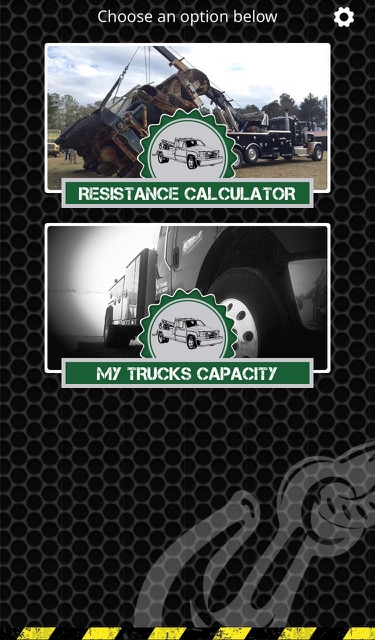
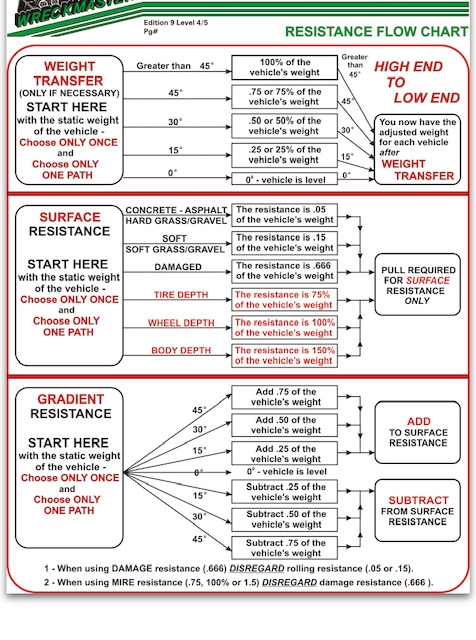
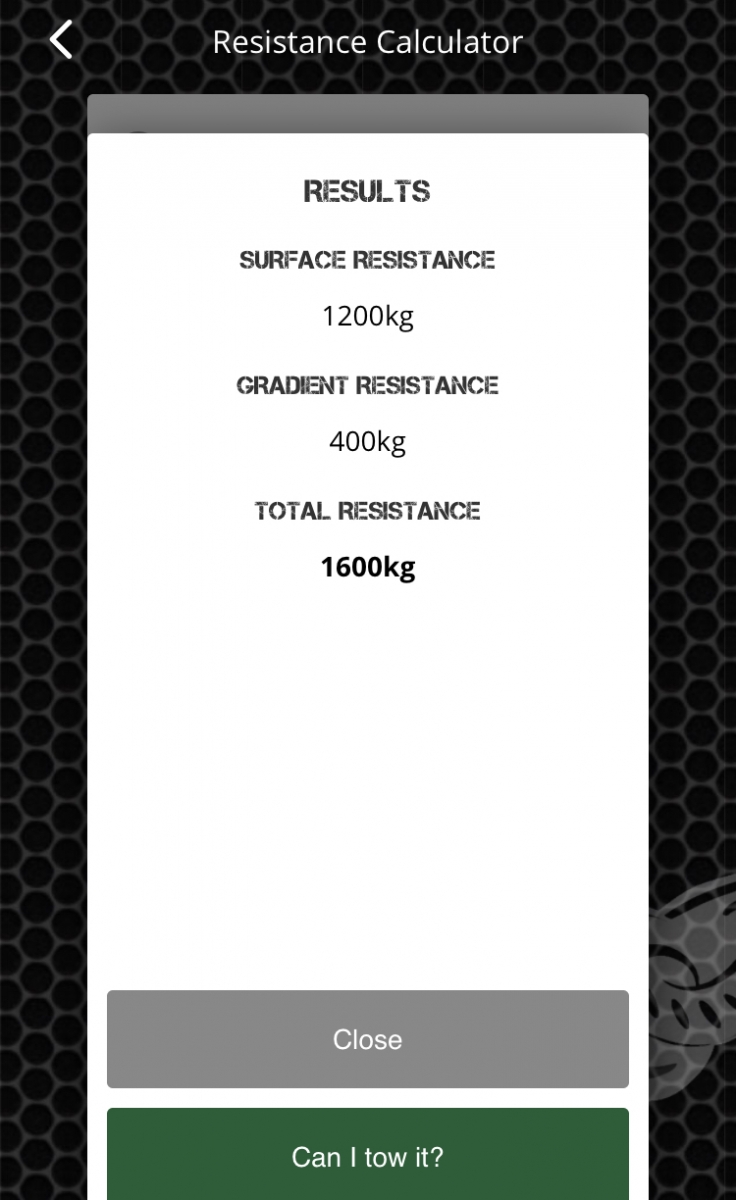
As we sometimes involve in off-road recoveries, i wanted to have a look at what the loads are when doing tows or recoveries in the desert with our vehicles. After all, we are all committed in working safely, and if i can speak for the Off-road club we constantly look at improving things as we should learn and keep learning. The biggest source of information on this topic can be found on the forums of companies and people who are working in the recovery and towing of heavy vehicles on the highways such as trailers, trucks, boats, and others. But the same calculation can be used for towing / recovering in the desert and is a good guideline to quickly calculate the TOTAL LOAD that will be involved before starting the recovery. The most important thing to calculate is the resistance of the vehicle to be towed. It is a well known rule that to pull a vehicle on asphalt, you only need to apply 5% of the total weight to move that vehicle. So for example if you'd push a Pajero SWB of 1600 kg on the road, it would take you 80kg to get it rolling. As you can probably imagine, the surface resistance is totally different on sand, and even worse when the wheels are buried in, and much worse if the car needs to be towed uphill. This is called the gradient resistance. What is resistance? Resistance is the amount of force required to move an object, given its condition and environment. It's written as a percentage of the weight that is being moved, which may be less than or more than the object's weight, depending upon conditions. That's because different surface environments, the condition of the load and the casualty, and terrain can increase or decrease resistance. Is the casualty stuck in mud? Do you have to move the casualty up hill? Both of these situations will increase the resistance to your efforts, and thus increase the amount of force you'll have to apply. So below the article i found that explains resistance: PS Disclaimer this article is taken from the certified training courses of Wreckmaster.com. I cannot take personal responsibility for the accuracy. There are 4 types of resistance encountered in our industry. ROLLING RESISTANCE MIRE RESISTANCE GRADIENT RESISTANCE DAMAGE RESISTANCE What is rolling resistance? Rolling resistance is the force it takes to move a rolling object, such as a wheel. (Remember when you were a kid and you coasted your bike down a hill? Eventually you'd slow down—and that's because of the forces that contribute to rolling resistance.) Forces that affect rolling resistance include deformation of the wheels, the surface the object is rolling on, wheel diameter, speed, and the load on the wheel. In the towing industry, we refer to a vehicle as either "rolling hard" or "rolling soft." A vehicle is considered "rolling hard" if it's sitting on a hard, flat, level surface such as concrete and has all of its tires inflated, wheels rolling freely, and its transmission in neutral. It requires 5% of the casualty's total weight to move something that's rolling hard. A vehicle is "rolling soft" if it's on a soft surface such as grass or gravel. It takes more force to move an object that's rolling soft—15% of the total weight of the casualty. TOTAL WEIGHT x 0.05 = "ROLLING HARD" RESISTANCE TOTAL WEIGHT x 0.15 = "ROLLING SOFT" RESISTANCE What is mire resistance? Mire resistance is created when a wheel or load is sunk into the dirt, gravel, mud, sand or other soft surface. The deeper it's sunk, the more force you'll need to move it. If it's sunk up to the lower part of the wheel ("tire mire"), you'll add an amount of force that's equal to 75% of the casualty's weight. If it's sunk up to the bottom of the wheel rims ("wheel mire"), add 100% of the casualty's weight. If it's sunk up to its body ("body mire"), add 150% of the casualty's weight. TOTAL WEIGHT x 0.75 = "TIRE MIRE" RESISTANCE TOTAL WEIGHT x 1.0 = "WHEEL MIRE" RESISTANCE TOTAL WEIGHT x 1.5 = "BODY MIRE" RESISTANCE What is gradient resistance? Gradient resistance is the force created by gravity when moving a load up or down a grade. It must be added or subtracted from the total surface resistance. Add it when you're moving the object uphill, and subtract it when you're moving the object downhill. TOTAL WEIGHT x 0.25 = RESISTANCE AT GRADIENT OF 15° TOTAL WEIGHT x 0.50 = RESISTANCE AT GRADIENT OF 30° TOTAL WEIGHT x 0.75 = RESISTANCE AT GRADIENT OF 45° What is damage resistance? Damage resistance is the force that resists the movement when the rolling object is damaged, for example, the wheels won't turn freely or the object has missing wheels. Damage resistance is always calculated at the same rate, regardless of surface conditions. It is two-thirds of the total weight of the object you're moving. TOTAL WEIGHT x 0.666 = DAMAGE RESISTANCE Using all the calculations above, we can calculate the total resistance required to move the casualty. HOW TO CALCULATE TOTAL RESISTANCE 1. Figure out the static weight of the load. The static weight includes all equipment, luggage, fuel, and anything else the vehicle may be carrying. You may need to adjust your static weight to compensate for weight transfer if there is more than one surface, for example the casualty is mired in mud and then will be on grass. The weight transfer number is added to the static weight, and it's calculated using the same gradient resistance numbers as we showed above (e.g. multiply static weight by 0.25 for a gradient of 15°). This adjusted number is the one you should use to calculate the surface and gradient resistance in step 2 and 3 below. 2. Calculate the surface resistance. The surface resistance is either rolling or damage or mire resistance, whichever is the largest number. 3. Add or subtract the gradient resistance. Add it if you're moving the casualty uphill. Subtract it if you're moving the casualty downhill. THREE SIMPLE EXAMPLES A 20,000-pound vehicle with four fully functioning wheels is to be towed up a 45° slope on a paved road. The total resistance would be (0.05 x 20,000) [surface resistance] + (0.75 x 20,000) [gradient resistance] for a total of 16,000 pounds of resistance. The same vehicle moved over a level grass surface would create much less resistance: (0.15 x 20,000) [surface resistance] + 0 [gradient resistance] for a total of 3,000 pounds. If the same vehicle became mired up to its body, the resistance would increase to 1.5 times its weight (1.5 x 20,000) [surface resistance] or 30,000 pounds of resistance. As above calculation is a bit tedious to do when you're standing in the middle of the desert sweating profusely and discussing with other members, i can highly advise you to install the APP called Wreckmaster, which has this calculator module built in. To have the app fully functioning the cost is around 90 dirhams. Than you can use the calculator with all functions. Once you start the app, you only need to fill in the vehicle static weight (includes fuel and equipment), and the angle of the slope. fill in 15° for uphill and -15° for downhill. Then choose the type of resistance (from hard surface to mire body depth, this means a vehicle which is completely buried up the chassis). 1* Hard grass, gravel, concrete.... 2* Soft grass, gravel 3* Damage 4* Mire tire depth ( a car little bit bogged down in the sand). 5* Mire wheel depth (a car where the wheels are buried in the sand). 6* Mire body depth (a care that has its body/chassis stuck on sand). In our Off-road scenarios, options 4,5,6 will be applicable. Let's try an example: A 1700 kg car is stuck and has to be towed on an uphill slope of 20°. The wheels are buried in (scenario 5). The result is that you will have a total resistance of 2409 kg. In that case, a car like Nissan Xterra that has a theoretical towing capacity design of 5000lbs or 2267 kg, is not designed to tow this vehicle upwards. Of course these values are merely an indication which have a safety margin, but it explains the total forces required to pull that vehicle upwards. The difference between towing and pulling/tugging is important, because the strain on the equipment is much higher because the total load presents itself in one peak, not in a gradual increase like you would have when towing or winching. I hope this article provides some clarification on the subject, the app might help us to quickly determine the total loads and severity of the situation.

 1 point
 -
1 point
-
YabbaDabbadooooo !! Due to circumstances I have been missing out on this area several times although it’s the one closest near home. I’m definitely in !1 point
-
Thats why I love National Auto for LR bits they already stock those and ask you which one you want even let you conpare both of them1 point
-
Exactly. Do some research, find out who makes the parts. I’ve saved a fortune over the years buying brands like Aisin, Ferodo, Gates, Valeo etc. It’s the same part in a different box.1 point
-
Old trick, always works with me. Take cash with you, dont talk price over the phone. Go see the car, test drive it etc etc once you know its a good one and you want it. dont make any Ill let you know, lets make an appointment to get it checked at xyz a few days from now etc etc. Take out the cash of what you want to pay for it and slam it on the hood. look mate heres the money, serious buyer here with cash in hand lets go now and transfer it and save your self the trouble of showing the car everyother day to tyre kickers. 9 times out of 10 this has worked for me. maybe 1 or 2k up and down from the offer made. Pressurize the seller into selling it.1 point
-
Exactly, even many taxi drivers are like that. It frustrates me like crazy. 🤬1 point
-
Dealers usually have a dealers plate, might have seen then white plate with red numbers and lettering in Arabic . Those are good to go, you can drive and take them anywhere with those plates. Ras Al Khor is a one stop shop. They have a tasjeel in it as well as many car testing places right outside. But fortunately Ive never needed any of these services.1 point
-
Sharjah shops for original spare parts are relatively cheaper than in Dubai and Abu Dhabi.1 point
-
The price mostly different at different spare parts shops as they all get at different % discount from the dealership..plus their own running cost is also added and profit margin...1 point
-
Yes, on mountain offroading your brakes will have to work a lot more than in the desert. I think 35000 kms with the same brakepads is fine. Again this depends on so many factors. I drive 55 kms to work and all on E611. Hardly need to use my brakes if i drive a bit "smart".1 point
-
Just start with the assumption that indeed no dealer can be trusted. You can take the cars for a test drive on the car market itself (within the premises) but you won't be able to take it on long stretches. But should be enough to assess the brakes, suspension, engine sounds, or others. You can also ask them to hook up the car to an OBD scanner to check for existing faults, and you can probably search via the VIN number if the car has been in an accident. I guess it all depends on the budget and the expectations. I bought my little Pajero on Ras Al Khor automarket and didnt want to pay too much because i knew that i'd have to throw another 5-10k at it to make it look and perform the way i wanted it. It's a buyers market now and they want to get rid of their cars so that gives you some leverage over the asking price. Just calculate as per the worst case scenario of costs you'd probably encounter on that car and make sure you are prepared and well informed in advance, so you can quickly see through all the bla bla bla from the dealer.1 point
-
I'm hearing this now since few years and as per the recent podcast along with Glenn Power who was the panelist in Automechanika Academy we discussed this same topic. It seems that too much work involved in grading 30-40K workshops and that too it should be done every year like in KHDA for school rating as people leave workshop and join new ones every year.1 point
-
Sorry it was carreport.com and not .ae Showing just the vin data for 99 dhs, crap.1 point
-
Yes, heck yes. The majority of people don’t care about a quality job, they just chase the cheapest price, no matter how shitty the work is.1 point
-
It’s usually pretty easy to spot when a car has been painted. Paint is never 100% match and it’s never flat. I don’t know why so many painters here have an aversion to wet sanding to correct their work. If you can park the car under a yellow street light at night it always shows the faults. Small fluorescent strip light is handy too, shine it on the paint and and you can see where the paint or metal work isn’t straight.1 point
-
Having personal experience with them. Paint testers are totally useless and a waste if money. A keen eye is nore useful.1 point
-
Ha Ha. Well Noted.1 point
-
Not yet, as every part dealer do a hush hush pricing and don't wanna disclose their pricing online.1 point
-
@Gaurav bhai thanks. Do we have any websites in UAE on which we can check/compare prices of these genuine spares?1 point
-
https://carnity.com/search?&q=toyota&type=cms_records5&nodes=83&search_and_or=or&sortby=relevancy Majelan, Amani, Dhanya, Samira are generally good shops1 point
-
You can get the quote from outside good workshops like Dynatrade, AAA and Al Futtaim will still cover the warranty as it's been under the latest law (In 2016) as car dealer can't force expensive service for retaining warranties. https://www.khaleejtimes.com/nation/transport/automobiles-agency-warranty-abolished1 point
-
For the people that have some spare time, this link below is like the bible of recovery: http://www.pirate4x4.com/tech/billavista/Recovery/ The indicated mire resistances are even rather higher here than the previous article:
 1 point
 -
Thanks buddy. The tow capacity of a vehicle is a theoretical calculation of the load that a vehicle should be capable to tow, like a boat or a trailer. This is taking into consideration that the car should be able to be strong enough to take that load onto hills, so engine and transmission power comes into play. As you won't find a pulling capacity of a car on the OEM specs, i think it's safe to use the towing capacity as a good starting point. After all, the trailer hitch is also mounted to the engine frame, just as the towing or recovery points. It would definitely have helped to spread the total load over 2 side tow points to evenly distribute the total load. But again these are indications and ballpark numbers. My proposal would be in case of certain recoveries, to use the calculator as a kind of rating from easy to severe. In the classification of serious or severe, it becomes advisable to: 1) Spread the load between 2 tow points. 2) Use the towpoint safety straps. 3) Do a buildup of several small pulls. 4) Look for alternative solutions.1 point
-
Superb research and fact finding to help everyone with the ballpark numbers before we carry out any recoveries. Also any idea, if Xterra would have would used both side tow points, would have helped...? Also any vehicle towing capacity and pulling capacity is same?1 point
-
2900-3100 seems excessive for a simple oil change, 80km doesn't seem to be mayor service (besides the possible brake pads replacement) but even on the first month of the service contract they are charging you almost the same amount. Seems they are forcing you to take the service contract. I guess you'd have to go with the contract if you want to keep the warranty. If it's off the warranty I would say take it somewhere else. It's just not worth it. I've also heard from some friends the Toyota maintenance prices are a ripoff. I would like to hear from Toyota owners here. land-cruiser-prado-150-series.pdf1 point
-
1 point
-
1 point
-
Basic Pointers from my end Ensure to check the exterior of the vehicle in bright sun light. Avoid evening time as you may find it difficult to see the difference in paint else you shall have paint thickness check pen. When you turn on the engine check for any abnormal noises. Better to open bonnet to ensure no oil leaks. When you go for a test drive ensure to keep all window open to check for any noise during drive. Better to take a test drive on unpaved road to check suspension and jerks if any. Try reverse gear too just to check. Apply brakes and check if the vehicle deviate from its actual path. Inspect tires manually. Follow coin rule or even check with your finger for the tire thread. ensure tires are not very old. Check all electronics like all windows, lights, wipers, sunroof mechanism, if its open roof, check for roof mechanism. Ensure that vehicle is GCC specs. Check for service history and recent repairs. Check for cleanliness of interiors.1 point
-
As most of my family and especially my uncles all drove Opel, The Manta A and B series, and then the Corsa, Kadett, and Astra models are part of my youth growing up. I can still recall the smell of the lightbrown perforated leather seats of the Manta my uncle used to have, and was totally in love with the Manta GT/E. A friend of mine still has the Kadett GT/E which he uses for oldtimer meetings. Opel however was known for rusting faster than the speed of light, especially on the wheel arches. Technically they had their hits and misses but if i ever come across an Opel GT, or Manta A in good condition i'd be shouting "TAKE MY MONEY"
 1 point





This leaderboard is set to Dubai/GMT+04:00