
Leaderboard



Popular Content
Showing content with the highest reputation on 09/14/2019 in all areas
-
Last night while driving I notice that the Check Engine Light came on all of sudden. Initially I couldn't understand but after searching little bit I now confoirm that its check engine light. Of course I step out and open the hood and check that engine is there, just kidding. Inspect all around for any leaks, let car cool down and check the engine oil level seems normal. What else Im missing and how to fix this light? How much it may cost and how long it will take fix? Can i drive now or is it urgent? Any VW suggested mechanic here>1 point
-
unless he gets it scanned doing anything blindfolded is not gonna help its just bringing beggar to a feast and tying his hands and asking him to help himself to eat your average joe usually does not have access to advanced diagnostic machinery and tools to open up things in car let alone to check if that particular thing is working or not...most of them cant differentiate a map sensor from a maf sensor let alone if its equipped or not or in many cases most even don't know how many cylinders they running many times many things point toward a particular problem so we can point it but most of the time its just a empty void unless you pulling some codes or viewing live sensor feeds and then start working on a path which leads to the problem being sorted1 point
-
throw in one point at a time so all have chance to contribute and also point towards something which others have missed...1 point
-
Surprise to see very limited response from our regular offroaders: Pull angle was more than 45 degree of tolerance. Ideally it should be always straight or anything close to the straight with max deviation up to 45 degrees, that too with lot of caution, patience, observation and feedback from different angles. They could have used driver side tow hook of FJC and Pajero to counter the angles to some extent. They could have use the viking rope for elastic soft tug than one big jerk. No radio communication or coordination with guy supervising the tug or filming. No use of 3 beep system, FJC could have used long beep to stop the Pajero (if trained). Both car windows should be rolled down for catching at least those last second scream. FJC tires were not pointing in the direction of tug, causing instant resistance to flip. Over enthusiast Pajero driver, who probably have not enough experience in technical recoveries kept on pulling. Clear the sand wall from driver side tire front side. Clearly it was bogged down to topple like this instantly. People don't use enough shovel as they think pulling will sort everything out. Prep before the pull to clear sand from all resistance is very important and in such critical angles its life saving. Ideally winch is better (if available) in such tricky situation to get slow motion feedback and stop in time. Give such critical tug in several tranches to access the situation first with a feedback from anyone supervising. Once car is moving with slightly gentle tugs without lifting any side, then proceed with little stronger tugs. Recover from backside with half or quarter the rope if front is totally hit in sand.1 point
-
The check engine light is part of your car’s so-called onboard diagnostics system. Since the 1980s, computers increasingly have controlled and monitored vehicle performance, regulating such variables as engine speed, fuel mixture, and ignition timing. In modern cars, a computer also tells the automatic transmission when to shift. When it finds a problem in the electronic-control system that it can’t correct, a computer turns on a yellow warning indicator labeled “check engine,” “service engine soon,” or “check powertrain.” Or the light may be nothing more than a picture of an engine, perhaps with the word “check.” In addition to turning on the light—known as the International Check Engine Symbol—the computer stores a “trouble code” in its memory that identifies the source of the problem, such as a malfunctioning sensor or a misfiring engine. The code can be read with an electronic scan tool or a diagnostic computer—standard equipment in auto repair shops. There are also a number of relatively inexpensive code readers that are designed for do-it-yourselfers. The code will typically just point you in the direction of the problem, and still requires an experienced professional to fully diagnose and repair the issue. if the check engine light illuminates, it will either blink or remain constantly illuminated, depending on the problem. A blinking light, or in some cars a red light instead of a yellow or orange light, indicates a problem that needs immediate attention. Either way, you should have the vehicle checked by a mechanic. In late-model cars, a blinking light usually indicates an engine misfire so severe that unburned fuel is being dumped into the exhaust system, where it can quickly damage the catalytic converter, leading to an expensive repair. If that happens, you should reduce power and have the car or truck looked at as soon as possible. If the light is steady, the problem is not an emergency, but you should schedule an appointment as soon as possible. Today’s automotive computers often try to compensate when there’s a problem, so you might not notice deterioration in performance, even though your fuel mileage might be suffering and your vehicle emitting unacceptable levels of hydrocarbons and other pollutants. If the check engine light comes on, here are some tips on what you should do: Look for a serious problem that requires immediate attention. Check your dashboard gauges and lights for indications of low oil pressure or overheating. These conditions mean you should pull over and shut off the engine as soon as you can find a safe place to do so. On some cars, a yellow check engine light means investigate the problem and a red one means stop right now. Try tightening your gas cap. This can often solve the problem. Keep in mind that it may take several trips before the light resets. Some vehicles have a separate indicator that warns of a loose gas cap. Reduce speed and load. If the check engine light is blinking or you notice any serious performance problems, such as a loss of power, reduce your speed and try to reduce the demands on the engine. For example, it would be a good idea to stop towing a trailer. Have the car checked as soon as possible to prevent expensive damage. Use built-in diagnostic services, if available. Many modern cars have integrated remote diagnostic capabilities, with the ability to report on trouble codes and schedule a service appointment. Today, many automakers—including Fiat Chrysler, Ford, Hyundai, Jaguar/Land Rover, and Volvo—support remote diagnostics and the ability to schedule a service appointment.1 point
-
@Frederic i managed to find your land cruiser before the flip-flop1 point
-
Looks like he turned at the very last moment towards the left instead of going towards the right or down the slope and braked due to which he lost momentum and rolled over.1 point
-
1) The dramatic soundtrack was basically asking for dramatic results (just kidding). 2) I feel he went pretty far up the ridge and completely turned his wheel at the last minute, which created the roll-over. If i am not mistaken you should avoid turning the wheel completely and suddenly in the desert and especially on slopes. He then put on full throttle expecting he could push himself out but made it worse by doing so. 3) The backside of dune was very soft and it looked like a LWB Land Cruiser or at least a heavy long car but i could be wrong.1 point
-
First : falling asleep or at least paying too much attention to the nice music he was listening to - and not enough to the convoy path. Anyways he went down the dune, then tried to correct his mistake, fighting gravity, turning his weels in the direction of the top of the dune.1 point
-
Thanks to @Carnity for giving us this platform to share and learn.1 point
-
Thanks @Rahimdad for creating this wonderful thread and always adding new incidents to discuss and let newbie learn the offroad accident reasons. Hope now newbies realize that we always insist on doing small U-TURN on your first sideys so you can learn how your vehicle reacts on the slope and you can learn to countersteer immediately if car fishtail and about to flip.1 point
-
Seems like he is driving on two wheel drive mode.1 point
-
At one point his wheels are completely turned while he goes full throttle. That created the breakout which he could not correct or rectify anymore. More power comes with more risk and more skills required !1 point
-
the launch itself was not that good apart from him fighting gravity and worsening his fishtail situation other then that all was good1 point
-
+1 at 0:08 sec the front left wheel is already started to lift. Probably too fast for the angle.1 point
-
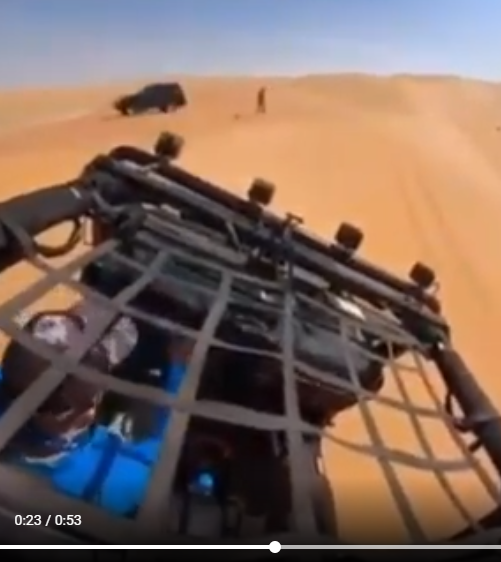
Seems like that driver wants to avoid that guy in front by going a little right and then entered the slip face and then while steering left and up he fought the gravity on soft patch resulting in a flip. However, the driver reaction after the flip tells another story: Either he is too happy to be alive Or did it on purpose (i doubt) Anyways lesson for bystanders that never come in between the path when someone is doing sideys (side sloping) as you never know what counter-action driver take in a spur of the moment which may result in a hazardous outcome.
 1 point
 -
@EmVarlet and @Frederic Nuyttens both have valid points. Any more guesses?1 point
-
Don’t. fight. gravity. Just accept it won’t be possible because of the angle, and act accordingly before it’s too late : steering right, go down and make a new turn. Also don’t crisscross at the wrong place.1 point
-
Thanks to @Asif Hussain for this contribution. What went wrong here? VID-20190115-WA0020.mp41 point
-
Wow that was something new to learn on the detailed views @Gaurav @skumar83 @Rahimdad1 point
-
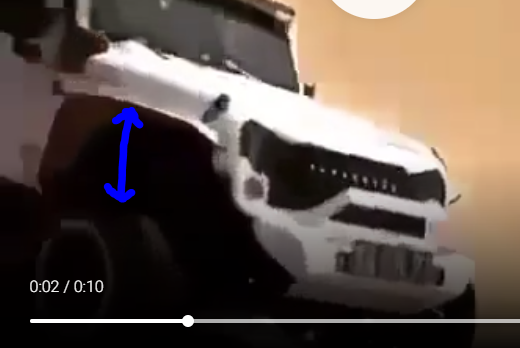
Thank you @Gaurav and @skumar83 for you views. Both of you have got it right. I have once before seen similar flip in Faqa area with a fellow offroader. The main culprit is the Jeep's Center of gravity is very high due to the lift and no spacers to even out the lift. Sometimes people buy fully modded Jeeps but with no experience in handling such a ride. The more experienced people normally judge the person by this highly modded vehicle and accept people for drives beyond their capacity. Judging by the speed and the way he approached the ridge cutting it is evident that he does not have such experience. This further endorses the grading structure we have introduced for people to better understand the importance of joining their level drives.1 point
-
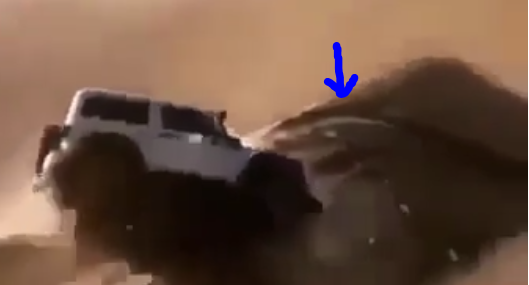
Very valued points already mentioned, here is my take on such unique flip "ON THE CREST" that I have never seen before. His speed was way too fast to do the criss-cross on that ridge. Seems like experienced but a new driver with this much-lifted (8-10 inch) vehicle that is more prone to flips, or he may be new to sand entirely to judge the way how this tall ride react to such situations. He turned little early and sharply on the right side, instead, he should have gone a straight little bit, ride the ridge and gently steer right to do the transition from where earlier tracks have been shown. Even with the slightest lift before the flip, if he could have steer left immediately he could have avoided the flip and got stuck on the crest, with this much-lifted vehicle he could have self-recovered very easily. So getting stuck or refusal is way better than flip or a roll. While the flip was happening (00:03 - 00:06), he has left the gas and could have avoided this flip to a certain degree if he kept on flooring the pedal. He has given gas after the flip (00:06 - 00:08), pretty much useless in that angle.
 1 point
 -
My view: 1. The car never reached the top of the ridge in order to cross over. I always feel that its important to ride the ridge a bit before crossing. 2. While crossing the rear of the car fish tailed causing the car to slide on the left side and then he was in a situation where the car was fighting gravity. Once the vehicle direction had turned 90 degree, it was always going to flip with the momentum. 3. Possible since the sand was churned up in the area his left front wheel got stuck which aggravated the problem of flipping. Bottom line, dont fight gravity...you might escape sometimes but not all the time.1 point
-
After reaching the top looks like the drivers leg was constantly on the accelerator pedal due to which he lost control of the vehicle and tried to swerve the vehicle or drifting it side ways and ended up flipping it. good thing is that he came out of the window in one peice and not seperated from his body parts.1 point
-
Excellent observation from a newbie perspective which shows your commitment to learning this sport with utmost safety. Totally impressed @Javier M, keep it up. Drifting downward and upward is not a good idea at all. On a flat ground, it's barely acceptable (borderline), if you know how to do it and do it within limits for just a little while. Drifting should be left for expert and professional drivers with proper safety gear, clothing, helmet, and roll cage installed vehicle on the race track or completely cordoned off area for the safety of others, and not in public desert playgrounds.1 point
-
Drifting downward is not a good idea at all.1 point
-
@Javier M you are correct on all counts. Feels good to have such observant people on board. My main intention to post these is to educate people and not repeat the mistakes made by a few.1 point
-
where do I even start?!! He wasn't wearing the seat belt I think he is on two-wheel drive When he finally made it to the top he got confident and tried to do a side pass but he did not take into account the high center of gravity of his car. As he was going down he was too fast and the approach angle was terrible1 point
-
-Soft shackles -Kinetic rope required.1 point
-
Now you know rear mounted spare tyres have more benefit than one! Lol1 point
-
Perfect analysis @Frederic Nuyttens correct on all 3 points. Others please feel free to share any other points you think might help to avoid the incident in the video.1 point
-
1) Tow hook on the back was connected to the bumper instead to the chassis itself it seems. 2) Not sure if he did previous pulls on this occasion, cause he drove off pretty fast. Would have been better if he did two slower pulls, followed by a more dynamic pull like this. 3) The rear wheels of that Prado were almost 80% dug in. Does not look like they cleared the sand out first to ease the recovery.1 point
-
I know this one is a bit difficult as it is the shot from inside the effected car, but what do you think he did wrong here. VID-20190215-WA0012(2).mp40 points



This leaderboard is set to Dubai/GMT+04:00