
Leaderboard
Popular Content
Showing content with the highest reputation on 12/14/2020 in all areas
-
LONG TREKS – OBJECTIVES, PREPARATION, AND MANAGEMENT Waking up on the first morning of a long desert trek is always very exciting, and a little concerning (let’s say 80% excitement and 20% concern). While for the group’s members the objective of the trip is to see as much as possible, take nice pics, and have fun (for them it’ll be excitement 100%), from the point of view of the group’s leader and the crew, the objective is to provide the above services while ensuring that the whole itinerary is covered timely and without incidents, with the security and comfort of the passengers as the first and foremost concern. Thus, let’s focus on that 20% of concerns which must be dealt with before the trip starts. These would normally fall under the following headings: local team, local cars, water supply, fuel supply, kitchen, camping equipment. Usually, these tours are managed with the support, and active participation, of a local team. They usually come from local tribes (in the case of Niger, but also Mali, Algeria and Libya, it's Tuaregs), and are headed by a senior, and most respected, member of the local community. The stature of the leader (in an abstract sense, even though Tuaregs are also very tall) is very important, as these trips usually cross areas of conflict, often between local tribes and sometimes between local tribes and national authorities, which require not only a person of experience in desert caravans, but also someone capable of commanding the respect of, and being able to mediate with, anybody interested in making the life of the convoy difficult. This particular itinerary was going to take us to the border area with Niger and Tchad, skirting the foothills of the Tibesti plateau. This is an area of conflict between Niger’s government and local Tebu tribes, which control this territory, and defend it in arms, including land mines. Other conflict areas may be the south of Algeria, the border between Egypt, Sudan and Libya, some areas of Mali, and border areas between Ethiopia and Eritrea. Here we already knew of another Italian convoy travelling toward the Tibesti, led only by their tour leader, who had ventured into a contested area, only to see one of the cars explode on a land mine, and 1 of the group's members losing his life. Their downfall had been the tour leader's wish to stray into an unknown area, and refusal to bring along a local Tebu guide, for the time necessary to cross that particular stretch of desert (these Tebu “guardian angels” stop all convoys along the beaten tracks, and board the leader’s car to escort non-army, non-governmental caravans, through the danger area, in exchange for a “donation”). Remembering this unfortunate accident, we had made sure our team was led by a senior Tuareg, and that he carried also enough money to manage any unplanned detours and carry out any “voluntary” transactions. LOCAL TEAM: Done. Next chapter – Local cars As the group usually travels to these distant locations by air (although I have friends who have driven their own cars, one holiday at a time, from Italy all the way down to these remote places), sourcing local, and most of all, reliable cars is essential. Toyota, with its Land Cruisers, has the monopoly of the Saharan market. The cars are all manual gears, and for the most part with minimal electronic equipment, which enormously facilitates their repairs, if needed, during the trip. Besides a local “chief”, each convoy usually is manned with a professional mechanic (and drivers, as well). Almost all drivers have either an army background, or have driven these routes with commercial trucks, hence are all experienced in impromptu repairs. These may range from simple things such as fixing a punctured tire, to averagely complex things, like changing a belt (there is always an extra belt aboard each of these cars, knotted around the shift lever), to more complex problems such as repairing a leaf spring suspension, plugging a leak in a radiator, or fixing the gear box. The mechanic’s ingenuity is directly proportional to his previous experiences, and sometimes reaches fantastic heights. For example, how do you fix a punctured radiator if you don’t have a soldering iron? Of course, first try with toothpaste: plaster it on top of the puncture, and hope the heat hardens it, and plugs the leak. Failing that (which in this trip, it did), you should clearly put some tobacco from your cigarettes inside the radiator, so that (don’t ask me why, or how), it “boils” up toward the leak, and plugs it from the inside. And this we did, to momentarily solve a radiator problem which occurred in the middle of the Erg of Bilma, for long enough (2 days) to reach the village of Dirkou, and its better equipped mechanic. Therefore, seasoned Toyota Land Cruisers, a good mechanic surrounded by experienced drivers, a minimum of essential spare parts, and a lot of creativity (and some luck) in solving problems: that’s all is needed to face a major desert trek. LOCAL CARS: DONE. Third chapter - Water requirements9 points
-
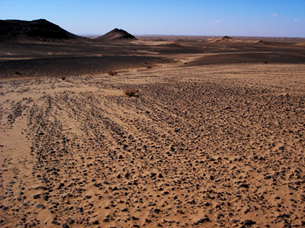
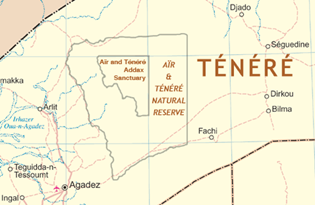
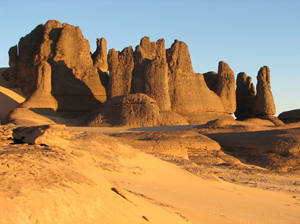
INTRO There are extraordinary places that, once visited, leave a lifelong mark on a person's life. Some people catch a "bug" for cities (using myself as an example, that would be Bangkok, or Buenos Aires), for countries (India), even for a continent (Africa). More rarely, it's a natural feature that leaves a lifelong mark on someone's mind, urging her/him to return to it, time and time again. For some, it's being out at sea, for others being up in the mountains. I am sure all of you, Carnity Desernauts, can sympathize with me for being unable to resist the call of the desert. Most people would find this inexplicable, and, bewildered, will say "but there is nothing in a desert", or "what can you do in a desert, don't you get bored with its emptiness?". I surely don't need to give you the answers to those questions (or you wouldn't be reading this post at all). Hence, I would like to take the "opportunity" of my FJ being momentarily "out of action", to spend some time reminiscing those very places which stole my heart and mind, from the very beginning of my desert-going years. In fact, there was a time when I moonlighted as an organizer, and guide, of adventure travels, specialized in desert locations. It was a magic period, when terrorism had not yet taken a hold of most of Northern Africa and other parts of the continent, and extensive travelling was possible, even to the most remote and wild locations. To most people, the sandy stretch covering the north of Africa is simply known as the Sahara. The word itself is self-explanatory, meaning "deserts" in Arabic (in the plural), but also "moon", "wilderness", and "dawn" or "before dawn", with similar variations in different languages. Seven million years old, and with an area of 9,200,000 Km2, it is the largest hot desert in the world. Concentrating on its plural form, "The Sahara" is an assembly of many, fabulous, sometimes mythical, individual deserts: the Adrar, the Ténéré, the Air, the Ennedi, the Tibesti, the Hoggar, the Tassili, the Fezzan, the Nubian Desert, the Gilf el Kebir, the Great Sand Sea, the White Desert, the Danakil, and more to the east, the Sahara's natural extension, The Arabic Desert, with The Rub al Khali. Amidst these legendary deserts, rise cities and oasis just as fabulous, with origins lost in the mist of time: Chinquetti, Ouadane, Mopti, Timbuctu, Gao, Agadez, Arlit, Fachi, Bilma, Djado, Tamanrasset, Djanet, Ghat, Kufra, Dakhla, Dallol, and (why not?) Liwa. These are the magical places I was lucky enough to visit before politics and terrorism closed most of these locations to travelers. I'd like to take this forced period of absence from our UAE deserts, to look back on those times, and share with you some memories, and stories from the campfire. Before getting into the thick of these travels, a few reminders of what The Sahara is, and how it is unique. Contrarily to common belief, only 15% of the Sahara's deserts are made of sand. Inhabited by only 2.5 million people, covering 1/3 of all of Africa's surface, the majority of its landscape is made of "Hamada", or rocky plateau, such as the Algerian Tassili, depicted below. The flat desert pavement, called "Reg", is the second most prominent feature of this region. while the dune fields most associated with the Sahara are known as "Erg". Other geological formations that may be encountered in the Sahara, are the Wadi (dry river), Oued (dry lake), and the Chott (salt flats). Mudflats, usually known as “Sabkha”, are more typical of the coastal deserts of the Arabian Peninsula (as in the UAE), and are not found in the Saharan landscape. Going back to our most favorite feature, the Erg – i.e., the familiar sand dunes we are used to driving on - these associate their names to fantastic Saharan locations. Some of the better-known ones to motorsports lovers have provided a stunning backdrop to the original Paris-Dakar rally: The Grand Erg Oriental, the Erg Issaouane, the Erg de Bilma, these are endless dune fields, which take days to cross, and are only rivaled by our own Rub al Khali, in terms of sheer size and remoteness. Having said all this and sending you to read Fred’s essay on dune formations, for more information on the matter, I’ll get on with lighting the first campfire, and share with you some memories from the Sahara. I will start, on my next post, with perhaps the most legendary of these deserts: The Ténéré. In the language of the Tuaregs who inhabit it, the word means…”desert”. While this repetitive calling deserts by their own common names may seem to reveal a lack of fantasy, to me it implies an utmost respect for their absoluteness: to the Arabs, as well as to the Tuaregs, these locations are THE one and only Desert. Most of the Ténéré is a flat basin, once the bed of the prehistoric Lake Chad. In the north, the Ténéré is a vast sand sheet (a Reg) - the true, featureless “Ténéré” of legend reaching up to the low hills of the Tassili du Hoggar along the Algerian border. In the center, the Bilma Erg forms rows of easily navigable low dunes whose corridors make regular byways for the azelai, or salt caravans. To the west, the black basaltic feature of the Aïr Mountains rise up. To the southeast, the Ténéré is bordered by the Kaouar cliffs running 100 km north to south. At the base, lies a string of oases including the famous Bilma. Periodic outcrops, such as the unusual marble Blue Mountains in the northwest near Adrar Chiriet, or the Agram hills near the oasis of Fachi and Adrar Madet to the north, are rare but notable landmarks. The entry point to the Ténéré is the Tuareg village of Agadez. This city built with mud can be reached after an exhausting 16-hour drive from Niamey, the capital of Niger. Along the way one can meet some of the local tribes, the most stunning of which is the Bororo tribe. The best time to visit this tribe would be during the Gerewol Festival. This is an annual courtship ritual competition among where eligible youths dress up in elaborate ornamentation and, made up in traditional face painting, gather in lines to dance and sing, vying for the attentions of marriageable young women. The feature which wins the lady’s hearts is the whiteness of the eyes and teeth, hence the young men’s grinning and wide open, seemingly psychotic, yet love filled eyes. Back to Agadez, one usually arrives in this mud-built city late in the evening or at night. Nothing better, at this time, then paying a visit to Vittorio, at his hotel, restaurant, camping ground, entertainment venue. Built by this Italian expat (legends say fugitive from the law), who moved to this remote outpost decades ago, the Hotel Telit, and its Le Plier Restaurant, are now local institutions, where Vittorio and his Tuareg wife never fail to welcome the wary travelers, on their way south to the capital, or further north, to the Ténéré, and onward to Algeria. Time to go to bed now, resting for the last time within the safe mud wall of Agadez, before venturing into the endless openness of the Ténéré. Stay tuned for the next installment of “Deserts of the World”, when the adventure begins.

 7 points
 -
Thanks Ale, v informative! We need a campfire in the desert to listen to these stories!5 points
-
Sounds tiny bit similar to our colorful past where we fixed radiators with m-seal and cigg butt, brake caliper with tin can and axle, suspensions and exhaust repair with tie-down straps few times, but nothing close to land mines. These tourist and tour operator are really brave heart. Looking forward for more excitement, soon.4 points
-
Thanks @Emmanuel for an awesome afternoon!3 points
-
N@ved @N@ved Ken Hüüdma @Ken Hüüdma Federico De Chirico @Federico De Chirico Federico Galbieri @Federico Galbieri Niki Patel @Niki Patel Danish Mohammad @Danish Mohammad Alphin Aloor @Alphin Aloor Abdul Rahman Abdul Kader @Abdul Rahman Abdul Kader Pickey Singh @Pickey Singh Saneesh Thomas @Saneesh Thomas Explored Dubai @Explored Dubai imranaasghar81 @imranaasghar81 You are all confirmed on the drive3 points
-
Finally the day has come to hear what is behind Ale's real off-roading spirit. Since we know each other from almost a year and I always use to wonder about your extra humble and accommodative personality when it comes to supporting drives. I strongly remember when you use to join in newbie drives with so much of passion, enthusiasm and "PATIENCE" I really used to wonder whether you are actually a newbie or just new to the UAE desert....? Your attention to detail, catching the right lines from beginning, and finesse with your trail without destroying the path were the significant traits that we all used to notice, but never got a chance to sit on campfire stories. Thank you for taking time to share these beautiful stories about African landscape and Sahara desert variations. I can't wait to hear more stories from your experience with different places, cultures and type of terrains.3 points
-
Congratulations @Andrei for reaching the Fewbie Level with Carnity Offroad Club. Looking forward to seeing you growing further and helping others to learn the art of offroading in a safe environment. Please make sure your Carnity user profile is always updated with all the latest Emergency contact details. P.S. Trip lead might deny your participation if you don't have required off-road gear. Fewbie: Drives Attended (Indicative) Minimum 5 Newbie drives are required within last 3 months for Fewbie promotion. What you'll learn Basic dune and sand reading Basic self-recovery techniques Advance side sloping and hill climb Basic ridge riding and criss crossing Basic control over technical dunes Slightly faster pace desert driving Skills required Enthusiastic and positive attitude Willingness to learn and help others Presence of mind and attention to detail Car Worthiness Any 4x4 vehicle with low range gearing Suitable approach and departure angle Off-road gear required Safety flag, tire deflator, tire pressure gauge, shovel, fire extinguisher, medical kit, radio (walkie-talkie), air compressor. Drive teamwork Manage second lead and sweep positions upon request Intuitive and proactive to support Trip Lead Observe recoveries and offer help, when needed Drive Joining Join Newbie and Fewbie drives And Fewbie Plus, after 5 drives at Fewbie level only Forum participation Active participation on the forum Share drive experience + feedback Share drive pictures in the gallery Post trip report after the drive2 points
-
I am speechless on what I just read. I was imagining in my mind just people sitting around a campfire and @Ale Vallecchi just telling stories. I miss the times where we could all gather in giant group and bbq or make a giant bonfire and talk or listen to music. Inshallah all this goes well and I hope to hear @Ale Vallecchi tell his stories while we eat delicious different types of food. Great story telling!!2 points
-
Congrats @Andrei !2 points
-
Dear friends @Anish S, @Nivin, @Abu Muhammad, @Kailas, @Alexander Alcala Please note convoy numbers for tomorrow's drive 1. Chaitanya 2. Anish S - 2nd lead 3. Nivin 4. Abu Muhammad 5. Kailas 6. Alexander Alcala - Sweep Tero is not joining as informed to me. We will use Channel 1 for radio coms. See you tomorrow2 points
-
Congrats @jodha singh shekhawat. Well done.2 points
-
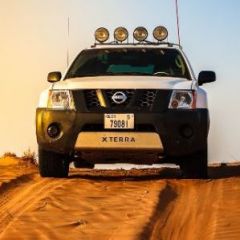
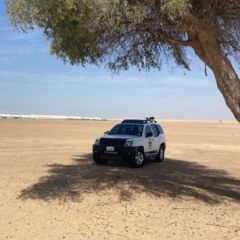
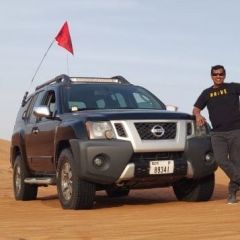
800,000 kms. I bought it brand new in 2011 and was using it everyday traversing my different sites but now since Feb after I bought the XTERRA is idling at home.2 points
-
Congratulations @jodha singh shekhawat. Hope to continue to enjoy learning and honing your skills at this new level.2 points
-
@jodha singh shekhawat congratulations2 points
-
Its always a good idea to keep your car clean. This coming from someone who only gets his car washed on special occasions like annual passing. However washing is not going to keep your tire rods or rubbers clean and thus damage proof. Your tire rods will only bend if there are a few hard bumps and not because there was sand from the last drive. Similarly rubber will become hard and crack with time and change in temperature, not because of sand from a few drives back. Cleaning from the underside helps you to get down and visually inspect if there is anything that looks put of place. Although its not a good idea to leave your throttle when you are climbing up a dune, but its not the greatest idea to keep the accelerator pressed to warrant a jump. That is why we encourage people to observe the car ahead and try to repeat the exercise. Once you feel that the front wheels of your car are through, let the accelerator go. The car's momentum will take it through. My opinion is better to get stuck than have an incident, and I'm sure no senior member in Carnity will encourage you to jump instead of getting stuck. Even our tutorial video clearly states try at lower RPM if you fail, reverse and try at slightly higher RPM and so on and so forth until you get it right. Repeat the exercise on each dune and do not go at higher RPM on next dune as each dune is built differently although they might look the same. With experience and repeating this exercise you'll learn the right throttle at the right time. Momentum doesn't mean speed, it means the right speed at the right time. Hope you continue to learn safely and with the patience of all the convoys all around, we don't mind you taking longer the learn as long as you do it safely.2 points
-
Great write up @Ale Vallecchi. You are not only a perfect dune master but a master when it comes to describing those dunes too!! Fantastic ✌️2 points
-
What a fantastic write-up, it says a lot about your passion for the desert and the life changing experiences that can be had when exploring these places. Definitely looking forward to more of this !2 points
-
@Ale Vallecchi this is extraordinary and for this Agree hundred percent very true ! Can’t Wait for the next to come @Rahimdad your guess is right regarding VW Touareg !2 points
-
@Ale Vallecchi wonderful story telling. Got me hooked. Starting wondering if VW took its Touareg name from one of your stories.2 points
-
untilDrive Details Level: Newbie and Above (All Levels) When: 18 Dec 2020, Friday. Meeting time: 6:30 AM (SHARP - Without any exceptions) Meeting Point: - Margham Village Entry Point - https://goo.gl/maps/6pK1UqzSV7jQDZDy9 Type of Car: Any proper 4x4 with front and back tow hooks and 8-10 inches of ground clearance. What to bring along: Loads of water, snacks (for yourself), smiles, face mask, rubber gloves, enthusiasm and willingness to learn. Approximate finish time: 10:30 AM End Point: Lisaili Depending on Convoy Performance P.S. Only join if you have a compressor to inflate your tires after the drive.1 point
-
 That true.1 point
 -
© Rakesh
1 point -
Thank you, gents for the messages and of course for your guidance during the newbie drives!! Appreciate evey piece of advice1 point
-
1 point
-
@Andrei congrats, foarte bine !1 point
-
Already cant wait for chapter three : water requirement ( trying to imagine how goes when out of water supply ...etc ) please Ale can you keep the last one till you get back in action and tell us yourself around camp fire ( covid precaution applied ) 🙏1 point
-
1 point
-
@Hardik ModyMody you are 3rd on the list1 point
-
@Tero Vallas @Nivin @Mohamed Seidam thank you for informing in advance, will definitely miss you all and i hope we will meet again soon.1 point
-
🤞 Sir Richard.. Kindly add me on the wait list..1 point
-
can you pls put me on the waiting list1 point
-
@Hisham Masaad waitlisted @syed salman raza waitlisted1 point
-
Good morning Can I be on the waitlist for this drive please1 point
-
The XTERRA has run 90000 kms with me after I purchased it in Feb. Its like choosing which car to drive everyday as I like both of them very much and pains to see I always choose the XTERRA over Altima as having a construction company, I need to carry lot of materials around which the Altima cannot take. Hopefully my son or daughter will take a license soon and take charge of that car.1 point
-
HI @Asif Hussain ! Unfortunately my plans in family have changed and hence I cannot join this time. Please give my place next to WL. Enjoy the ride !1 point
-
@jodha singh shekhawat congratulations and well done 👍1 point
-
Stick to that size, have a look at the drive report where Srikumar has wrote some info on your tyres.1 point
-
Drive report After supporting the AN drive in the morning, I decided to stay in the area because I selected the exact same meeting point for my drive in the afternoon. I had a quick sandwich, a drink and some rest at the last exit and I didn't even inflate my tyres again. When I reached the meeting point, I was happy to see I was not the first one. Everybody was very well on time and after a quick briefing, we started driving at 2.15 pm. @Veedooshee was my second lead, girl power in the front. @Tamas Hoffmann was covering the center and @Janarthan was my trusty sweep with his lovely copilot Mira. We went through some technical dunes first before we reached the long range dunes. I kept a quite high pace and that meant we could cover about 60 km in a little over three and a half hours. Everyone did amazingly well and we had a minimum of refusals and stucks. I saw that everyone had a big smile on their face after the drives and enjoyed theirselves. I know I did !! I hope to see you all again very soon.1 point
-
1 point
-
1 point
-
1 point
-
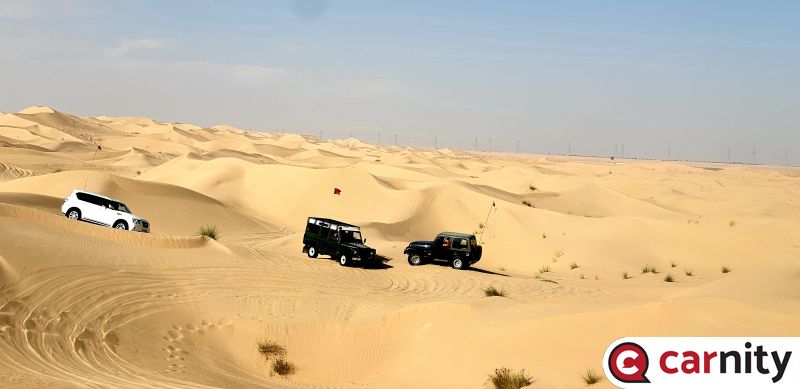
© Rakesh
1 point -
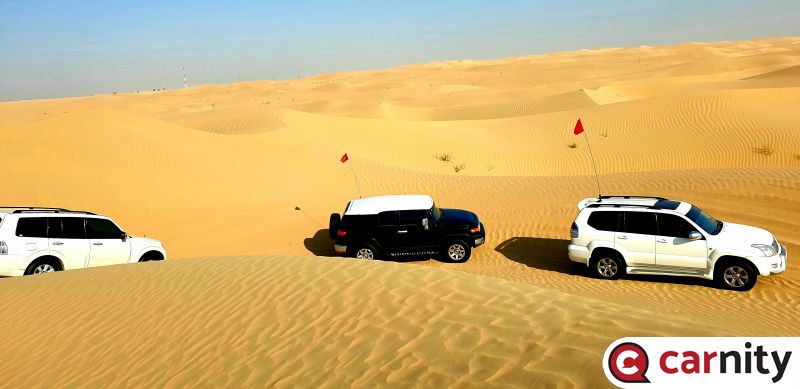
© Rakesh
1 point -
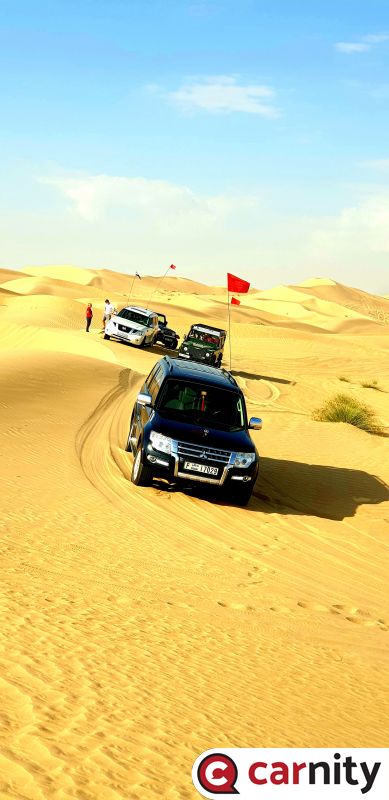
© Rakesh
1 point -
@Asif Hussain bhai unfortunately i have to work in Dubai on 18th afternoon. Exiting the drive will see you soon!1 point
-
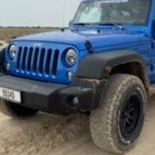
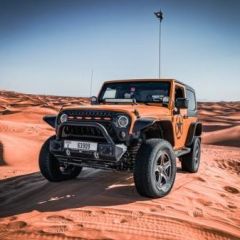
Hey Team, I bought a 2nd hand Jeep wrangler JKU. The previous owner added a 2.5 inches liftkit and a huge 35inches tyres. I do realize now that this is not the optimal setup for climbing hills or getting the best performance and milage out of this car. I'm also struggling with deciding on the best jack for this car. A hydrolic jack seems not efficient. A hi-lift needs to be mounted, and it needs a stable surface and a good lifting angles. Is a hilift jack my only option? What about the x exhaust jack?1 point
-
You can use any floor jack with extra wooden plank, as mentioned above OR buy additional few inches of rubber or metal adapter to suit your lift.1 point





This leaderboard is set to Dubai/GMT+04:00