
Leaderboard


Popular Content
Showing content with the highest reputation on 05/20/2019 in all areas
-
3 points
-
Last time I checked and it's been a while, visit visa holders with international license can only drive rent a car cars P.S : I wouldn't let any one drive my car who doesn't have decent UAE driving experience from our south east Asian countries, even if it is my brother!3 points
-
Simple answer, Emissions regulations. That’s why catch cans don’t come as standard. With a catch can, you’re venting gases directly to atmosphere whereas with the standard PCV system, the gases are pumped back into the engine and burnt. The oil filter doesn’t take all the contaminates out of the oil. If you’ve ever taken a sump off an engine and seen all the crap in the bottom, you’ll understand.3 points
-
What do you guys think? - I may put this in my list of upgrades.2 points
-
Too little too late for damage control. Engine, transmission, suspension, diffs, electronics, 90% other parts from the BMW parts bin. Makes it a BMW. Just tuned different2 points
-
As much as both videos try its best to make it very convincing to have, but my question to more technically capable members if these fumes and contaminants left in the system, won't they get collected in engine oil filter.....? If not, then why manufacturers are designing cars without a catch can?2 points
-
yes, email the guy...he will quote you the rate with international shipment till Dubai. He might ask the payment to his paypal account instead of the online portal. That's fine. Dont forget to buy the extension for the transfer case drop. It costs only USD 8 extra.2 points
-
@hossein Thank You brother. well noted.2 points
-
And regarding the electrical thing you could have taken the power from the source...taking positive from the fuse box is a bad idea...2 points
-
Not really its mostly a BMW Z4 Toyota just put some Toyota Supra badging and a different front end on it. Open the hood and everything has BMW labels on it. Same motor too Interior is also the same from the steering stalks to the in car entertainment. It's all BMW. Seems like Toyota has lost the ability or appetite for developing new cars other than cheap econoboxes.Even its flagship SUVs the Land Cruiser and Lexus LX are overdue for a new generation by two years. But they just keeping giving the old ones facelifts. The Toyota 86 was a rebadged Subaru, the new Rush is a rebadged Daihatsu Terios,. The Supra is a rebadged Z42 points
-
Guys, I would request input on the topic of my current interest at the moment. My brother is a frequent visitor to UAE on visit visa during his academic breaks. He is insisting on to obtain IDL from India and has plan to drive my car during his visit. Request input,suggestions/advice from experts on this topic. Few concern pops up in my mind are as listed below. Indian Driving License holder with IDL can drive in UAE - Any Car? or with restrictions? Motor Insurance in UAE by default except this as a extended cover? Anyone who have experience this in their family or in friend circle kindly share their experience.1 point
-
Nice share. I have always seen some of these in bright sunlight, however not all work in every car.1 point
-
I usually skip through long videos, but this one didn't let me do it. Amazingly well explained the connection, differentiation and yet togetherness of Toyota and BMW for Supra and Z41 point
-
hi srikumar does he ship to UAE as when I was proceeding it did say 46 $ for shipment to uae but on the last page just where you enter the billing address and credit card details it says ships to only US only ??I have send them a mail to verify1 point
-
@syedyaseerI checked with Police and insurance for my friend, he has the same condition with your brother, there is no problem to drive any car in UAE with IDL with the same category on the license as police said, I ask insurance also, they said in case of an accident if police issue the report the insurance will accept, I shared my experience but better you check and make it sure, its not on my responsibility good luck1 point
-
Don't go along with that plastic gourmet it's interchangeable you have to study the plate on the transfer case itself to be 100 % sure just where the rear shaft extends there is a round plate rebit to the case take note from there1 point
-
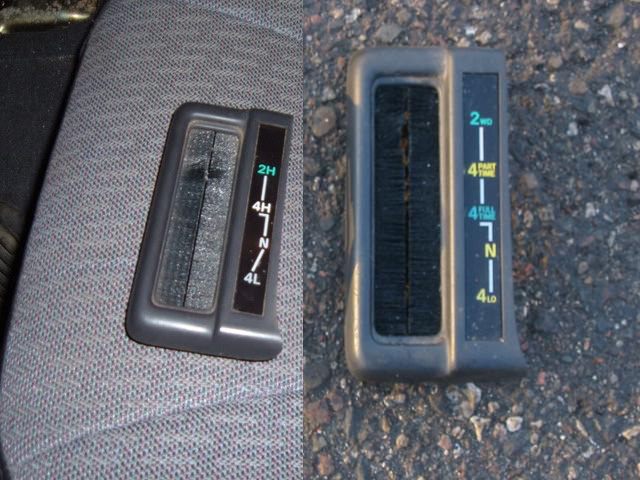
Then you have a NP231. You can select from the website. Since you are driving an automatic you have to select automatic transmission along with transfer case drop. http://www.boostwerksengineering.com/231-HD-Shift-Linkage-Auto-Trans-V20_p_25.html you can take this linkage to Saleem. He installed mine and is aware how it's to be done.1 point
-
Can you send me the picture of the transfer case linkage taken from inside your car cabin clearly showing the description. I have attached one picture from the internet. The one on the left is NP231 and one on the right is NP242. I changed these parts by studying various forums. Not sure which workshop guy would have the right knowledge. They can help you fix the linkage once you buy it, but till that point you have to do it yourself.
 1 point
 -
When you are on the Boostwerks site, it gives you two options, one with lift and one without. The difference between the two is that there is an extension linkage for the lifted vehicles. So better to buy that one. That guy does international shipment if you send him an email. Would cost you approx USD 100 landed, but it's definitely worth it.1 point
-
Any accessory such as light bars should be connected through its own relay, dedicated power supply cable and own fuse to avoid such occurrences. Not sure who connected yours but it’s really a bad idea to hook that up to essential components.1 point
-
One more point. The best thing about the XJ is that you can crawl below it and manually shift the vehicle from 2H to 4H and to 4L. So incase if your linkage has failed in the desert, do that. Agree. Getting a clean one is most importand and it's a big challenge. But the issues that the OP has raised are minor ones and can easily get fixed. In your case, you spent more money fixing the AC than the value of the car.1 point
-
1 point
-
Forgot to mention- sri we missed you on the drive. hope you get better soon. best wishes srini1 point
-
1 point
-
Car engines, unlike some other parts of a vehicle, don't have a predetermined life expectancy. Instead, their longevity largely depends on how well they are maintained and operated. Neglecting essential maintenance tasks like regular oil changes, fluid checks, and timely servicing can significantly shorten an engine's lifespan. In extreme cases, an engine can suffer irreparable damage within a relatively short distance, such as 30,000 kilometers. On the other hand, diligent maintenance practices can greatly extend an engine's life. By following manufacturer-recommended service intervals, using quality fluids and parts, and addressing issues promptly, it's not uncommon for engines to reach well over a million kilometers. These well-maintained engines often exhibit reliable performance and fuel efficiency even after years of use. Personal experiences like mine with a 17-year-old Pajero, which has clocked 180,000 kilometers and still runs smoothly, highlight the impact of proper care on engine longevity. Such examples underscore the importance of regular maintenance and attentive driving habits in preserving the health and longevity of your vehicle's engine. Unfortunately, many car owners have encountered fraudulent mechanics or received incorrect maintenance advice in the past. This emphasizes the need for caution and diligence when choosing a workshop or seeking repair services. It's advisable to research and seek recommendations from trusted sources to find a reputable and reliable workshop that prioritizes honesty and quality service. A simple yet effective strategy when facing car issues is to gather multiple opinions and estimates from different workshops. By comparing these assessments and considering factors like competence, reputation, and cost-effectiveness, you can make an informed decision about where to entrust your vehicle for repairs or maintenance. This approach not only helps in finding the most suitable solution for your car's needs but also reduces the risk of falling victim to unscrupulous practices.1 point
-
30 Fuel Saving Tips For Saving Over 30 Percent On Fuel Cost Hypermile: Extreme Energy Efficient Driving Hypermiling is the art of saving fuel by understanding and reducing the driving habits or ways that sips extra fuel on every mile (km) you drive. Without knowing the below little secrets we conveniently blame the vehicle or car manufacturer to design such fuel-thirsty cars. Of course, we agree some cars are more fuel-sipping than others that have been engineered with fuel efficiency in mind, but still, you can control the fuel efficiency by over 30 percent by simply following the below fuel-saving tips. For result-oriented fuel-saving, one needs to understand the basic science behind fuel consumption in simple language. When your body works out hard or runs a long stretch, you eat more food. Similarly, car fuel consumption depends on this basic science too, that how hard you drive and how much load you carry from place A to place B. Secondly how you can reduce the drag against the incoming air as a basic law of physics. Engine and Drive-train 1. Avoid Idling: One of the biggest factors affecting the fuel mileage is to let the car engine run idle for a long time in parking, while loading/unloading while pulling over for phone calls or GPS routing etc. You should even switch off the car engine on a longer traffic signal that lasts more than 30 seconds. Roughly every 1 minute spent on idling consumes fuel for 2 km's drive (this may vary dramatically based on the size of the engine and use of A/C). During idling the combustion of the air/fuel mixture is not completed efficiently, meaning that some fuel gets deposited on the cylinder walls. This removes the protective lubricating film, which in turn causes increased mechanical wear, and oil dilution over long periods. 2. Check tire pressure weekly: Second most important factor for saving fuel is to drive with fully inflated tires. Even if your car has TPMS (Tire pressure monitoring system) still keep a close check of all tire pressure all the time. TPMS will raise an alarm when the tire is generally lower by 5-7 psi and this variance is enough to cause additional drag for your car to consume extra fuel. Lower the tire pressure = higher fuel consumption. 3. Use higher gear: As much as possible, use the highest gear available in your car. If your car has an option of OD (Overdrive), leave it engaged all the time as this will switch to the next higher gear as soon as possible. If your car gear transmission comes with economy mode, leave it on ECO mode always as it will shift gear faster for achieving better fuel mileage. In manual transmissions match the gear selection to the road and engine speed. Using too higher gears can actually use more fuel because a bigger throttle opening is required to overcome the effects of gear ratios that do not match the car’s speed. 4. Regular car service: Periodic servicing as mentioned in the car owner's manual must be done to change the engine oil, and engine oil filter, and clean or replace the engine air filter. This regular maintenance is very important for optimizing fuel efficiency and also to keep your car engine running happy and healthy for a long time. 5. AC on circulation and Eco mode: Set your car air conditioner to recirculate cabin air as it will use less power to keep the cool air cold, than cooling the outside hot air to cool in an open vent setting. Also use AC in an eco mode that frequently switches off the compressor and works more with re-circulation of cold air, which reduces the significant load on engine fuel economy. Driver (Real nut behind the wheels) 6. Drive at ease: Driving at easy behavior to accelerate gradually and braking slowly will amazingly increase the fuel efficiency, then sharp speeding and braking while driving in rush. 7. Plan your brakes: Anticipate the traffic or turn ahead of you to avoid hard braking. Always keep an eye on the brake light of 3-4 vehicles ahead of you and leave the acceleration as soon they brake. This will give you enough time to slowly approach the braking vehicle and slow down your car with little or no brake. This conserves a lot of fuel and also saves the brake pads and brake rotors/discs. Always keep a long enough following distance to the vehicle directly in front of you to avoid having to adapt your own speed to the traffic flow all the time. Maintain a following distance of at least four to five seconds to avoid continually having to brake and accelerate. 8. Plan your stops: While approaching a red signal, leave the acceleration from a distance and hold the brake gently as if to approach the signal when it’s green. Idea is to use the car's momentum as much as possible and not to start the car from a standstill point (if possible). By sticking to the speed limits, you can catch all the lights on the green if you catch the first one on the green. The majority of the traffic lights are synchronized to the speed limits, so by driving smart, you can avoid having to stop at all traffic lights. 9. Rev less: Try to drive around 2000 rpm or less by driving in a higher gear or by a softer acceleration in automatic cars. Higher the engine rev’s it takes a lot more fuel and covers less distance. Leave high revs for the fastest car in the world and not for daily drivers. Drive a manual car in its most effective rev range. Smaller engines need to be run at about 3000 to 3200 RPM to work comfortably, so use proper gear selection and matching engine speeds to use the least amount of fuel. Making small engine labor at lower revs requires bigger throttle openings, which uses more fuel to maintain power and speed. 10. Shift to Neutral when stopped: Make a habit of shifting gear in Neutral as soon as you stop in traffic or elsewhere where your car is not moving. Keeping the car engaged in D (Drive) wastes a lot more fuel when the engine is pushing the car forward and the brake is holding it back. Vehicle Dynamics 11. Tire size and weight: Always get the OEM tire size of recommended tire brand. Increasing the tire size or the weight can cause a dramatic change in fuel consumption. Lighter the tires, better the fuel efficiency and vice-versa. While it is true that correct tire pressures can improve fuel consumption by up to 3%, much of this saving can be offset by using non-standard tires. Fitting wider and bigger tires can actually use more fuel than standard equipment due to the increased rolling resistance of wider tires. Always keep tires as close to the original size/width as possible to get the biggest savings. 12. Switch off DRL: Turn off the DRL (Daytime Running Lights) if it’s not needed on a bright and shiny day, this also adds a bit of extra overhead for fuel consumption. 13. Close Windows and Sunroof: While driving at a higher speed, it’s better to drive with all windows and sunroof closed to reduce the aerodynamic drag. 14. Clear your trunk (boot): Remove all unwanted stuff from the trunk and backseat, as every single object weight “really” adds up to increased fuel consumption. 15. Remove unused roof rack: Just like above, if you aren’t using those roof racks frequently then better get rid of them and save a few liters on every fill-up. The roof rack adds weight and also affects the aerodynamics of the vehicle. Make better Choices 16. Drive on tarmac than off-road: Prefer to drive on tarmac than on loose gravel or sandy patch that has less traction and results in consuming more engine power at higher fuel consumption. 17. Cruise control or steady throttle: Idea is to drive a vehicle at any constant speed to increase fuel efficiency. Cruise control is good for straight roads but bad for incline and declining roads. It is best to develop a throttle control to keep it at a set constant position all the time for best gains. 18. Choose a less crowded fuel station: Plan your fuel fill-ups in time, especially in the evening or night, and avoid a busy fuel station that will keep your car running idle for minutes and spoil the fuel economy further. 19. Don’t warm up the car: It’s a thing of the past now, as all modern cars don’t require warming up the engine for 5-10 minutes. While you start, driving gently (no hard acceleration) is more than enough to warm the engine oil and protect your car engine. 20. Use soft music while driving: The choice of soft music will make you more attentive and considerate on the road with all of the above fuel-saving tips. The fast or upbeat number will aggravate you more to forget all and drive fast as possible and race to the finish line. Plan and Monitor 21. Track your fuel consumption: For improving the fuel mileage, one needs to track it on every fill-up and then compare it with previous mileage to improve further. Fuelly is one good site and app that offers tracking fuel fill-ups very efficiently and do the cross-comparison with previous tank reading to encourage driver. 22. Display fuel consumption in cluster: If your car comes with a fuel consumption display then drive it with that all the time to keep a constant eye on your driving behavior and constantly challenge and remind yourself to improve it. 23. Take the empty roads: Prefer to choose an empty road while routing than the traffic-filled road, as car consumes a lot of extra fuel in stop and go traffic. For example, a 5 km stretch in 20 mins will sip more fuel than a 10 km stretch in 20 mins. You can plan the shortest and fastest route by using GPS navigation by using the traffic layer. 24. Drive around the economy zone: Every car speedometer has two little green points around the 40-60 and 80-100 range indicating the best fuel economy zone. Try to drive within or around that economy zone as much as possible. 25. Start early to avoid rush: Start 5-10 minutes early to avoid rush hours or rushing at high speed or getting stuck in stop-and-go traffic which is worst for fuel mileage. External Factors 26. No to drive-ins: Start saying no to drive-in restaurants and cafés that get you stuck in the queue for several minutes and spoil the fuel economy. It’s better to step out and stretch a little while waiting for your order. 27. Pick the clean lane: While driving in a clean lane you can control your gradual speeding and plan your brakes than in a busy lane that forces you to brake and speed up all the time. 28. Honk if needed: If you suspect the car in the next lane gliding towards your lane without an indicator, just honk a little to get to his attention and avoid any hard braking or sudden maneuver. 29. Adhere to the speed limit: If you adhere to the assigned road speed limit then you are among the majority of the car driver on the road and you don’t have to slow down or pace up suddenly. These sudden increase or decrease in speed takes a toll on the fuel mileage. 30. Park in shade: This will heat up your car less and will use lesser air conditioning to cool the car cabin and resulting in less fuel consumption and a more comfortable drive.1 point
-
In 2005, my jeep had a tire blow out. It was very scary because I didn't know what happened at first. I was driving to work as I do five days a week, and I heard a loud BOOM. I tried to keep control and barely was able to, until I got the car to a stop. It looked like this:1 point
-
i am facing some problem in my jeep cherookee sport 1999, could you please forward me the contact number of shakeel1 point
-
You seem really like a champion in Jeep. Really strong will you got backed with tremendous knowledge and engineering. Good sharing this experience.1 point
-
Welcome Saaduddin, to the jeep hood. You must be really lucky and proud to have YJ.1 point
-
For the information of all, I had issue with driving propellor shaft which came out several times from yoke by breaking fixed bolts. why that was happening I want to share with you! I got surprised when it broke 4th time in desert!! This time I took challenge left my drive of last Friday for diagnosing the cause. I removed leaf spring inspected aligned/measured then re-install I removed transfer case trey measured then re-install. I found rear differential movement not free. After all re assembling I took my jeep to my good friend Shakeel(al suwaidi garage), he is very well known among Jeep owners. He is very experienced. during my discussion with him I told him that I recently replaced yoke from one garage. He then started inspecting rear differential, front differential, transaxle(double gear) ended up diangnosis that the yoke replacement not done properly. Please make a note when replacing differiantial yoke, person must to align pinion and do proper adjustment of yoke special calculative torque required to tight & grip yoke... any way he describe by doing in front of me! Now this is an experience I gained, all of you sure want to know how this happen. I will not mention the name of that person or garagae, as I believe we should keep curtain on other bad deeds and good deeds I love to mention by any mean. I gave my vehicle for slip yoke changed to a known garage and he changed it without doing proper alignement resulting my test as 1. letting me take out my jeep on front differential only. 2. Damaged transaxle(double gear), as drove without oil 3. Damaged front drive shaft as load of stress Now I am driving my jeep on the same rear shaft, by yoke alignment by Shakeel Bhai Below is Yoke & rear drive shaft in proper condition!! This week I really put my foot down to check the work done up to the limit and ALHAMDULLIAH very much satisfied.1 point
-
MY BEST SALAM TO ALL MY NAME IS : SAADUDDIN AHMED OWNED: YJ 1992 (MANUAL) WORKING FOR: GECO MECHANICAL & ELECTRICAL LTD.1 point
-
My 1st jeep in 1985 was CJ7, In Pakistan high price of fuel made me to replace engine to 1C Diesel.1 point
-
Thank you Dr. Srini. Will be back from the next drive onwards.0 points













This leaderboard is set to Dubai/GMT+04:00