
Leaderboard


Popular Content
Showing content with the highest reputation on 09/06/2023 in all areas
-
@Haneef Thayyil But I see it on your profile Fewbie. try to restart your phone or laptop and refresh may be?? ( 😂😂😂😂😂)2 points
-
Thank you very much @Gaurav, the Carnity leaders, advisors, supporting team and all the members. It’s been a pleasure to learn and grow with your support and guidance, and so happy for the promotion.😊 I look forward to the next level of drives with more fun and excitements. Thanks again.2 points
-
Thanks for the tip @Sunil Mathew. Plan on checking if this is the culprit tonight. Obviously damaged from my over enthusiastic usage of horn 😅😅2 points
-
These are the stats from the last two drives I did here. In the first of the drive, we had a situation where we had a stuck car being pulled by another that got stuck which needed to be pulled by one more which got stuck too so we had to use one more behind it. There was a pop out too at the very start even before we entered the dunes. In the second drive at one time, we found three cars inside a small bowl, a little later in the drive we had 2 or 3 simultaneous popouts being fixed at the same time, and a dead car towards the end of the drive, in the dark. Expectation: The sand will be incredibly soft; the dunes are un-even and narrow. It will be a slow and treacherous track, where anything that could go wrong will go wrong. Objective: We will thread carefully among the dunes and try to keep moving by finding an uncomplicated way to navigate. Reality: TBA
 2 points
 -
Congratulations @Haneef Thayyil for reaching the Fewbie Level with Carnity Offroad Club. Looking forward to seeing you growing further and helping others to learn the art of offroading in a safe environment. Please make sure your Carnity user profile is always updated with all the latest Emergency contact details. P.S. Trip lead might deny your participation if you don't have required off-road gear. FEWBIE Drives Attended (Indicative) Minimum 5 Newbie drives are required within last 3 months for Fewbie promotion. What you'll learn Basic dune and sand reading Self-recovery techniques Shoveling at right place Crawling out of difficult situations Blip Blip - Coordinate steering and gas control Basic side sloping and hill climb Basic ridge riding and criss crossing Basic control over technical dunes Slightly faster pace desert driving Ability to manage stuck/refusals with radio Learn to control and avoid fishtailing Never fight or challenge gravity Skills required Enthusiastic and positive attitude Willingness to learn and help others Presence of mind and attention to detail Car Worthiness Any 4x4 vehicle with low range gearing Suitable approach and departure angle Off-road gear required Safety flag, tire deflator, tire pressure gauge, shovel, fire extinguisher, medical kit, radio (walkie-talkie), air compressor. Drive teamwork Manage second lead and sweep positions upon request Intuitive and proactive to support Trip Lead Observe recoveries and offer help, when needed Drive Joining Join Newbie and Fewbie drives Forum participation Active participation on the forum Share drive experience + feedback Share drive pictures in the gallery Post trip report after the drive1 point
-
Wow 🤩🤩 is it too late to switch to this drive instead???? 😜1 point
-
Maybe just have a read of the radio info here and preprogramme your radio before Sunday 👍 https://carnity.com/advice/offroad/carnity-two-way-radio-frequencies-r119/1 point
-
@Abhilash Kottakkal Only piece of advice is, U need to identify the sweet spot ( as @Gaurav always says) Start at 12, if u feel good thats it, if refusals go to 11, if thats swift and smooth u have identified ur sweet spot. Dont be afraid of popout, U will have to go through that process to identify ur sweet spot and there is no science involved, keep going and u will revert everyone the day you identified it👍🏻😎1 point
-
Do you have a flag yet?, edit, sorry just saw that you have one on your previous post1 point
-
Guys - I have some news to share and Those who will be making it to this drive, Please carry your coffee mugs , As I am will be treating the convoy with Beverages or so As I believe in not adding further to trash, would prefer to avoid disposables! ( I will be carrying trash bags though, in case someone wants to collect the trash we find during the drive 😂) Black coffee guys pls react "totally Agree" Coffee with milk and sugar "well done Lemonade : "Thank you"1 point
-
Congratulations @Haneef Thayyil on your promotion.1 point
-
Congrats and Well done @Haneef Thayyil ! See you soon some day in Sand!1 point
-
Well done @Haneef Thayyil ! See you soon in the sand !1 point
-
Congrats @Haneef Thayyil Enjoy the new rank and pace!1 point
-
I also faced the same issue....horn was working intermittently, and not working at all when steering was straight.. when turned towards any side, it used to work randomly. The culprit was the clock spring aka spiral cable , located within the steering wheel housing For the fortuner - AED 330 for original part, AED 120 for labour 🙂1 point
-
i had the same issue after the rollover, below are the steps my electrician did: 1. Use a meter to probe the relays if they are good instead of unplug-and-replug. They were good. 2. Open the steering wheel cos the horn and cruise control wirings go through the Yellow Spiral Clock Spring thingy. The yellow clockspring was ok. 3. Finally he used the Electrical Wiring Diagrams to probe the wirings, and found one wire needed soldering. Good luck with yours 👌🏻1 point
-
1 point
-
@DP1011 first of all let me thank you and all for the great support as i have all time to get . and let me inform you about the source of Energy is the support i get from all of you and my colleges, with my confident to do something new in my life . with thanks to all of you .1 point
-
Drive Report : For a Newbie level - Test of Endurance, raising your patience levels and Team sport - This is what I would call this drive all about and ALL of the convoy demonstrated all of these skills - Absolutely Impressive! Thank you @Islam Soliman For giving us this opportunity of great learning , both for the NBs and as well as the Support members ! Despite the challenge thrown by @Islam Soliman & Google maps ,on Finding the location of meeting point, All of the members were pretty much on time and post deflation with a back to school detailed briefing by Islam the journey of learning began. Some Drive stats : The drive commenced at 6.20, and we finished at 11.30, covering a distance of 39kms . The total duration being 5 hours, with 2.15 hours of stoppage time, while battling those soft patches which offered all of us great learning of who are our first go to friends in desert - the 3s, Steering, Shovel and Support team The only absolute NB @Rafey Hashmi with his impressive Jimny and from being flagless one day before the drive, to an amazing UAE flag, demonstrated great attitude by taking up all the challenges offered. am sure reflecting back on what you did, you should be proud of yourself ! Keep it up my friend and am sure you also learnt the art of moving to Manual and the timing of shifting gears and how steering works in your favour ! - just a reminder , Ikea 49 Aed is for the shovel is your next investment @Dev_ - Another member in convoy - I think hardly any refusals for you except minor ones if i remember, was first drive with you and you drove well, My only suggestion would be on aggressive steering my friend and nothing else - I know you felt the drive was easy and that explains your experience of learning on just you second drive ( not sure if you were driving before) @Dorian Zissi - Hope you had a good relaxing weekend my friend and am very sure, when reflecting on the day, you will certainly be proud on yourself, with so many learnings - as we say, the more you are stuck or face refusals the more you learn. and what you learnt on this drive is i would say, I learnt in 5 drives of being my newbie level - Keep up the endurance and the way you self recovered your self on that soft patch with inputs from Pajero king @Mehmet Volga was absolutely impressive. and looking forward to driving again with you soon . @DTG The demonstration you do with you machine is always commendable Danny and how well you know your vehicle is clearly seen that you buying water spray even before Shovel ( just on a lighter note) - Ikea 49 dirhams is your next investment !! _ Nicely done while doing those side dunes and overall I see you stepping up in each drive ! @essam ibrahim Always great to see you on drives and You were most inspirational on endurance level, with minor refusals , great attitude and extremely well done ! What's your source of Energy - we would all want to know !! @Fabien Monleau & @Mehmet Volga - Been long we drove together and it was great to have you guys as a team and am sure if not your presence, we wouldn't have had early dinner haha ! and lastly once again - Thanks @Islam Soliman - As I said, I got my technical Adrenaline ! Looking forward to seeing you all again soon in desert !1 point
-
1 point
-
1 point
-
1 point
-
1 point
-
1 point
-
1 point
-
1 point
-
1 point
-
1 point
-
1 point
-
1 point
-
1 point
-
1 point
-
1 point
-
1 point
-
1 point
-
1 point
-
1 point
-
lol Dont get hung up on Liwa, really. As you need a ride that you can enjoy 12 months rather than once a year. Liwa is not a big deal depending on which level drive you join, we have seen all size and shapes of cars doing liwa every year.1 point
-
One of my favorite topics...a Manual gearbox. Firstly, I love the feel of a manual gearbox especially while driving on the sand. No overheating issues, no upshifting issues and if you are reasonably careful they will outlast an automatic transmission any day. As Fred said, however much your experience of driving manual on the road is, off-road is very different. You will definitely burn your clutch in the initial phase. How many clutch sets you go through depends on how fast you learn not to ride the clutch. I prefer the vehicle to stall 10 times rather than ride the clutch once. But before you jump into a manual Xterra, I would check the following: 1. What are the gear ratios of the manual Xterra vs the automatic version. In some cars like the XJ the manual gearbox has a superior first gear ratio than in the automatic, letting you drive at high speeds on 1st gear. 2. If these gearboxes are not common, what would you do when one fails? Are they places (in US or a scrappy) where you can find a replacement. After struggling with quite a few bad scrapyard and rebuilt gearboxes over the past 2-3 years, last year I finally was able to source a new gearbox from the US. Costed a bomb, but I am glad I took the call. Some points that you ought to consider before buying a Manual Xterra.1 point
-
Hey @Sreenath G Of course you can drive a manual gearbox in the dunes. I even prefer it over automatic. For an Xterra it's definitely rare, and probably lots of fun, @Anoop Nair, @Srikumar, myself, and few others drive manual gearboxes. The advantages: 1. No automatic upshifting. You and only you decide which gear you want to drive in. 2. Less weight in comparison with an auto gearbox which will mean better performance and less delay (no torque converter). Disadvantages: 1. Little bit more difficult to learn and you will probably burn 1-2 clutches by the time you get fully used to it.1 point
-
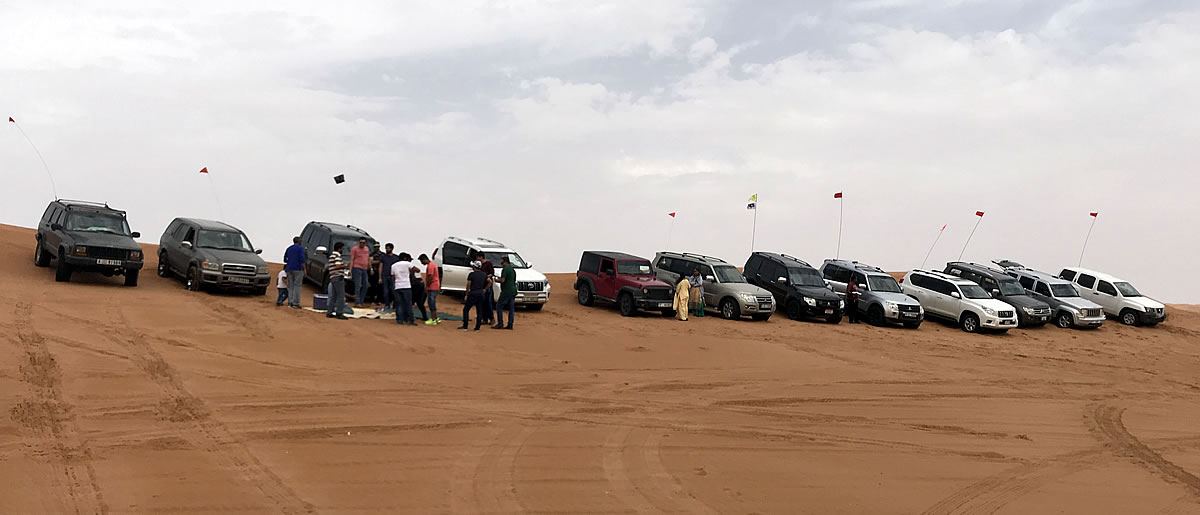
Everything you need to know about Off-roading in UAE from Desert, Mountain, Wadi and Camping As simple literal meaning off-roading means any terrain off the road, but it gets way too confusing as per so many people different understanding with not enough clarity. After spending 12 years in UAE off-road scene, I feel this write up will help many offroaders clear their doubts and explain a lot of intrigue details to other aspiring offroaders. Off roading is a way of life For a vast majority of UAE population venturing offroad over the weekend is a way of life, that you sneak away from your busy lifestyle and enjoy the adrenaline rush to forget all your worries and recharge yourself. Why and how do you forget your worries? While off road driving your brain has to process hundreds of instructions per seconds that you will eventually forget all you were thinking in the first 5 minutes. And this process continues for the whole offroad drives and keeping you super alert at all times to have the best experience every time. Offroading is an act of driving a standard, stock or modified vehicle on any surface other than the tarmac road. It can be on loose gravel track, beach sand, desert, dunes, mountains or in wadi's (riverbeds). There are several different ways of off-roading in UAE based on your adventure appetite from leisure drives with stock (unmodified) vehicles to slightly modified vehicles to competition level with highly modified vehicles. Off road drive Sand Driving This is the most basic and first step towards an offroading. This requires your standard road 4x4 vehicle with proper 4x4 and LO gearing or even AWD vehicle is acceptable to a certain extent, but not an SUV. All you need to do is deflate your tires to 14-15 PSI to gain more traction and increase the footprint of your tire to spread the vehicle pressure on a greater surface area. At first, learn some basics of offroading in the sand in UAE. Plan your entry and exit points carefully either by following offroad books available in UAE or by existing trails from wikiloc. This level of a drive can be done on the beach, desert or any place close to the habitat territories. In the desert, it's usually restricted to either flat tracks (sabka's) or easily passable tracks on the broad dunes. Dune Bashing This is the most common level of offroading in the UAE, where the group of offroaders get together and venture in desert dunes and explore the uncharted and uninhabited territories. This requires a proper 4x4 with minimum 8-10 inches of ground clearance and deflation of 10-15 PSI depending on the tire and vehicle load. This level of drive organizes in the desert having plenty of dunes to make your own path on virgin sand dunes. This challenge requires special skills of reading the sand and riding the 4x4 with precise control to continue moving without getting stuck. Self-recovery in the sand is the most important skill that every offroader should learn after the first few drives. If you are stuck in the sand, then listen to the instructions very carefully without getting panic. Get out of the car to analyze the situation and also to help the person who is helping you either by shoveling or by fixing the tow rope to your car in the proper recovery point (tow hook). Once you are out of the stuck, do remember to get out of the car for removing the rope and thanking the person. In dune bashing chances of getting stuck are very high and that's why most of the offroaders venture in groups to help each other with proper offroad recovery gears. You can join the like-minded offroad club freely available over Websites, Facebook, Meetups and Whatsapp groups. All you need to do is join a couple of few to find where do you fit the best, as every offroad club and groups are different and unique in their own ways. Some people do prefer private drives over the club and vice versa, check out the reasons here. Mountain Driving This is the second most common level of offroading in the UAE, where offroaders get together to explore beautiful mountains, wadis, and gorgeous camping spots. This requires a proper 4x4 with minimum 8-10 inches of ground clearance and deflation of 22-25 PSI depending on the tire and vehicle load. This level of drive organizes in scenic mountains either accessible by gravel track or by tarmac road to a partial extent. Traversing through rocky mountains or riverbed, do require a special skill that is easier to learn with capable offroaders. Similar to dune bashing, you can join any offroad club for quickly gaining the right experience with safety. These are the Top 3 off-road mistakes in Desert & Mountain that you can learn and avoid. Off road cars Depending on the level of off-road adventure you seek, you need a capable off road vehicle to make you a good offroader. Not all 4x4 and SUV are made equally capable and some are better, stronger and more reliable than others. To begin your offroading journey you can take your regular road vehicle if it's equipped with 4x4 gearing and LO gear option and also have 8-10 inches of ground clearance. Once you get a hang of this new offroading hobby it's always better to invest on a separate dedicated offroad vehicle because of several reasons: You can enjoy the best of both worlds: a comfortable vehicle for road and stronger vehicle for regular off road use An offroad vehicle will be limited to weekend bashing to prolong it's offroad usable life, as every offroad car require more frequent maintenance than the road car. If your offroad vehicle is under repair, you can still safely use your road car for daily commute. You can freely modify your offroad car by trimming bumpers, lifting the suspension, additional lights etc. You will be more comfortable in pushing the rev limiter in 20-40K dhs offroad vehicle than in 200K road car. Here is the list of best offroad 4x4 cars under 10K and 20K dhs in UAE, if you really get serious for offroading. After every offroad drive, you need to check your vehicle before hitting the road again with these post offroad drive car care checklist to make sure if your vehicle is safe for the road again or not. For more serious and regular dune basher, you should learn from other offroaders mistake to know what went wrong just before the accident. These discussions and feedback from seasoned offroaders will help you avoid the disaster and save your life and vehicle. Last but not least wherever you venture, please do not throw your trash or anything as it's a house of beautiful wildlife who get killed by eating plastic, tins, glasses and even metal threw as garbage. If you spot anyone doing it, please explain this to them as many people think that desert is an abandoned area and they can throw anything there. Due to this inconsiderate approach authorities are fencing lot of conservation area and also issuing hefty fines for offroaders littering in the desert or mountains. Feel free to ask me any question for more details or suggest me to add more valuable points for offroading in the UAE.
 1 point
 -
 Welcome to a basic guide to off-road venturing. Most of us would like to venture into the vast dunes we see on either side of the road, but it can be tricky for the uninitiated to take the first step off the tarmac and into the unknown, Well the first thing to remember is sand is almost like a liquid surface and our main aim is to stay above it, buoyant if you will and not sink. How do we do that? Lowering the tire pressure. How does that help exactly? It increases the contact patch or footprint of your tires. Which basically means now there is more ground to support the weight of your vehicle and you wont sink in as easily. For basic desert driving at first stick with 14-15 Psi, going any lower exponentially increases the chances of the bead of your tire losing its seal with the wheel and letting go of all the air (pop out), usually at the worst time and place possible. Once you understand and gain more experience in the art of desert driving you can go lower according to the vehicle and terrain at hand. But in the beginning lets stick to 14-15psi to keep our first steps in to the desert as trouble free as possible. Now that you have your tires ready for the terrain what do you do now. Full throttle starts are mostly never a good idea but rather gentle acceleration, some situations you need to give it more go than normal, but if starting from a flat and relatively smooth area it is always better to be gentle. Hard starts will usually end up in digging yourself in if not careful. But don't be a granny about it either, remember this is not your typical tarmac surface and gentle blips on the throttle will not get you anywhere. You have to learn to achieve that balance. Once you get going you have to remember what was mentioned earlier, that think of sand as a liquid surface. You have to keep your momentum, in fact momentum is your biggest friend out in the desert and once you have an intimate relationship with momentum, it will help you out in a lot of places. What you initially thought were impassible tracts of sand, momentum will take you through them. Think of this as water skiing, once the boat slows downs the skier tends to start going lower and lower into the water until he finally sinks. Although the desert will not consume you and your car like a body of water but getting back to that speed and motion is going to be real hard, and in some places its just not possible to build that momentum again and you will either get bogged down or have to change route. Don't be afraid to let your engines stretch its legs to keep the momentum going, thats how you learn advance desert driving skills. Most people are afraid to rev their engines too much simply because they are not used to it. Don't change up gears too soon, as the lower rpms will rob the wheels of the required torque to keep the momentum going. But also just don't stick in one gear and let it scream in pain. If you're driving an automatic keep the pedal planted in just enough that it does not shift into the next gear or mashed totally into the carpet that it downshifts and starts to over rev. Automatics in this regards can be a slightly tricky, but they shift gears in milliseconds and keep the downtime in between gears to a minimum. While on a manual you have to be quick and crafty with you changes as too long between gears and you could have broken that fine balance keeping you afloat. Again taking similarities between water and sand, more like ice in this example. Steering. it will not be as sharp or as responsive as on a hardened surface. The vehicle will not turn on a dime. There is a small delay in where you want the nose to point and where the car itself wants to go. Basically you turn and then you wait for the rest of the car to catch up before it actually starts to and this delay gets worse as the speed of your vehicle increases as well as the softness of sand your driving on. So you have to be a little ahead of time, a sort of a mini time traveler if you wish and be able to predict where you want to be going in the next few seconds rather than waiting for the last moment. Sometimes no matter of future predicting ability can help you when gravity becomes in charge, this usually happens on slopes and we will talk about this later. Now that you got your self going, what about stopping? And as always braking, this is different here too, you just can't slam on the breaks. Because all this does is digs your tires into the sand and then trying to move again becomes a hassle if not totally getting stuck. Always gently ease off the throttle and apply the breaks slowly and when ever possible let the car come to a halt on its own. Also makes a big difference where you choose to stop. If your facing uphill and the angle is high enough. 9 out of 10 times you will not be able to carry on forward any further. Always try stopping facing downhill even if it a a very gentle slope. You'd be surprised how well gravity works ! OK, now that we know how to drive on flat surfaces, lets tackle some fun stuff ! Going up a dune ! Sand dunes have two sides to them. One is a gradual climb leading up to what I refer to as the slip face. The other side, a real sharp drop and most of the times there is a nasty bit in the middle of these too. Which I like to call the blade but usually know as the ridge. At first always try to go up the easy side first. Always look for a smooth and straight line up. Which is clear of all bushes, dips and bumps, basically as smooth a ride up as possible. Then comes the tricky bit. Now what you need is power but in very measured quantity. Too less and you won't make it and too much will send you flying off into the unknown on to the other side. So to make it simple, the thing to do is give it as much as you got at first but easing it off or totally letting it go before you go flying off. Three Fourth way up the climb you should be able to guess from the forward momentum of the car that whether you need to keep the pedal mashed into the carpet or you need to back off or totally let go and let your old friend momentum take care of the rest with just some gentle blips from you here or there. Keeping in mind the amount of run up you have had before the climb. If you had enough speed before you hit the dune and specially of it is not a very big one, say twice the height of your car. It would be unwise to mash it as you already had loads of speed and your own inertia will take you over just keep the throttle steady or give it a little more if you feel your losing forward motion on the way up. Sometimes you might even need to slow down if you don't want your bumpers from smashing into the wall of sand. What do you do once your on the top? Well hopefully your not on your own and you are following someone or driving with an off-road club so keep an eye on that car what it does, goes over, turns to one side etc etc and try to replicate the same thing. If your following someone give it sometime before you attempt the climb yourself, in case there is a problem you cannot see. If there is you should see someone come over the top to tell you or if you have a radio you should get an all clear. If your by yourself. Always a good idea to go on foot and see whats on the other side. If you don't make it the first time round. Put your car in reverse and slowly come straight down. Sometimes this can be tricky as you may be a bit disorientated from the angle or which way the tires are pointing. Remember gravity and the delayed steering. Gravity will initially pull you down straight and then the delayed steering will come into play and you could end up sideways on a slope. Also never freewheel down, always keep in gear and let engine braking help you down plus this also helps you keep in control of the situation. Then back up a little further if possible and give it more throttle the next time. Also keep in mind that sand is also a little bit like pie. A hard-ish crust on top with being softer on the inside, and once you drive over a patch you have effectively cracked the crust exposing the softer inner side. So try not to follow your tracks of the previous attempt as you will be treading on the softer exposed sand. The more cars that pass the more churned up and softer it gets. Sometimes it is not possible to get a fresh patch of sand. Only one small exit out of a pocket or only a small crossing on top that is not sharp enough to cross over. In that case try to be on as much undisturbed sand before you are forced to get in line. As with all things, what goes up must come down. Going down is one of the easier parts of desert driving and sometimes the most scarier parts specially if your a beginner, but don't get too easy about it either. Things can still go wrong. First basic rule is too keep you wheels and the nose of your vehicle pointing straight down. This might be harder than it sounds, remember what was mentioned earlier about reversing down a dune, the same thing can happen while going down nose first. Again never freewheel in neutral down a drop and don't brake too aggressively this will cause your nose to dig in and in a worst case scenario cause you flip over, head over heels. Although this is very rare but this might happen. Another phenomena while slithering down a dune is fish tailing. That is when the end of your car wants to over take the front, So it starts to come up sideways from behind. What needs to be done is to make the appropriate steering correction and slightly accelerate for your front to get back up to speed with the back. But gently, over enthusiasm here can end up worse than the initial symptom of fish tailing. If coming down a sharp and steep downward slope engage low 4, 1st gear or D 1 if an auto and then let the car comedown with the help of gravity and engine braking. Better is to start off with less sharper gradients and practice this with being in D 1 or 1st. Once you get used to it you should be able to complete this task in D and just the brakes. But it is always handy to know this technique, In the end driving in the desert is a delicate balance between momentum, gravity and power and only practicing and driving as often as possible can get you better at it and develop a sixth sense about it. You will learn to interpret the feedback of your vehicle and steering wheel is giving you. You will learn to read the terrain better, even before your vehicle gives up on you, you will realize your not going to make the climb and its better to stop or if you have enough momentum left to come back down. But its better to start of with the correct basics instead of getting ingrained with the incorrect technique right from the start. This is just a very basic guide covering only some of the points. Remember nothing beats real world practice. Hope this has been of some help in making that transition from tarmac to sand. Feel free to add or edit or even post questions. I will try my level best with whatever knowledge I have to try to answer your queries.1 point
 -
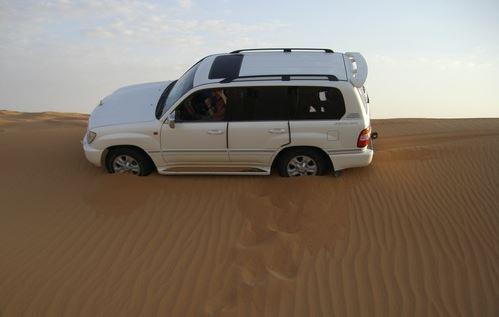 Basic Guide to Self-Recovery For newbie here is the recommended to read beginners guide to off-roading before you jump to reading this topic. We have already looked at the very basics of driving in the desert, lets look at another aspect. Sooner or later you will experience another, but not so pleasant but inevitable facet of this sport or hobby. Getting stuck, now we will talk here about that or to be more precise, how to get yourself unstuck without any help or if you are on your own, which by the way is not a very good idea to start with, specially if you've been just introduced to this activity. Getting bogged down happens all the time, whether its your first day in the desert or your a seasoned professional with the scars to prove it. The very first thing to do is NOT to panic. You are not the first one this has happened to and your not going to be the last. Panicking will only make the situation worse, so its always better to keep a calm and collected mind to help you through this ordeal. The other thing is to realize that your actually stuck and leave it at that and learn to accept that, yes, you are stuck and not going anywhere anytime soon. I have noticed many a times that someone does not accept the fact he is stuck and making the situation worse, What usually happens is the individual goes into denial mode and thinks that power alone can help him out, forgetting that his old friend momentum has abandoned him because he was mean to it. Then you see huge trails of sand being thrown up as he or she digs deeper into the earths crust. You see every time a wheel spins in a stationary position is displaces more sand underneath it effectively acting as a drill, remember our goal is to stay on top of the sand not under it, so this ego push will make things worst. Most of the times by simply reversing out to where you came from will solve the problem, specially when you have a slightly rising gradient in front of you. But start of with the gas slowly making sure not to spin the wheels, a little slip here and there is acceptable. Best way to do this is to pop your head out of the window or simply open the door and peek at your wheels. The advantage of this is two fold, first you can see your tires and second very quickly you'll learn not to spin them as doing so sends a tons of sand in your direction and fill the interior of your car with sand. Also before you do this, its best to step out of your vehicle and analyze the predicament you've gotten yourself into. This gives a good idea of what exactly needs to be done next. One effective technique to self recover from desert and one that I personally feel is dying out is the art of rocking. No its not some kind of ritual dance to appease the sand gods so they will let you free from their clutches. It is pretty much what it says. You literally rock your car out. This usually works best if you are knee deep in it and on relatively flat surface, has limited to no effect if the car is stuck sideways at a sharp angle. This works best if your driving a manual transmission but not totally ineffective on autos too. First thing to do is engage low ratio as this gives you more torque and you shall require oodles of it here. In low gear now bring the clutch to it's friction point, and I do hope you know what that is, if not look it up. Just when you feel the car is about to move, press it back in, just before it stalls. You don't need to use the gas pedal here. You might even stall a few times but its perfectly OK to do so, try again. Now once you do this you'll realize that the car gets a slight jolt like some one just gave it a wallop. Do this a few times and you'll feel with every movement of the clutch the car gets more movement than the last. What is happening is your disturbing the sand that has a death grip around your tires. With every jolt the car is trying to make forward, some of that sand is moving into place where your tire used to be, all the while making some space for the tire to move about. After a few attempts in one direction change gear, if you were in 1st put it in reverse and vice versa. Now this pushes the sand on the other side of the tire. All the while you will see your movements getting bigger and bigger gradually, now the trick is to keep the clutch engaged just long enough to move the vehicle as much as possible before it stalls out and you will see the car has now started to rock. What is happening now even if you have half a foot or less of travel in either direction is, sand is sliding in when you move and when you go over it the weight of your vehicle is compacting it, so you will slowly start to rise out of the sand. Sometimes the surface could be flat or the sand coarse and not sliding in at a fast enough rate or not at all. Now what you will do is what many will find extremely odd some might even disregard it. Pile up sand on your tire sidewalls. When I mean pile up, I don't mean bury your entire tire, just till sidewalls should be enough and you might have to repeat this. When you do this and rock that sand pile flows into that little tract your making like a small bulldozer and slowly the elevation starts to get higher. Now that you've got a good rocking motion going for you, you can feel your almost free. Now get the timing right on the edge of your swing, throttle it down and most of the times you will jump right out, sometimes you might misjudge it or the sand is playing tough, you might have to start over. Another thing to keep is mind is you have to make sure you are not grounded. This is when any other part of the undercarriage i.e chassis, differential etc is in contact with the sand, even if by a little. You'd be surprised how stubborn sand can be sometimes. Best to clear your car to such an extent that nothing other than your wheels are in contact with the ground. For an automatic rocking is less effective simply because of lacking a clutch, and not being able to give those life saving initial jolts. What one does is play between D and R. D a little movement forward, the same in R. Do this a few times and see if your getting any movement in any direction and if only in one direction, then play with that side first and then slowly going in the opposite direction. The concept is the same but just takes longer and your not rocking, rather paving your way out. You can try and achieve a rocking motion by alternating between a gear and N, but this is not recommended. Also keeping in mind not to over do it and automatic transmissions are prone to overheating, give it a little rest in between tries by simply putting it in park or neutral to cool itself down. Another way if your driving an automatic or you cannot rock for whatever reason. Is crawling. Now this is different and nothing like rock crawling. Crawling is basically struggling and fighting your way out. More like a battle with the sand to show it whose the boss, but don't get too cocky here, mother nature always has the upper hand. You might win the battle but will always loose the war. First of all is see if there is a downhill slope in any direction, even a very slight one, always remember to never underestimate the power of gravity. Similarly aim away from any uphill slopes, yes even very tiny ones and this goes for almost all types of situations where you get bogged down. How to crawl, very simple but can be physically strenuous at times. As always engage low ratio and apply differential locks if you have them. Now if the down hill slope is behind you engage reverse or forward if in front, first we have to get it going, then if it is on any one side we try to come out of it. You have to give it enough throttle that your wheels start to spin slowly, again stick your head out of the window for the two reasons mentioned above. Usually this is in between 1500 to 2000 rpms. Initially you might have to go a little over just to get the ball rolling, easing back down once you do. I don't think I need to mention again that you do not want to be spinning them as if your doing a burnout, just keep it steady. Now while that is happening, do full lock to lock turns with your steering wheel from left to right and than from right to left again. Do it with a little enthusiasm and not as if granny is trying to parallel park. You might notice that front wheels might stop turning between those lock to lock turns but that's OK. Keep at it. What is happening here is that your oscillating wheels are clearing out loose sand from its path and depending in which direction you are moving either pulling or pushing your car. Of course the rear wheels are also helping. Also if you got mates with you a little push also helps out a lot. By this time you should have some kind of movement. At first it could come is short bursts, but keep at it. If you notice you are getting lateral movement only within a specified arc of the steering i.e only half a turn in either direction and rest of the movement of the steering wheel is pretty much doing nothing. Then limit the the turns to that much. Trying out complete lock to lock turns again in the middle to see if the situation has changed or you lost movement in the your intended direction. If the downhill slope your aiming for is on one side then steer more on that side. Limiting turning to the opposite side. If your lucky and there is a downhill slope close by you will feel the car is starting to struggle less as it tries to free itself and gravity giving it a good helping hand, this is when you start to give it a little more gas. this is also when you realize how even a slight slope helps. Slowly but surely if you don't over spin you tires and keep at it, your vehicle will come to a harder patch of sand and now all you have to do is keep going until your well clear. And of-course when all else fails, use your trusty shovel and a little bit of elbow grease. But know how to use it wisely don't just go about it, a little shoveling in the right place goes a long way, rather than a lot of shoveling in the wrong place. First of all make sure as mentioned earlier nothing other than your tires should be in contact with the ground. If there is a build up of sand in front or at the back of any of the tires, clear that out as well. Once you've done that try to break free if it doesn't work the first time see where the problem is and shovel a little more and give it an another shot. One type I will not cover in detail here as it is a subject all on its own is when you get stuck sideways, only the very raw basics as it is always advisable to get help from others first, only if your by yourself and you have no other option. The simple aim here is you want either the nose or tail of the car to point downhill as much as possible. If it is very steep slope with very loose sand and your tires dug in quite deep on the down side, in that case call for help. If it is not that steep, or high and the sand is not all that soft and your not dug in too deep, then you can try to get out of that situation, but raise caution again if your not 100% confident of what your doing it is best to ask or call for help. Anything over 30 degree of tilt I would leave it alone, more experienced drivers might attempt steeper angles but they know what they are doing and do not try to emulate them. Thing to do here is see which side of the car is pointing more down and has a clear path that is no obstructions like bushes. You want to go in that direction. Sometimes you could land up in what will once again have your car stuck, i.e: a ditch or pocket but being stuck level in a ditch is any day better than being stuck sideways on a slip face. Try to crawl out first but of course not steering up in this case. If you feel your getting some kind of movement then keep on going if not, give it up. As you advance more in desert driving you will lern to assess the situation very carefully and correctly and then you might want to physically move some of the sand out of the way and try again but very very careful and cautious as sometimes that sand on the lower side wedged up against your car is the only thing keeping it from rolling over. So if you disturb that you could end up in a world of hurt. And last but not least as every stuck is unique and requires its own set of solutions to get away, sometimes you will have to use one of the techniques mentioned here sometimes all of them, or even more, never give up on ingenuity, but always step out and access your situation before you start trying.1 point






.thumb.jpg.faf264f698ded093f59df7be5597f9ce.jpg)


This leaderboard is set to Dubai/GMT+04:00